November 24, 2026
Wholesale Management Software: Tools Compared for 2026
Compare wholesale management software for fashion, beauty, and home brands, from order platforms to ERPs, and see where Sprello fits.
Published January 12, 2026
No single wholesale management software covers a whole season, and the right pick depends on which layer your team is missing: buyer ordering, visual line review, ERP order intake, or the product visuals that feed every buyer assortment. Sprello, our product, handles that last layer. The ten tools below cover the rest.
It's the Monday before a showroom appointment. You have 120 styles to present, three buyer accounts that each want a different mix, a design team still weighing two colorways, and a line sheet showing last season's prices because someone updated one spreadsheet and someone else updated another. None of that is a software failure by itself. It's a handoff failure, repeated across four systems that each hold a different version of the truth.
The category is big enough that vendors have stopped pretending to own all of it. One industry estimate valued the wholesale inventory software market at $2.38 billion in 2025 and projected it to reach $8.48 billion by 2035, a 13.1% compound annual growth rate, per Swell's wholesale inventory management statistics. Growth like that funds a lot of narrow, useful tools.
So this isn't a ranking of feature counts. It's a map of where each tool sits in the season, from the visuals that start it to the ERP that closes the order.
1. NuORDER by Lightspeed
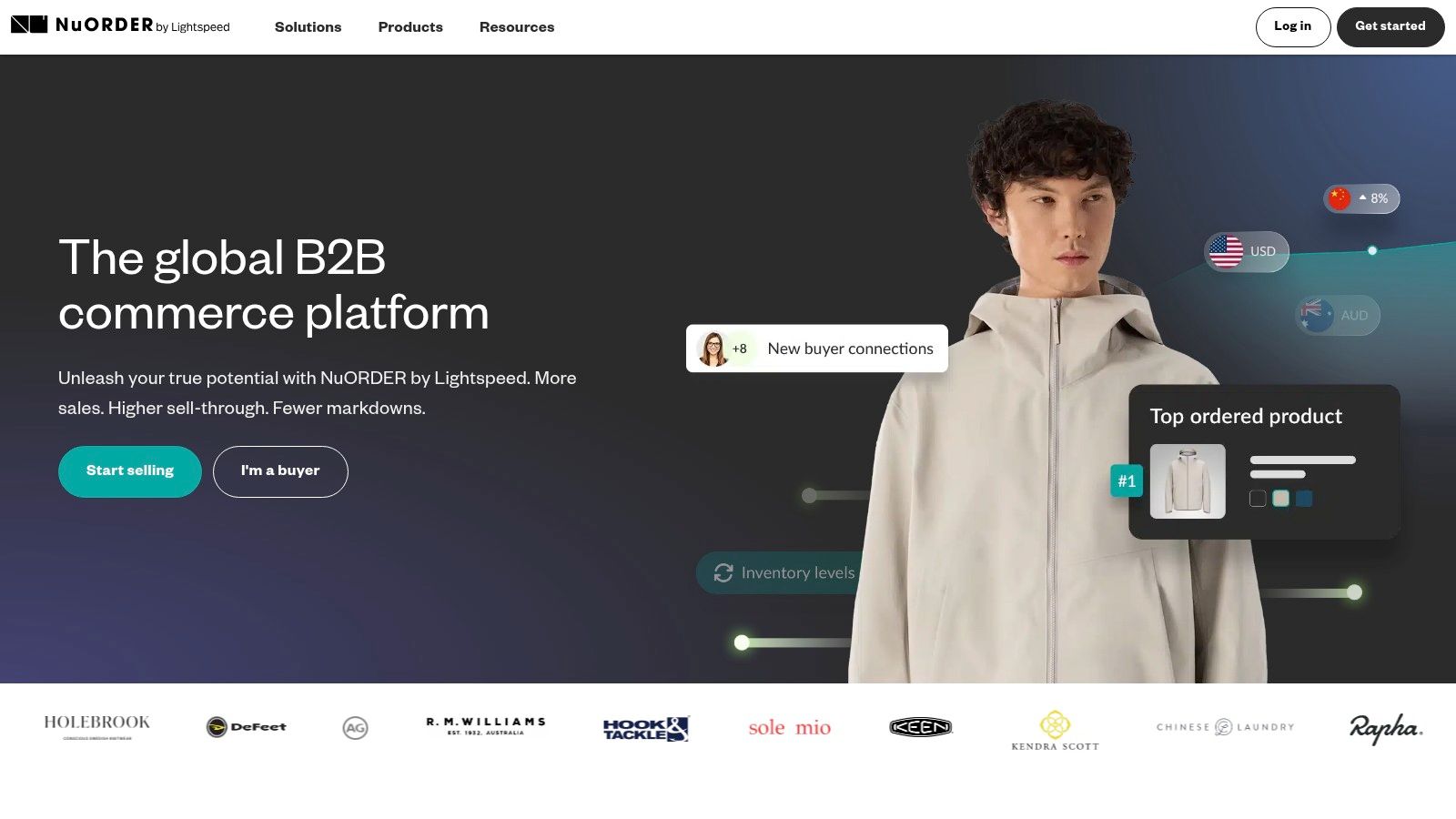
NuORDER covers the buyer ordering layer. It turns a seasonal line into digital line sheets and virtual showrooms, then adds a retailer marketplace so buyers already on the platform can find brands they don't currently stock.
- Digital line sheets and showrooms: imagery, size runs, colorways, and account pricing in one presentation a buyer can work through at 11pm.
- Ordering and inventory tools: 24/7 wholesale ordering, with availability visible to the buyer instead of confirmed by email three days later.
- ERP, PLM, and POS integrations: product and order data sync downstream rather than being retyped.
Integration is the part worth demoing. In 2024, 3 in 4 brands reported using ERP integrations to bidirectionally sync product, order, and pricing data, according to NuOrder by Lightspeed's 2024 State of B2B Commerce report.
Where it isn't a fit: brand pricing is quote-based, and onboarding or support complaints show up often enough in reviews that two reference calls are worth the time. If you're still working out how a selling platform relates to the systems around it, start with how a wholesale ordering platform fits the wider stack.
Website: NuORDER by Lightspeed
2. JOOR
JOOR sits in the same buyer ordering layer, weighted toward retailer prospecting. When the problem is that buyers don't know your brand exists, that difference counts for more than any feature grid.
- Digital line sheets and virtual showrooms: collections presented with imagery and account pricing.
- Retailer discovery and outreach: a global buyer network to prospect into before market week, not after.
- Order management and reporting: orders plus JOOR Pay for payment handling.
- Integrations: ERP, PLM, POS, and accounting.
The investment case for better assortment presentation is well documented. A McKinsey study cited by JOOR's guide to visual assortment planning found that 58% of fashion executives identified assortment planning as a key area for expanded use of data and analytics.
Where it isn't a fit: brand pricing is quote-based and payment processing fees sit on top, so compare all-in cost rather than subscription alone. Manufacturers selling production services rather than finished collections usually find fashion wholesale platforms a poor match, because the buying unit is a capacity booking, not a style.
Website: JOOR

3. RepSpark
RepSpark earns its place when wholesale already happens outside the showroom: reps on the road, many retailer accounts, and a catalog too big for a shared PDF. It sits at order capture and account management, after the buyer has seen the line and before clean orders reach the ERP.
- Digital catalogs and ordering: wholesale ordering with assortment and line sheet tools attached.
- Field rep workflows: reps write and manage orders per account rather than sending edits back to headquarters.
- Shopify and ERP integrations: available depending on plan, so get the exact tier list in writing.
The plan ladder runs from launch setup for newer programs to enterprise configurations. Fixed dollar pricing is not published, so treat subscription scope, integrations and support as contract items, not assumptions.
Where it isn't a fit: a team that only needs a clean per-account document will find line sheet software lighter than a full B2B commerce platform. If the gap is upstream visuals feeding every buyer assortment, RepSpark will not solve it.
Website: RepSpark
4. Brandboom
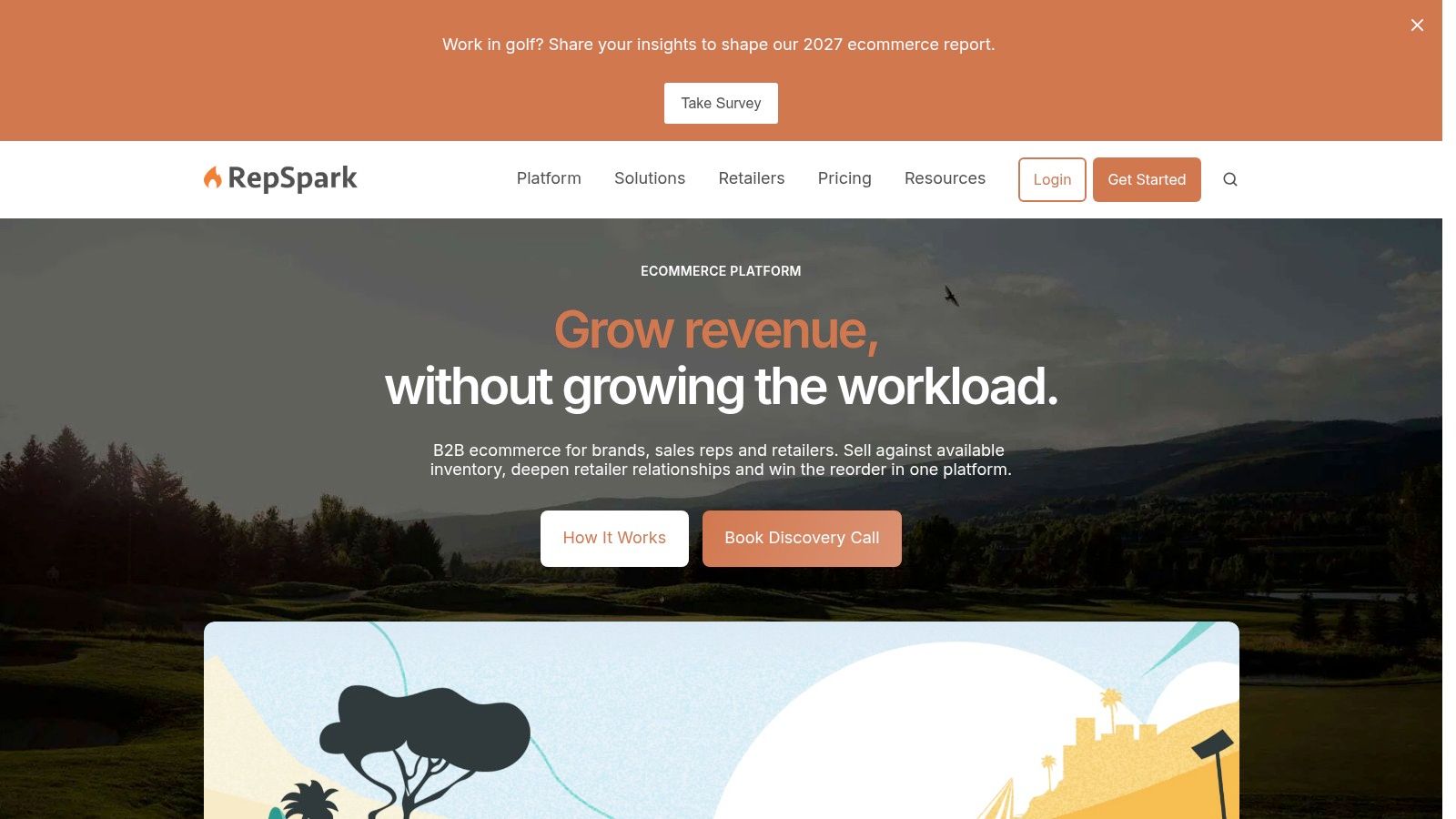
Brandboom is the option you can evaluate this afternoon. It publishes entry-level pricing and offers a free account, which is rare in a category where most vendors route you straight into a discovery call.
- Digital presentations and line sheets: build a seasonal presentation and share it with buyers.
- Orders and invoices: Stripe and PayPal support on listed plans, so payment doesn't need a separate tool.
- Buyer activity tracking and mobile quick order: on the Startup plan, useful when a rep writes orders in a showroom basement with poor signal.
- Shopify integration: API and ERP file sync arrive on higher tiers.
Where it isn't a fit: lower tiers cap active product counts, which bites hard on a 400-style catalog. Business and Enterprise pricing is quote-based, so larger brands should confirm integration scope and contract terms rather than assuming public prices scale linearly.
If you're still deciding what the document should contain, start from a wholesale line sheet template and work outward to the software.
Website: Brandboom
5. Elastic Suite
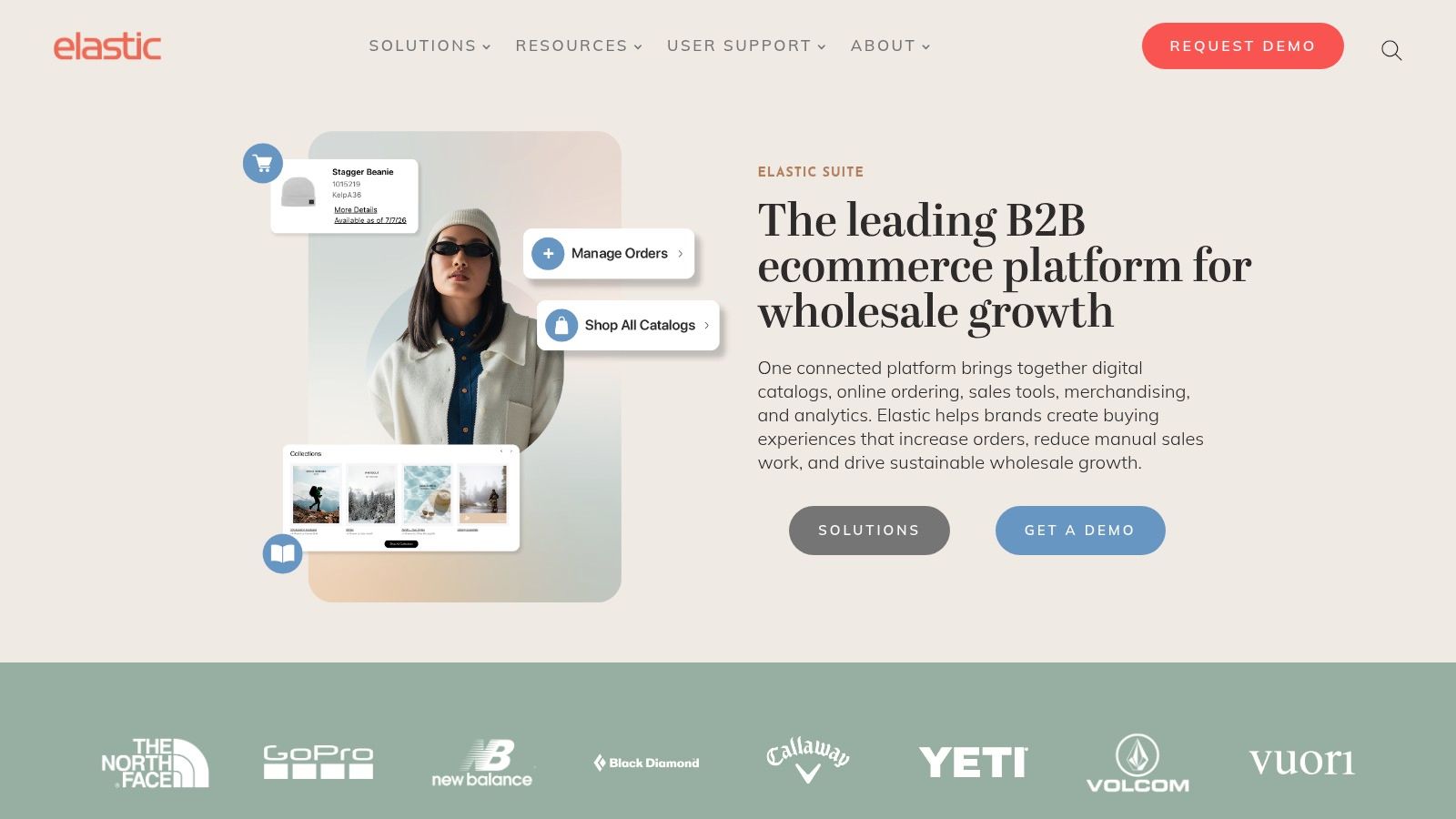
Elastic Suite treats wholesale as a branded storefront problem. It's a B2B ecommerce and digital merchandising platform, so the buying experience carries your brand rather than a marketplace's navigation.
- Branded B2B storefronts: your categories, your imagery, your account rules.
- Digital product merchandising: collections and product presentation managed as merchandising, not as a product feed.
- Wholesale order management: orders sit in the same environment as the presentation.
- Configured packages: scope is built to the business instead of sold off a rate card.
That last point is the trade-off. A custom implementation fits a brand with unusual buying rules or a large account base, and it costs planning time.
A tailored platform is a resourcing decision as much as a software one. If nobody owns the project internally for a full quarter, scope creeps and the launch slips into the following season.
Where it isn't a fit: pricing isn't published, and a custom build needs more internal attention than a self-serve tool. Ask what the proposal includes for integration, maintenance, and support, because those three lines move the total more than the license does.
Website: Elastic Suite
6. Pepperi
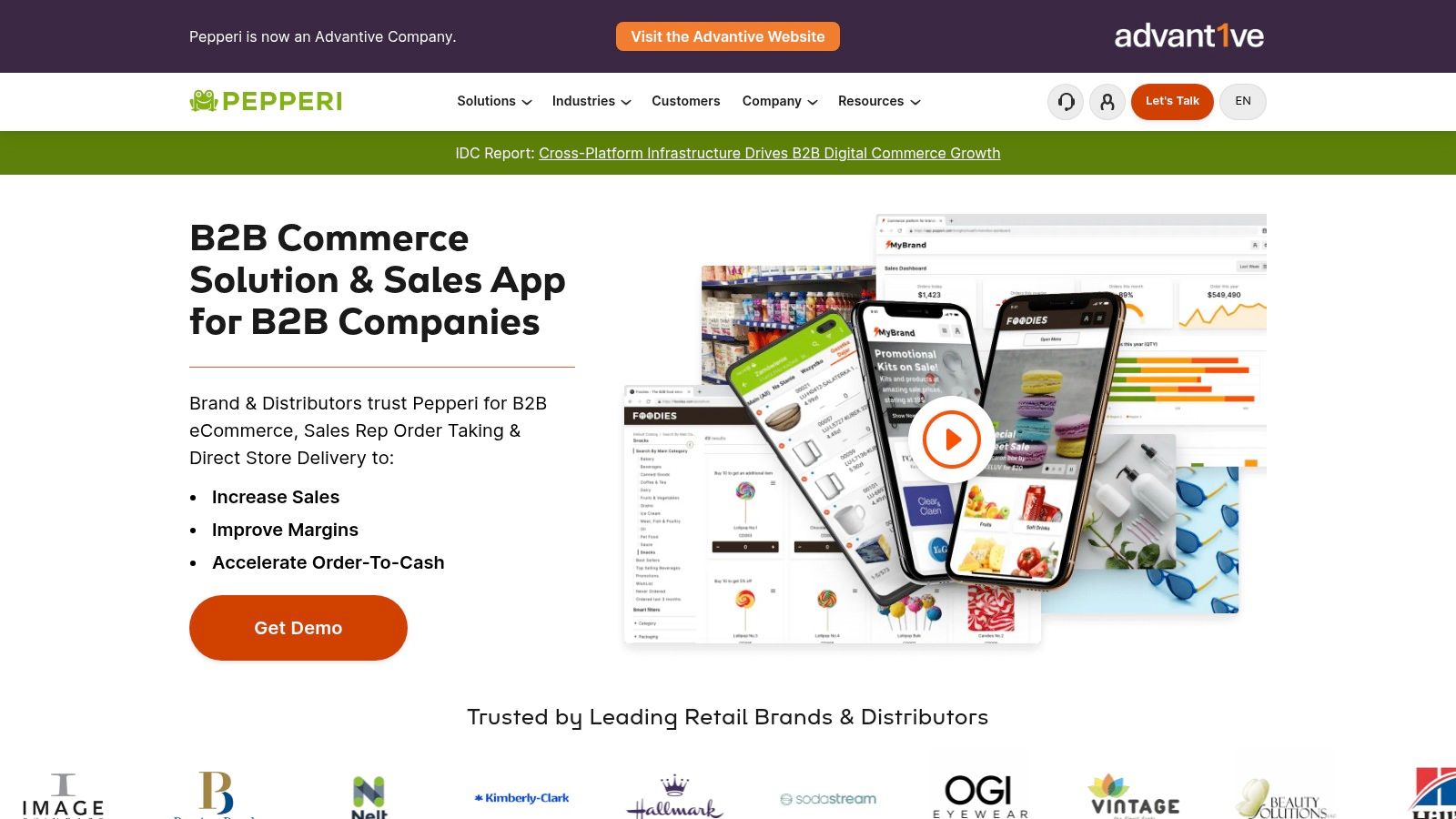
Pepperi covers wholesale when wholesale is one channel among several. It pairs a B2B storefront with a mobile app for sales reps, and both work from the same account-level pricing rules.
- Storefront and mobile app: buyers self-serve, or a rep writes the order on a phone.
- Account-specific catalogs, price lists, and discounts: different terms per account without maintaining parallel files.
- Offline order-taking: reps keep working where there's no signal.
- Promotions, payments, inventory visibility, ERP integration: the operational pieces around the order.
The complexity is both the selling point and the risk. If your rules are complicated, negotiated prices by account, volume tiers, channel-specific catalogs, Pepperi handles what a line sheet tool can't. If your rules are three price tiers and a seasonal discount, you're buying machinery you won't switch on.
Where it isn't a fit: seasonal order capture alone doesn't justify it. Pricing isn't public, and implementation scope drives the number more than seat count, so budget for configuration time before you budget for licenses.
Website: Pepperi
7. Shopify B2B
Shopify B2B works when wholesale and direct-to-consumer should live in one place. It adds company profiles, custom catalogs, and volume pricing to a store your team may already run every day.
- Company profiles and business buyer accounts: each account gets its own login, catalog, and terms.
- Custom catalogs and B2B pricing: assign products and price lists per company.
- Quantity rules and volume breaks: minimums and tiered pricing at product level.
- One back office: orders, inventory, and payments beside DTC.
Practical test: ask for a walkthrough where a buyer builds a seasonal assortment across categories, not a repeat order of one SKU. The second demo always looks better than the first, and only one of them matches how a fashion buyer works.
The honest limit is merchandising. Shopify is a commerce platform, not a showroom, and there's no buyer network. If your team is already deep in the ecosystem and needs the build side handled, Refact's Shopify services cover it.
Where it isn't a fit: catalog assignment and advanced B2B capabilities vary by plan, and brands with individualized pricing or deep ERP workflows should verify that native features are enough before migrating.
Website: Shopify B2B
8. BigCommerce B2B Edition
BigCommerce B2B Edition is a self-service buyer portal. It assumes your accounts want to log in, reorder from history, and pull invoices without calling anyone.
- Buyer portal and company accounts: buyers manage their own users and permissions.
- Quote workflows: a buyer requests a quote and a rep responds inside the system.
- Quick order, order history, invoice portal: the repeat-purchase tasks that eat a customer service day.
- Multi-storefront: separate front ends for regions or brands.
That list is operational, not visual. It serves categories where the buyer reorders known SKUs, and it's weaker for a seasonal collection a buyer needs to see, compare, and edit as one assortment. Teams weighing the reporting side should compare BigCommerce reporting tools before committing.
Where it isn't a fit: feature availability depends on the plan or B2B Edition package, and fashion brands needing seasonal visual selling will need complementary software. Customization effort varies widely with catalog structure.
Website: BigCommerce B2B Edition
9. OrderEase
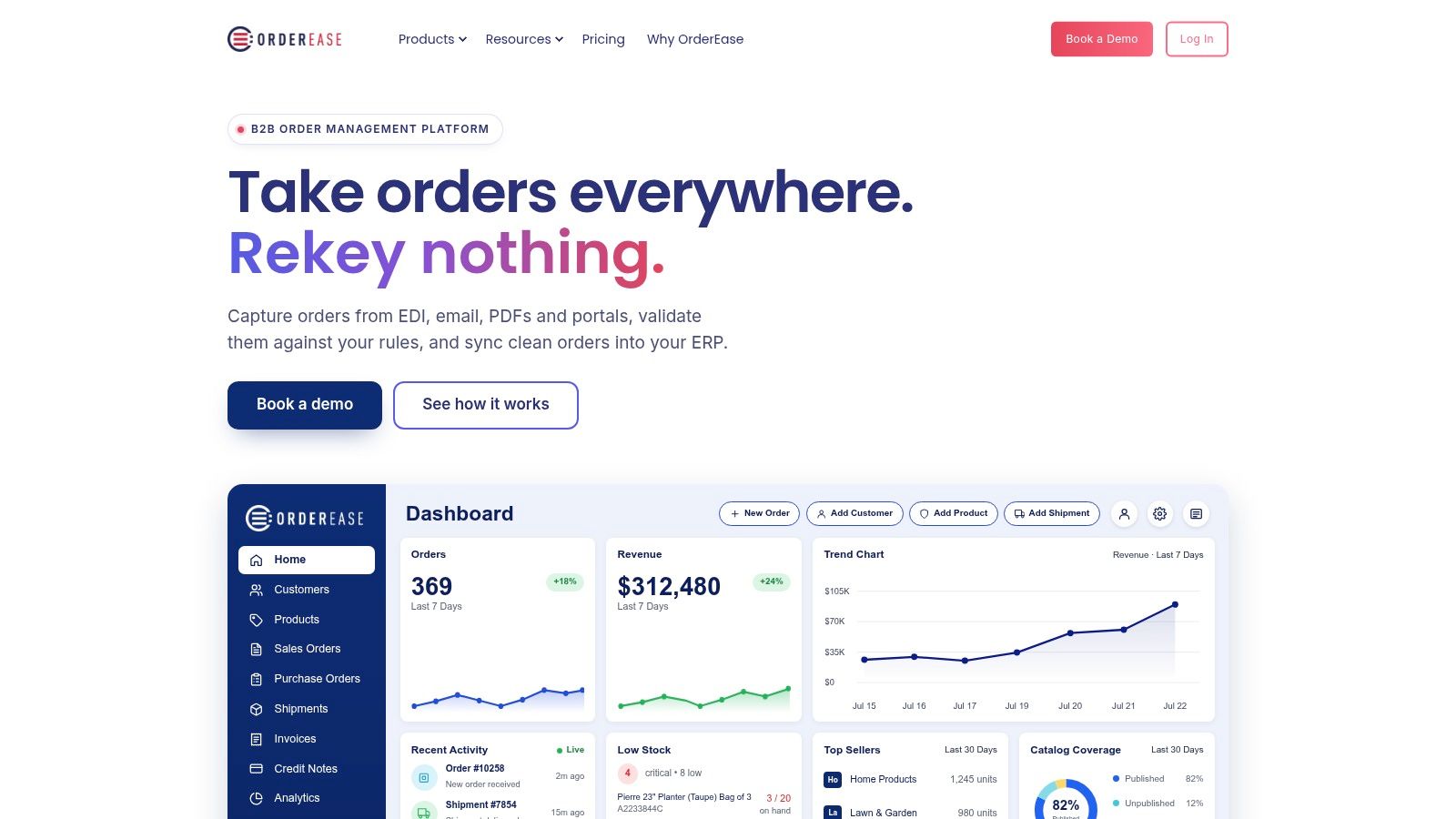
OrderEase handles order intake, not selling. It collects orders arriving by EDI, email, PDF, or portal, validates them against your business rules, and pushes clean orders into the ERP.
- Multi-channel capture: one queue for every order format.
- Validation against business rules: pricing, minimums, and account terms checked before the ERP sees the order.
- ERP routing: validated orders land where fulfilment expects them.
- Apparel workflows: the company lists fashion among its supported industries.
That problem is widespread. A wholesale survey cited in RepSpark's analysis of wholesale operations reported that only 19% of brands had fully integrated their B2B platform with ERP or inventory systems. The rest are rekeying.
Where it isn't a fit: there's no retailer prospecting and no visual assortment planning. It sits behind whichever storefront or rep app you sell through, so it complements a selling platform rather than replacing one. Pricing isn't public, so confirm which channels, ERP connectors, and exception paths are in scope.
Website: OrderEase
10. AIMS360
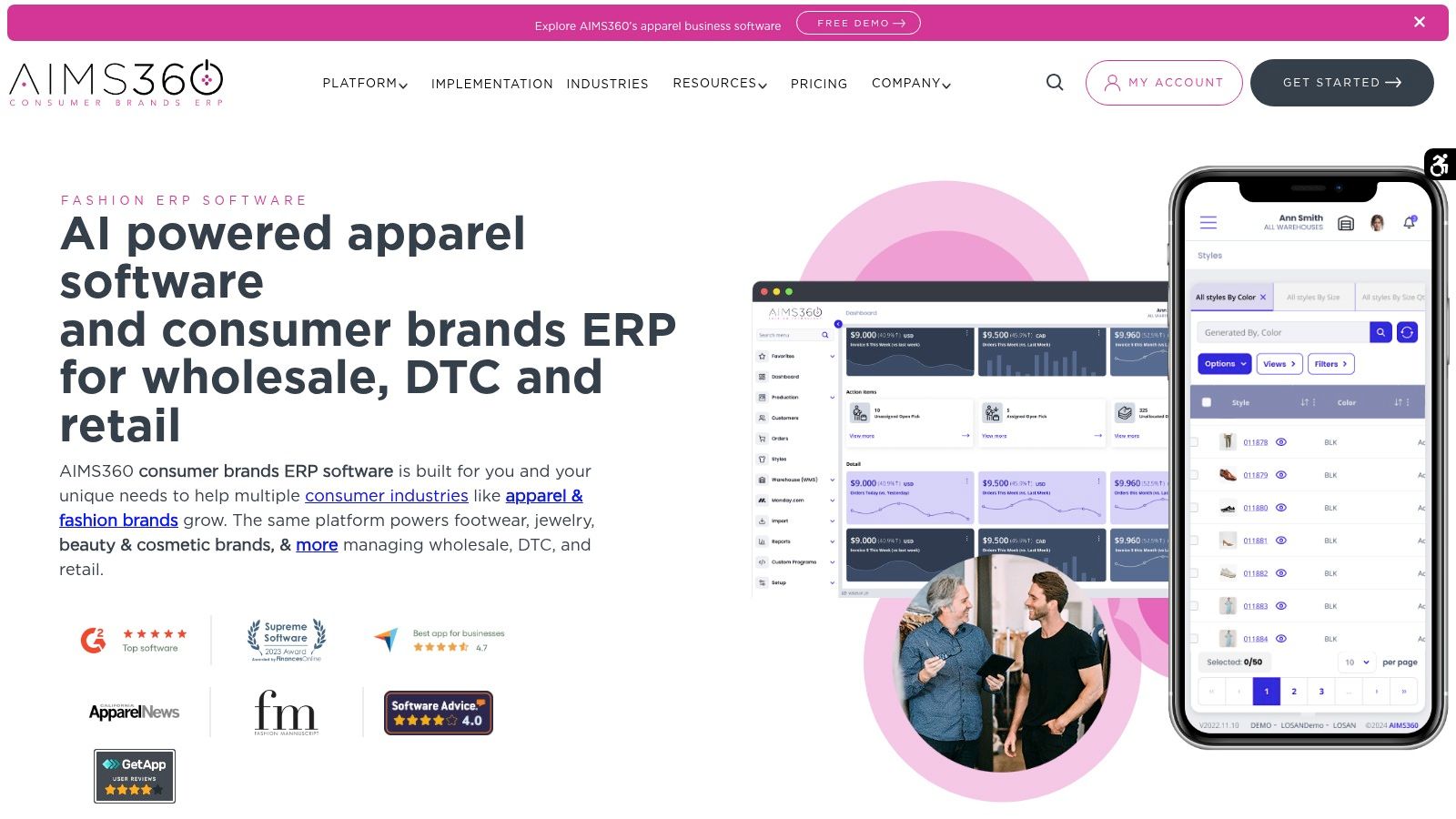
AIMS360 is the ERP option here. It runs wholesale orders alongside inventory by style, color, and size, plus production, retail, ecommerce, and accounting in one system of record.
- Apparel-specific inventory: style, color, and size matrices rather than generic SKUs.
- Wholesale, DTC, and retail order workflows: several channels in one system.
- EDI and fulfillment: the trading-partner plumbing larger accounts require.
- Production and accounting: costs and financials inside the same platform.
ERP is mainstream in distribution. A 2025 industry compilation reported that approximately 92% of wholesale distributors use some form of ERP, and that modern implementations can reduce inventory-carrying costs by 20% to 30%, according to 9cv9's distribution software statistics. The second figure depends on implementation quality, forecasting accuracy, and where your processes start.
The ERP number that matters isn't the license. It's the hours your team spends reconciling what the system says with what the warehouse actually has.
Where it isn't a fit: a full ERP is a bigger undertaking than a buyer portal, with a longer runway and more process change. Sales-facing features and integrations need verifying for the exact configuration you buy, and standard plan pricing isn't published.
Website: AIMS360
11. Sprello (our product)
Sprello sits upstream of buyer ordering, visual line review, ERP order intake, and the product visuals that feed every buyer assortment. It is an AI workflow canvas for building production-ready creative workflows across SKUs, channels, regions, and seasons. The practical value is in making early product and merchandising decisions visible before the collection reaches sales. A buyer-facing line sheet is only as useful as the product information and imagery behind it.
The timing argument is concrete. A peer-reviewed apparel product-development case study reports that seasonal lead times commonly average 8 to 12 weeks, per the apparel industry case study. Research on intimate apparel found that virtual prototypes cut one prototype step from three weeks for a physical sample to one week, saving two weeks per sample viewed, according to the intimate-apparel product development research. Sprello reports 3x fewer physical samples and a 50% reduction in excess inventory.
- Canvas: explore colorways and material directions with AI before making the next physical sample. Save a workflow and run it again on the next style. If one step is not right, fix that step without regenerating everything.
- One catalog: keep every style in one shared product catalog, with its details and the visuals created for it. Selected visuals and details flow into line sheets and buyer assortments.
- Line sheets and assortments: build line sheets for wholesale presentations to every account, including North America, Europe, department stores, specialty boutiques, flagship stores, or own retail. Show style or variant codes, material, wholesale price, and retail price. Each buyer's assortment starts from the same product information, and the mix can be reviewed as a whole.
- Scale and controls: run an approved workflow at scale for ten, fifty, or a hundred variations with quality decisions built in. SOC 2 compliance and role-based access controls keep access aligned to the right people, accounts, and data.
Category coverage is specific. For jewelry and accessories, Sprello supports detail-grade product renders and lifestyle context, on demand. For fashion and apparel, it supports editorial campaigns across every SKU, colorway, and region. That makes it most useful when the missing layer is product visual production or line review preparation, not order capture.
Where it isn't a fit: Sprello does not handle tech packs, BOMs, pattern making, demand forecasting, or open-to-buy, and it does not capture or process wholesale orders. It complements PLM, planning suites, and order platforms. Sales demos are set up after the team shares its catalog size and use case, then adapted to its workflows. A demo can show the catalog, canvas, line sheets, and assortments on one of your own product categories. Enterprise customers get hands-on onboarding, workflow setup, training sessions suited to production needs, and a private Slack channel for 24/7 help from the founding team. During business hours, live chat is available through the chat bubble in the bottom-right corner of any page on sprello.ai.
How each wholesale platform differs by primary role, best-fit team, and pricing information
| Item | Primary role | Best for | Pricing information |
|---|---|---|---|
| NuORDER by Lightspeed | Fashion wholesale selling platform | Visual selling and retailer discovery | Brand pricing is quote-based |
| JOOR | Fashion wholesale platform with showroom, ordering, and payment tools | Fashion brands seeking retailer relationships | Brand pricing is quote-based; compare payment-processing fees |
| RepSpark | B2B wholesale commerce and order management | Brands with complex catalogs or enterprise needs | Subscription pricing; fixed prices are not publicly listed |
| Brandboom | Wholesale linesheets, presentations, and order management | Brands and sales reps seeking an easy-to-trial platform | Free account and publicly listed entry-level pricing; higher tiers may be quote-based |
| Elastic Suite | Branded B2B ecommerce and digital merchandising | Larger teams needing a tailored wholesale buying experience | Pricing is not publicly listed |
| Pepperi | B2B commerce and sales platform | Brands and distributors with complex pricing and sales channels | Pricing is not publicly listed |
| Shopify B2B | Wholesale commerce within Shopify | Brands already using Shopify for ecommerce | B2B features are available across Shopify plans; capabilities vary by plan |
| BigCommerce B2B Edition | B2B ecommerce buyer portal | Wholesalers seeking self-service account and ordering tools | Depends on the selected plan or B2B Edition package |
| OrderEase | Multi-channel order intake and processing | Businesses consolidating orders and routing them to an ERP | Pricing is not publicly listed |
| AIMS360 | Apparel ERP with wholesale operations | Fashion businesses seeking a broader operational system | Standard public plan pricing is not listed |
| Sprello (our product), Recommended | AI product development and merchandising platform | Teams creating product visuals, line sheets, and buyer assortments before orders | Pricing is discussed during a demo |
Choosing the Layer Your Team Is Missing
Companies don't need one platform to do everything. They need to name the gap and buy for it, and the naming takes one meeting with merchandising, sales, and operations in the same room.
If buyers can't see the line, you need visual selling. NuORDER, JOOR, and RepSpark cover that layer with different strengths in retailer discovery. If orders arrive as email attachments and PDFs, you need intake, which is where OrderEase sits, and a self-service portal built on Shopify B2B or BigCommerce B2B Edition can absorb the storefront side if the portal itself needs building. A guide to B2B sites for tech firms covers the structural questions worth settling before you brief anyone.
If product records are scattered across teams, you need a shared catalog and the visuals that feed it, which is the layer we build for. If finance, stock, and orders need one record, you're buying ERP, and AIMS360 or one of the broader platforms is the right conversation.
Then do the unglamorous part. Confirm integration scope in writing, with field-level detail on which system is authoritative for product data, availability, pricing, and order status. Test with three of your own styles, two accounts, and one colorway change rather than the vendor's showcase data. Model ROI on SKU count, seasonal assortment changes, manual touches per order, and the cost of a stockout, because approximately 83% of organizations that performed a pre-implementation ROI analysis said their ERP project met or exceeded expectations, according to Anchor Group's wholesale distribution ERP statistics. The preparation is what predicts the outcome, not the logo.
Ask this in every demo: which system is authoritative for this field, and what happens when two systems disagree?
Governance belongs on the same checklist now. Approvals, provenance, and human review decide whether an automated output can be defended months later, and the regulatory backdrop is tightening: academic legal research counted approximately 752 proposed AI regulations under consideration worldwide, per the Journal of Intellectual Property Law & Practice.
If you want to see how a shared catalog, line sheets, and buyer assortments would work on your own categories, book a demo. We'll ask for your catalog size and use case first, then walk through the canvas, catalog, line sheets, and assortments on a category you sell.
Wholesale starts long before the first purchase order, and most of the expensive rework happens while the collection is still being shaped: colorways debated, line sheets rebuilt per account, buyer assortments assembled by hand. Sprello connects AI product visuals to one shared catalog, then into wholesale line sheets and separate buyer assortments for each account or channel, so the visuals your team approves are the ones buyers see. If your wholesale calendar keeps slipping at the product development stage rather than the order stage, book a demo and we'll run it on one of your own categories.
Related
More to explore
Fresh reads
Production Pipeline Software: 10 Tools Compared in 2026
Compare 10 production pipeline software tools for fashion, beauty, jewelry, and home brands. Criteria for workflows, handoffs, and deliverables.
Mood Board Software for Fashion and Product Teams: 10 Tools
Compare 10 mood board software options for fashion, beauty, and home brands — features, collaboration, and how concepts move into production workflows.
Wholesale Ordering Platform: 10 Tools Compared for 2026
Compare 10 wholesale ordering platforms for fashion, beauty, jewelry and home brands: pricing, retailer reach and order workflow fit for 2026.