November 18, 2026
10 Line Sheet Software Options Worth Comparing in 2026
Compare 10 line sheet software options for fashion and lifestyle brands, including what each tool does well, what it lacks, and how to choose the right fit.
What should line sheet software do for your brand?
Line sheet software turns a product catalog into buyer-ready wholesale presentations, usually with ordering attached. The right pick depends on whether you need a shareable document, a full B2B ordering channel, or a connected product-development workflow.
Sprello is our product, so read this as a disclosed comparison rather than a neutral review. We built it for teams that want AI product visuals, one shared catalog, line sheets and separate buyer assortments per account in the same place. Every other tool below is described by the work it does, with its published pricing and limits where the vendor states them.
The list is grouped by job rather than rank:
- Presentation tools turn product data into a designed document you can send or print.
- Wholesale ordering platforms add buyer accounts, order capture and payment.
- Full business systems connect line sheets to inventory, production or ERP records.
Four criteria settle most decisions: presentation quality across a full range, how buyers order, whether pricing is published, and how cleanly product data moves between systems. If the catalog also feeds a Shopify storefront, agree the data model with whoever builds it, and plenty of brands hire Shopify developers for that handoff before syncing anything.
Published 4 February 2026.
1. Sprello
Sprello is an AI workflow canvas for fashion, beauty, and lifestyle brands. Teams connect models, adjust parameters, and see how product inputs become visuals. The canvas takes sketches, CAD files, materials, and references, helping teams create and refine product visuals and explore colorways or material directions before making the next physical sample.
Every style lives in one shared product catalog, with its details and visuals. The catalog shows which products have approved visuals and which still need them. Selected visuals and product details flow from the catalog into line sheets and buyer assortments, keeping the source information consistent.
Where it fits in a wholesale calendar
The timing pressure is real. McKinsey's fashion research found that some fashion players completed a specified development phase in an average of 11 weeks, compared with 24 weeks for hybrid players, with an average sell-in time of eight weeks (McKinsey fashion report). Sprello says it delivers 3x fewer physical samples. AI-assisted colorway and material exploration can help teams assess options before committing to physical samples.
The canvas keeps inputs and instructions visible. If one result is off, a team can change a reference, compare the output, and fix that step without regenerating the whole workflow. Once a workflow meets the team's standards, it can be saved and run again across more variations.
The canvas and catalog view, where a style's visuals and buyer-facing details live together:
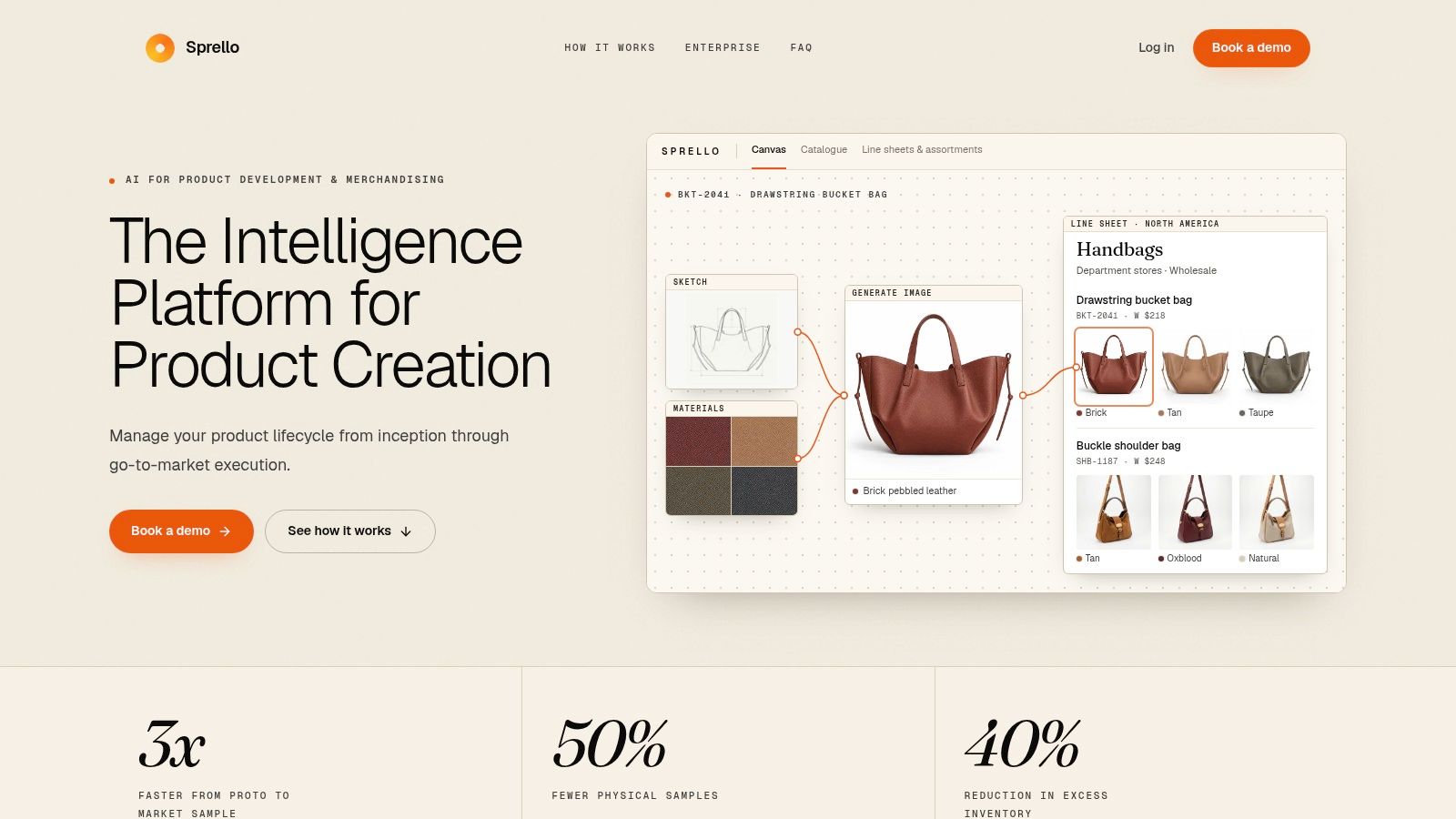
Line sheets can be built for every account, whether it serves North America, Europe, department stores, specialty boutiques, flagship stores, or own retail. They can show style or variant codes, material, wholesale price, and retail price. Each buyer's assortment starts from the same product information, while the mix can be reviewed as a whole. For a jewelry-focused example of buyer-facing fields and layout, see this jewelry line sheet template.
Pros
- Connected product-to-presentation workflow: visuals and product details move from the catalog into line sheets and buyer assortments.
- Options before sampling: teams can explore colorways and material directions with AI before making the next physical sample.
- Repeatable production: save a canvas workflow and run it again across styles or variations, with quality decisions built in.
- Enterprise controls: Sprello is SOC 2 compliant. Designs, sketches, and brand IP are encrypted at rest and in transit, with strict data isolation between workspaces. Customer designs, sketches, and uploads are never used to train Sprello's or anyone else's models. Role-based access controls help teams manage access to accounts and data.
Cons
- Pricing is not public: a sales demo is arranged after the team shares its catalog size and use case. The walkthrough can be adapted to its workflows.
- It complements PLM and planning suites rather than replacing them: it does not handle tech packs, BOMs, pattern making, demand forecasting, or open-to-buy.
- Merchandising teams still own the numbers: the catalog is only as accurate as the product data feeding it.
Website: sprello.ai
2. ModaFlow
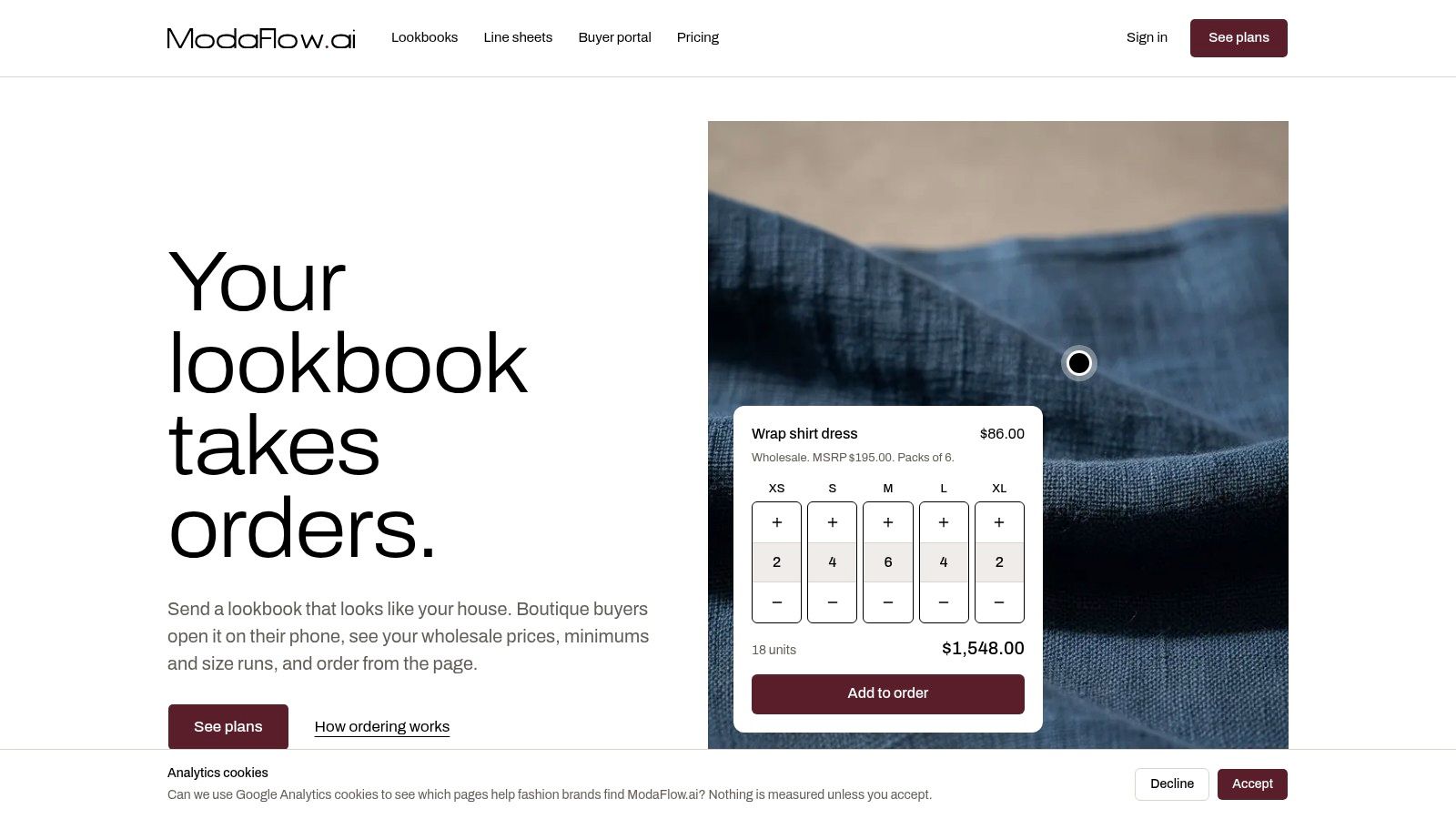
ModaFlow combines line-sheet presentation with wholesale order capture. Brands can build line sheets and lookbooks from a product catalog, share them as links or PDFs, and let buyers order through a shoppable version. It is aimed at apparel, accessories and footwear brands that want presentations and ordering in one platform.
Keep product fields distinct from selling terms. A line sheet can list style-level details such as SKU, colorways, size range, material composition, wholesale price, MSRP, MOQ, case pack and delivery dates. Season, order dates, payment terms, shipping terms and returns belong at the document level. Grouping styles by category, season or delivery window helps keep a large range readable (line sheet format specification).
What it covers
- Catalog to sheet: build presentations from stored product records rather than starting with a fresh file each season.
- Sharing: send links to buyers who browse on a phone, or PDFs to those who print.
- Buyer portal: buyers can browse, order and reorder in one place.
- Operations: manage wholesale orders, invoices and shipping workflows.
Pros: Presentation and wholesale ordering sit in the same product. ModaFlow publishes entry-level monthly plans and a free trial; check its site for current rates and terms before comparing costs.
Cons: ModaFlow is not a retailer-discovery marketplace or a DTC storefront. If you only need a downloadable PDF, its ordering features may add cost without solving a problem you have.
Website: ModaFlow
3. LINESHEET
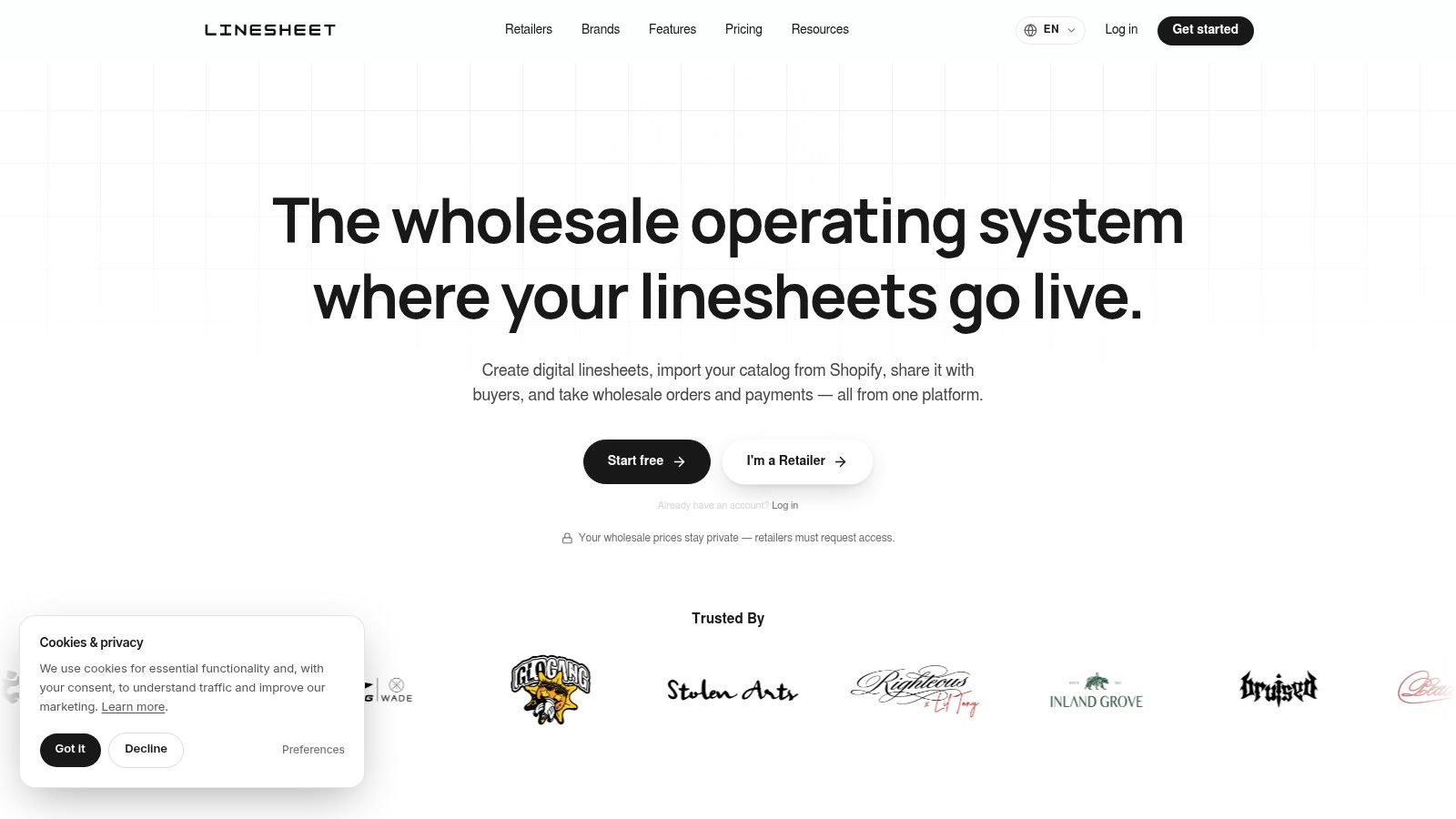
Say you sell 30 styles a season to independent boutiques, and half those buyers won't create an account just to see prices. LINESHEET is built for that pattern: digital line sheets shared by link or QR code, ordering open to buyers without accounts, and retailer approval controls that keep wholesale pricing behind a gate.
The platform layers payments, shipping, Shopify syncing and AI sales features on top of the sheet itself. A free plan covers up to five products, while the paid Pro and Scale tiers add team access, lower fees and the AI tools.
If you're still defining the document itself, what is a line sheet covers the fields and the order they appear in.
Strengths worth noting
- Low entry cost: a free tier that suits a first season or a small catalog.
- Frictionless buyer access: ordering without an account removes the most common drop-off.
- Price gating: approving retailers first is good discipline, not bureaucracy.
Limits: the free plan is capped by product count, several capabilities sit behind paid tiers, and the product is built around wholesale transactions rather than assortment planning or creative production. If the sheet has to be a designed selling document, the visuals come from somewhere else.
Website: LINESHEET
4. Brandboom
Brandboom supports several ways to present a wholesale collection: shareable links, iPad presentations in the showroom, and PDF exports for buyers who prefer a file. Viewing insights show who opened a presentation and what they clicked. Buyers can view and order without creating an account.
A buyer-ready line sheet needs clear product identifiers and terms. Include an image, style number or SKU, product name, materials, available colors, size run, wholesale and suggested retail prices, case pack or prepack information, minimum order quantity, and delivery window. Keep the SKU consistent with order forms and invoices, and specify ship and cancel dates, as Brandboom's line sheet guide recommends.
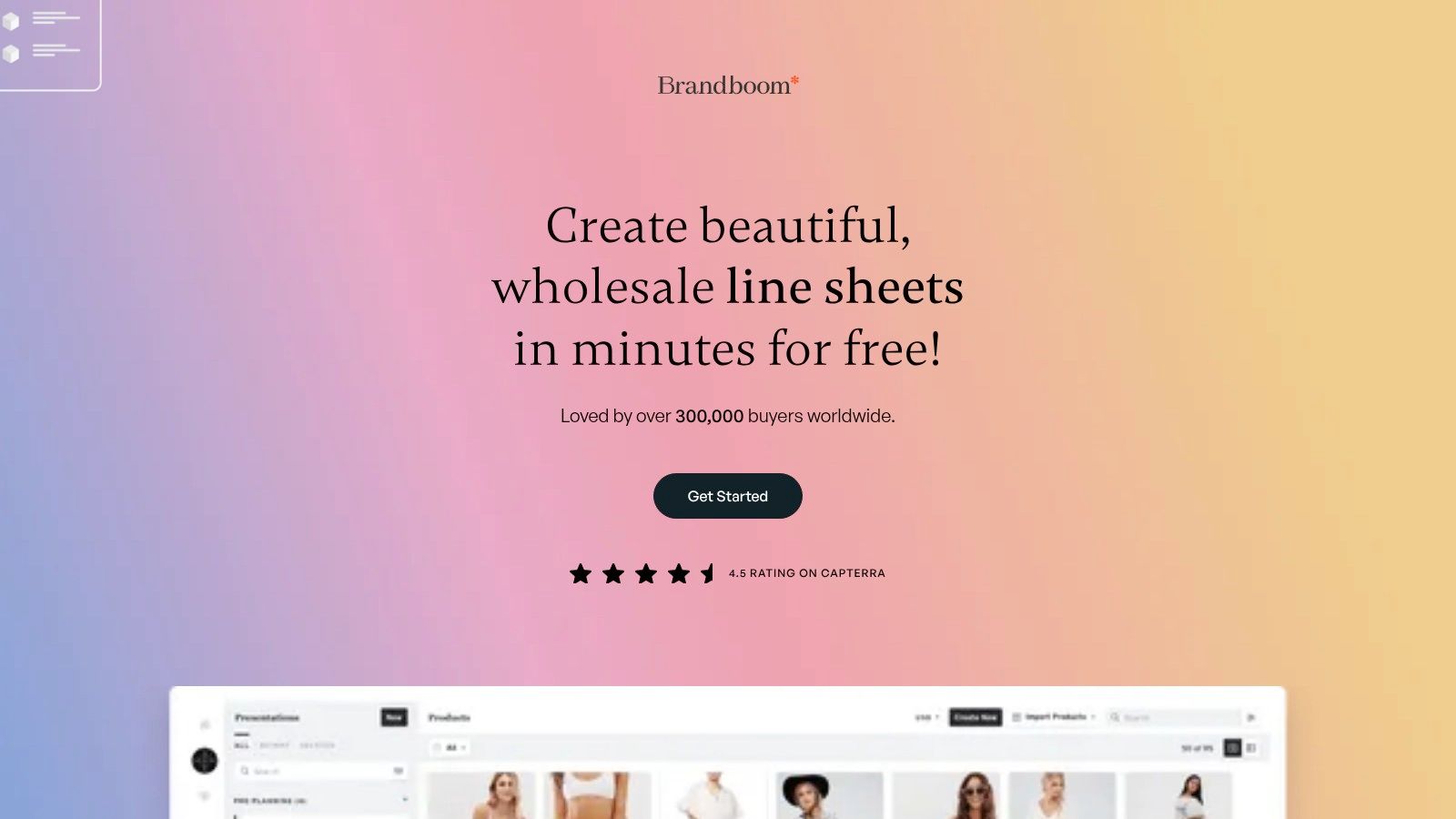
Commercial terms to check: Brandboom offers a free account for creating products and presentations. The available pricing and contract terms should be confirmed with the vendor before budgeting. For a brand testing wholesale for one season, commitment length can matter as much as the monthly cost.
Website: Brandboom
5. JOOR
JOOR is the network play in this list, and the network is the product. The platform reports more than $120 billion in wholesale transactions processed, more than 700,000 retail buyers across 150 countries, over 2.5 million brand-to-retailer connections, and 17% year-over-year growth in transaction volume, all platform-reported figures rather than industry totals (JOOR for brands).
Line sheets sit inside virtual showrooms, so a buyer appointment can move from a story to a style to an order without leaving the app. Reporting, payment options and ERP integrations are part of the package, and the retailer directory is the piece most brands underestimate: it turns a presentation into outreach.
Pricing is quote-based across Starter, Pro and Enterprise packages, so a small brand can't budget from the website alone. For teams that need campaign imagery alongside the sheet, how to make a lookbook covers sequencing images before product detail.
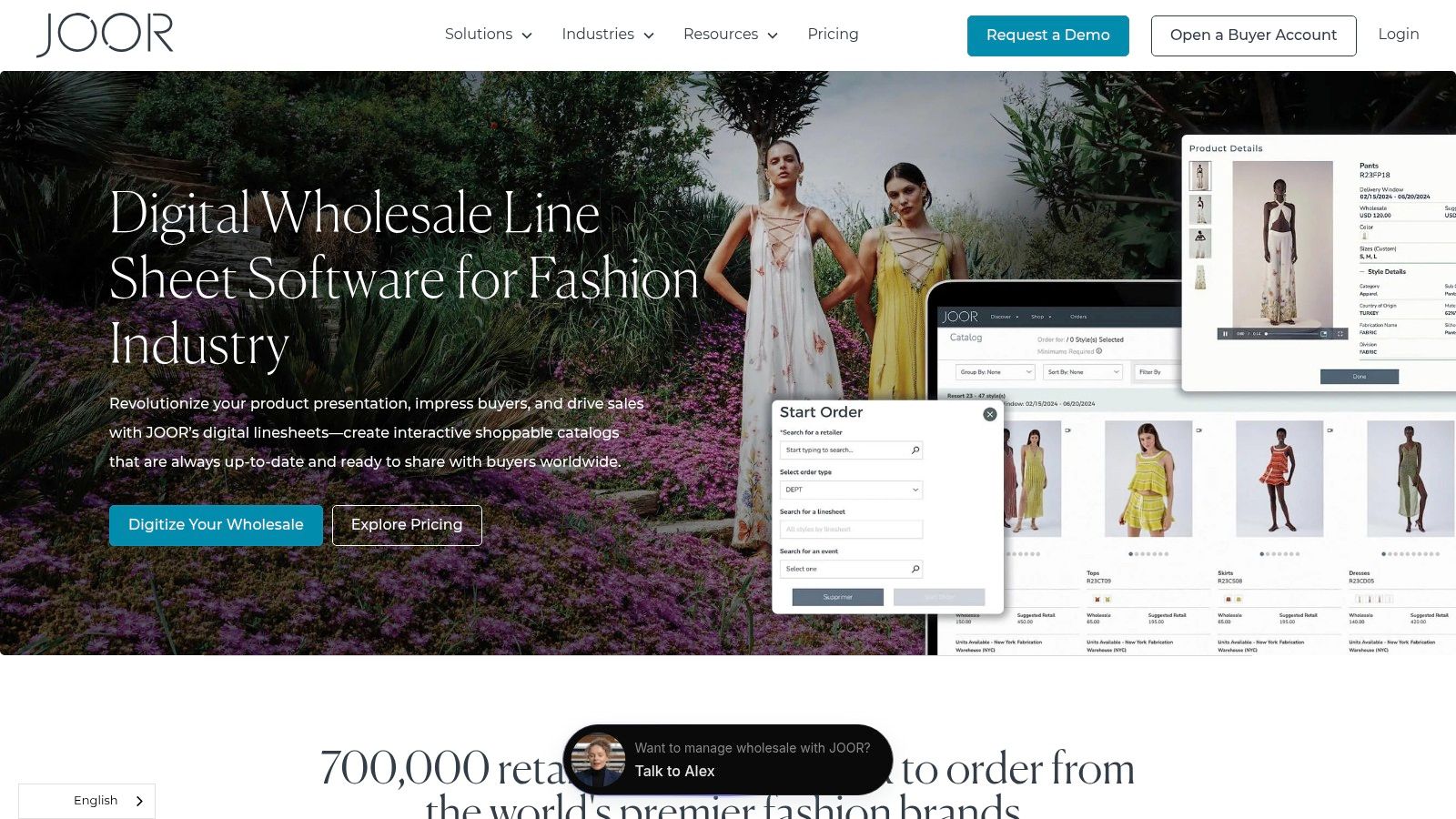
The network earns its cost when you're actively opening accounts. If your buyers are already locked in, you're buying reach you won't use.
Website: JOOR line sheet software
6. NuORDER
NuORDER's line sheets are interactive rather than print-first. Buyers review a collection, build an order and collaborate with the brand team inside the same buying experience, with inventory updates, merchandising collaboration and integrations running underneath.
The category has moved faster than most merchandising teams assume. In 2024, 75% of fashion brands surveyed said they used B2B software to support wholesale operations, a figure published by Glossy and drawn from NuORDER's 2024 State of B2B Commerce Report, which puts the remaining quarter of brands on spreadsheets, email and shared drives.
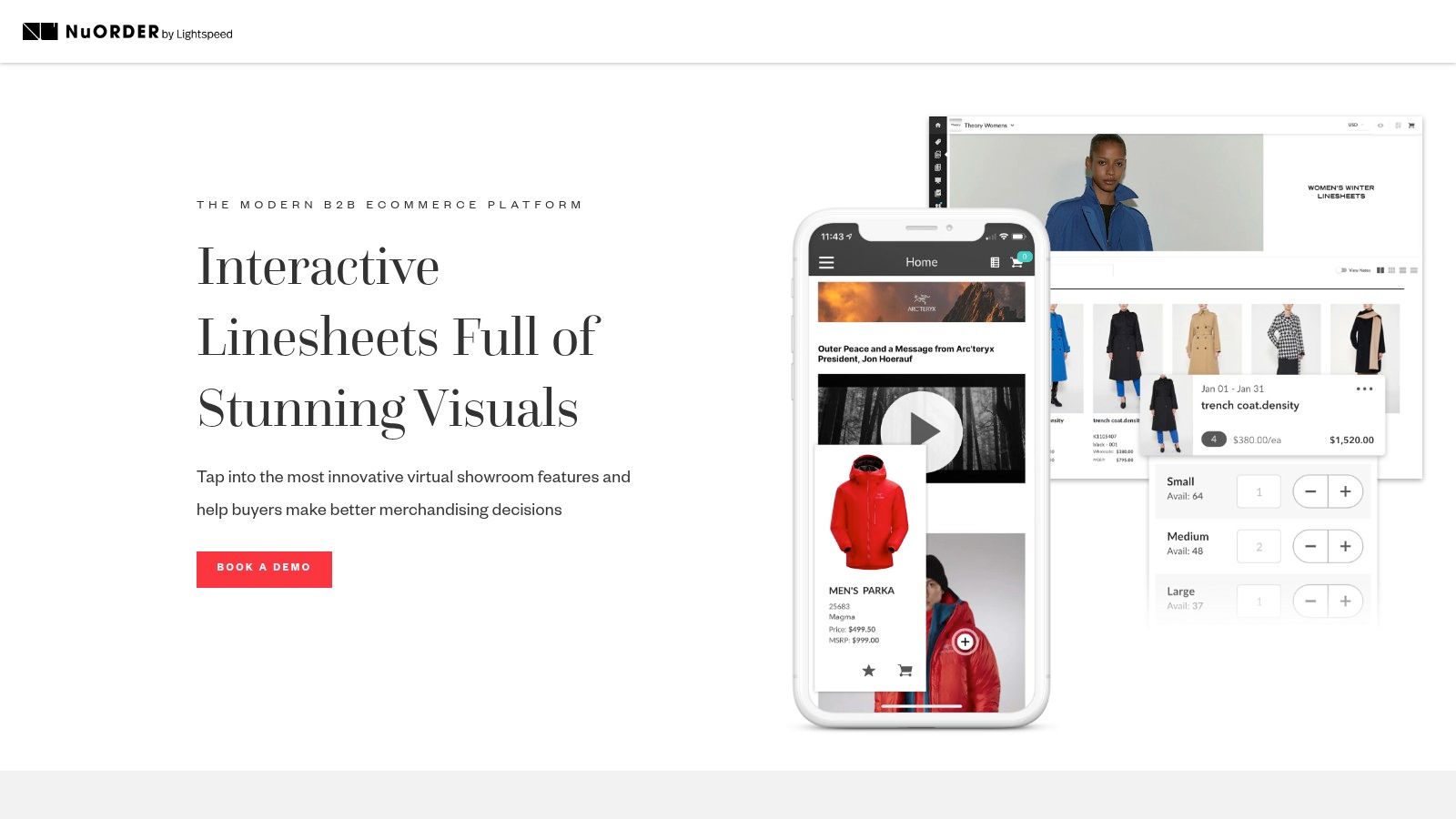
What works: customisable sheets, richer media in the presentation, and order management that stays connected to catalog data instead of drifting from it. What to check: pricing isn't listed on the product page, so book a demo and ask directly what the annual commitment and renewal terms look like. If your team only needs a clean PDF export, this is more platform than the job requires.
Website: NuORDER line sheets
7. RepSpark
RepSpark treats the line sheet as a live view of data rather than a document you rebuild every season. Templates pull from ERP or catalog data, display buyer-specific pricing and current inventory, and let the buyer order in the same place. The vendor builds templates for apparel and adjacent categories such as golf, swim, outdoor and performance.
Live data solves the failure that costs merchandisers the most: a sheet quoting a price or availability that changed two weeks ago. Once a buyer catches one stale number, every number after it gets questioned.
Practical rule: if a line sheet can't be traced back to a system of record, treat every publish as a reconciliation task, not a design task.
Where it bites: pricing is available by demo and quote, and ERP integration plus implementation is real setup work, with support for systems such as NetSuite, SAP and Shopify. Teams of two or three usually find the configuration overhead heavier than the benefit.
Website: RepSpark digital line sheet software
8. ApparelMagic
ApparelMagic is a full apparel business system, and line sheets are one output of it. Product costing, raw materials, manufacturing, sales orders, inventory and wholesale ordering through a customer portal all run in the same place, so a style created for production already exists when sales builds a sheet.
That's the appeal for a brand that has outgrown a standalone presentation tool. No second database, no re-keying prices, no argument about which file is current on a Tuesday morning.
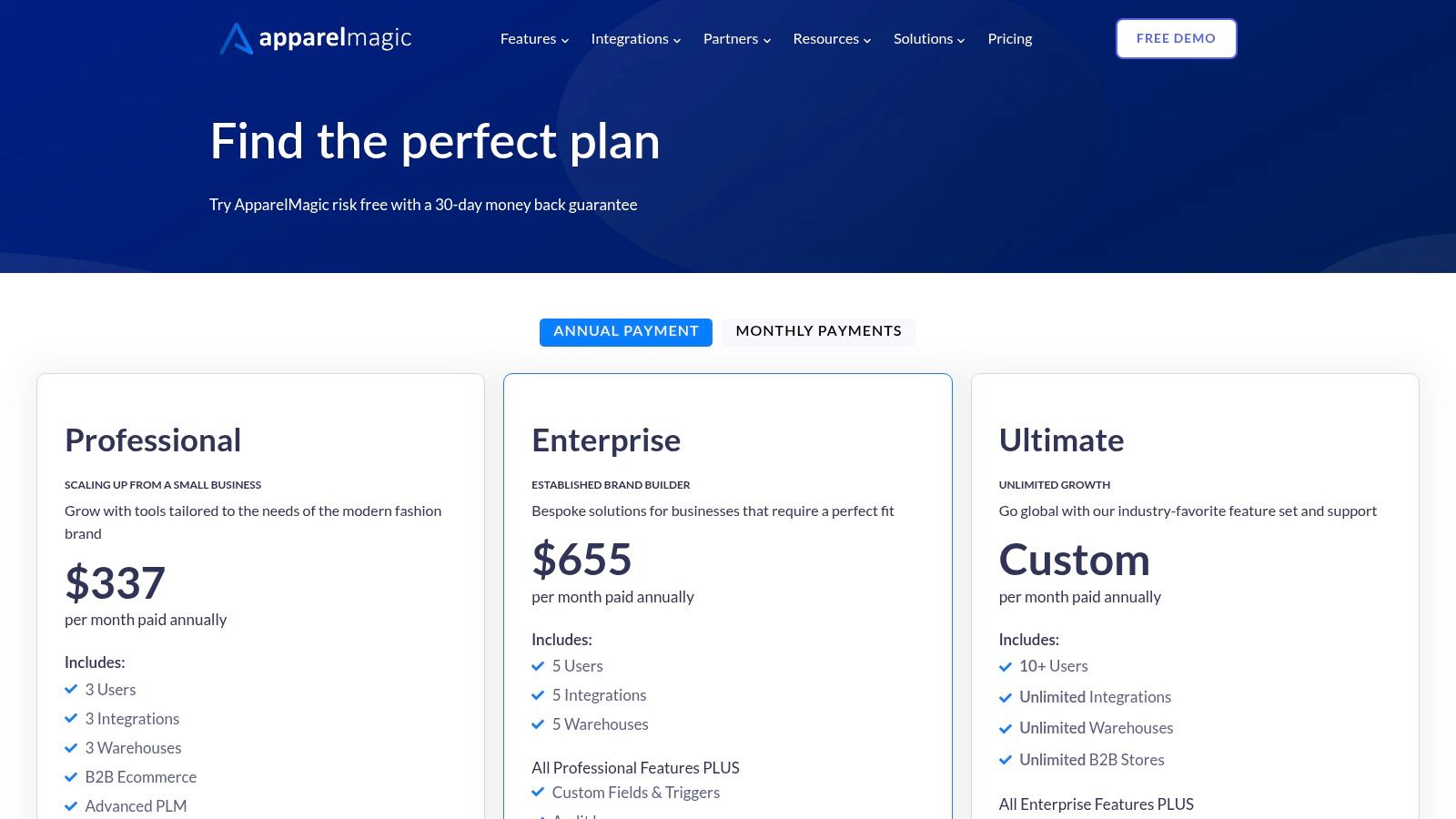
Pricing is published, which is rarer than it should be. The pricing page lists sales-rep-only users at $50 per month each with monthly billing, or $40 per month each when prepaid for the contract term, while the full platform price and which plan includes specific line-sheet and B2B functions should be confirmed with the vendor (ApparelMagic pricing).
Trade-offs: it's a management system rather than a lightweight editor, so someone has to own setup and data discipline. Designers who want to lay out one beautiful sheet will find it heavy, and the B2B tier is worth mapping to your actual sales model before you commit.
Website: ApparelMagic
9. Techpacker
Techpacker generates line-sheet reports from information in tech packs. Images, descriptions, sizes, and color combinations carry over, reducing duplicate data entry between product development and sales.
Fashion teams still use a mix of industry software and general tools. Kōbō Labs reports that spreadsheets, email, messaging apps, and shared drives remain common alongside industry-specific technology (Kōbō Labs fashion tech adoption research).
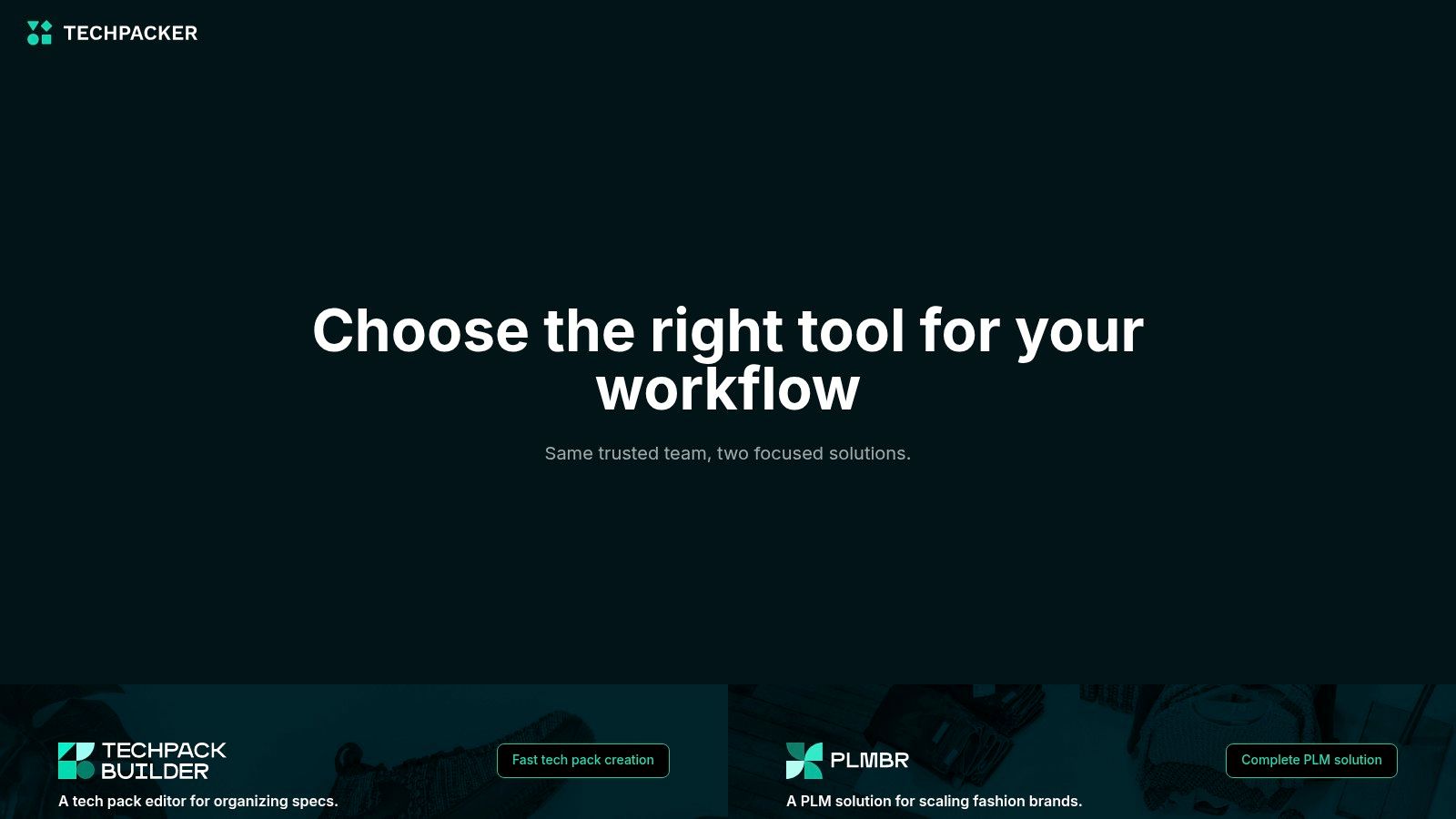
Check the plan before choosing: line sheets are listed with Techpacker's PLM Professional and Premium plans, while the entry Tech Pack Builder tier does not list the feature. Trial access is available, so build a real sheet and check that its output fits your sales process.
Website: Techpacker
10. QUOMODA
QUOMODA connects the sheet to the warehouse. Buyers order from a shared line-sheet link using a size-and-color matrix with delivery-drop selections, and the same system handles stock allocation, production, fulfillment and invoicing, with Shopify sync for products, variants, pricing and stock.
The Brand plan is listed at €89 per month with an annual-billing discount, additional team seats are priced separately, and buyer accounts are described as free and unlimited. That last point matters if your retail list keeps growing while your team doesn't.
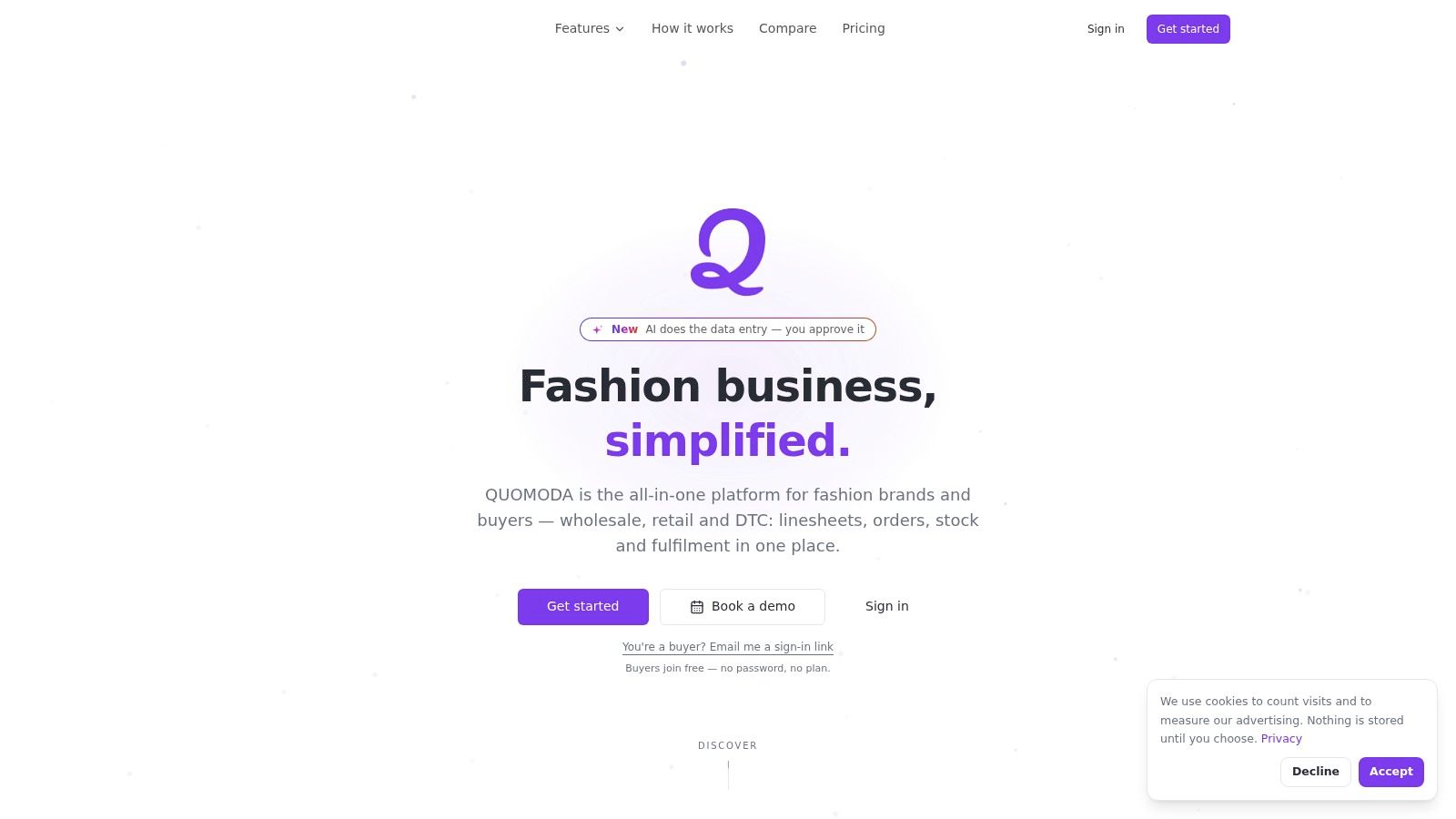
Best fit: brands shipping from their own stock who want to follow an order from sheet to invoice without exporting anything. Weak fit: a design-led label that needs a beautiful document and nothing else, because the operations layer is the whole point. Confirm the integration path against your specific sales and production setup.
Website: QUOMODA
Line sheet software compared
| Tool | Primary focus | Published pricing | Buyer ordering | Best for |
|---|---|---|---|---|
| Sprello | AI product development, merchandising, and buyer-ready assortments | Not public; book a demo | Buyer-specific assortments; ordering details not specified | Recommended for fashion, beauty, and lifestyle teams connecting product development to sales materials |
| ModaFlow | Digital line sheets, lookbooks, and wholesale management | From $99/month or $79/month billed annually; 14-day trial | Buyers can browse, order, and reorder through a portal | Brands seeking presentation tools with wholesale ordering |
| LINESHEET | Digital line sheets and wholesale transactions | Free for up to five products; paid plans available | Direct ordering, including without buyer accounts | Independent brands wanting simple wholesale ordering |
| Brandboom | Digital catalogs, line sheets, and wholesale marketplace | Free account; paid plans from $50/month, typically with a 12-month contract | Buyers can order through shared line sheets | Brands seeking shareable presentations and buyer insights |
| JOOR | Fashion wholesale, virtual showrooms, and retailer discovery | Quote-based | Buyers can place wholesale orders | Fashion brands seeking retailer-network tools and wholesale sales features |
| NuORDER | B2B commerce, digital catalogs, and buyer collaboration | Not public; request a demo | Buyers can build orders and collaborate with brands | Brands with complex wholesale and merchandising needs |
| RepSpark | Wholesale e-commerce with connected line sheets | Demo and quote | Buyers can order with buyer-specific pricing and inventory | Wholesale teams needing synchronized inventory and ERP data |
| ApparelMagic | Apparel business management and wholesale operations | Sales-rep-only users: $50/month each, or $40/month each prepaid for the contract term; full platform pricing to confirm | Buyers can order through a customer portal or line sheets | Apparel businesses connecting line sheets to inventory and operations |
| Techpacker | Fashion product development and PLM | $95 or $125 per user/month for qualifying plans, billed annually | Buyer-ordering functionality not specified | Teams generating line sheets from tech-pack data |
| QUOMODA | Wholesale line sheets and operations management | €89/month for the Brand plan; annual discount available | Buyers can order by size, color, and delivery drop | Brands combining line sheets with stock, production, and fulfillment workflows |
How to Choose and What to Do Next
Decide the job before the tool. A shareable presentation is a design and data problem. An ordering channel is an account, pricing and payment problem. A connected workflow is a governance problem, and it's the one that determines whether a sheet still matches your ERP in week six of a selling window.
Wholesale deserves the attention. In 2024, brands reported that an average of 60% of their revenue came from wholesale, a figure TheIndustry.fashion published while summarising NuORDER by Lightspeed's 2024 State of B2B Commerce report. That share is why a slightly better buying experience, or a price that's 4% wrong on 200 styles, matters more than the font choice.
Next, write down what product data each tool needs before you can publish anything. Style number, colorway, size run, material, wholesale price, retail price, MOQ and delivery window are the minimum. If a vendor can't tell you where each field originates and who owns corrections, you'll be reconciling by hand every season.
Before you sign: get the renewal terms, the notice period, the overage rules and what happens to your product data if you leave, in writing.
Pricing deserves its own check. Quote-based platforms hide the cost until a demo, and published entry prices often exclude onboarding, integration work or seats.
Frequently Asked Questions About Line Sheet Software
Is published pricing a reliable signal of total cost? Rarely. A published entry price tells you where negotiation starts, not what year one costs once integration, seats and onboarding are included. Ask for a written three-year view on any quote-based platform before you compare it to a monthly list price.
Do buyers need an account to view a line sheet? Some tools require it and some don't. LINESHEET and Brandboom both allow ordering without an account, which reduces drop-off from smaller boutiques. Larger platforms usually route buyers through an account because order history and pricing tiers depend on it.
Where should line sheet data come from? From a record you already trust, ideally the same one your order forms and invoices use. If the sheet is the only place a price or availability lives, it will drift within weeks.
Does the tool need to match my category? Presentation needs vary more than vendors admit. Jewelry buyers want detail and scale, beauty buyers want ingredient and hero imagery, home buyers want room context and dimensions. A generic template will look generic in all three.
Does Sprello replace PLM or planning software? No. Sprello handles the concept-to-assortment flow: product visuals, a shared catalog, line sheets and buyer-specific assortments. It complements PLM and planning suites rather than replacing them, and it doesn't do tech packs, BOMs, pattern making, demand forecasting or open-to-buy. If your team also needs storefront or wholesale portal features, look at company store software features before deciding where the catalog should live.
Book a demo at sprello.ai and bring one of your own categories. The walkthrough can use your styles, so you can see your catalog, canvas, line sheets and buyer assortments rather than a demo range built for someone else.
Sprello takes the product images, material and colorway options, and style details your team already develops and carries them into one shared catalog, so the wholesale line sheet and each account's assortment come from the same source instead of a rebuilt file. The demo is a walkthrough on one of your own product categories, which is the fastest way to see whether your current line sheet process is a document problem or a data problem. Visit Sprello to set that up.
Related
More to explore
Fresh reads
Jewelry Line Sheet Template: Fields, Steps and Compliance
Build a jewelry line sheet template with the fields, imagery, minimums and compliance details wholesale buyers check before they order.
9 Types of Fashion Silhouettes for Merchandisers in 2026
Nine types of fashion silhouettes explained with defining shapes, styling uses, and how each affects fit, sampling, and collection design.
How to Create Fashion Mood Board: A Step-by-Step Guide
Learn how to create fashion mood board files that guide design, merchandising and buying, with steps, a translation table and a review checklist.