November 22, 2026
Wholesale Ordering Platform: 10 Tools Compared for 2026
Compare 10 wholesale ordering platforms for fashion, beauty, jewelry and home brands: pricing, retailer reach and order workflow fit for 2026.
A wholesale ordering platform is software where brands present collections, take retail buyer orders, and manage reorders through a marketplace, branded storefront, or rep-assisted order book. The right choice depends on where your orders start; Sprello fits upstream, helping teams prepare collections and buyer presentations rather than take orders.
You're preparing for market week, but the buyer's assortment is in a spreadsheet, the latest images are in a shared folder, and a rep has emailed a revised order against yesterday's prices. Another portal won't fix that unless you're clear about which part of the workflow needs replacing.
Published 2026
Disclosure: Sprello is our product. It is AI for product development & merchandising. From product concept to buyer-ready collection. Canvas turns sketches, CADs, materials, and references into photoreal visuals and colorways through saved workflows, connected to a shared product catalog, line review, wholesale line sheets, and separate buyer assortments per account or channel. It complements PLM and planning suites, doesn't replace them, and isn't ranked as an ordering platform.
The practical groupings are marketplaces and buyer networks such as NuORDER, JOOR, and Faire; brand storefronts and ecommerce extensions such as Brandboom, Shopify B2B, and SparkLayer; and rep-led or enterprise wholesale such as RepSpark, Elastic Suite, Pepperi, and MarketTime. These groups overlap, but they expose the buying decision better than feature counts.
Keep the back office separate from the selling interface. SIX ERP's wholesale distribution guide provides useful context for that distinction: order capture is only part of distribution.
1. NuORDER by Lightspeed for Network-Based Collection Selling?
NuORDER by Lightspeed combines a retailer network with brand-side collection presentation, ordering, and assortment tools. It belongs on the shortlist when you manage substantial seasonal collections and want buyers to work from visual assortments rather than emailed product lists.
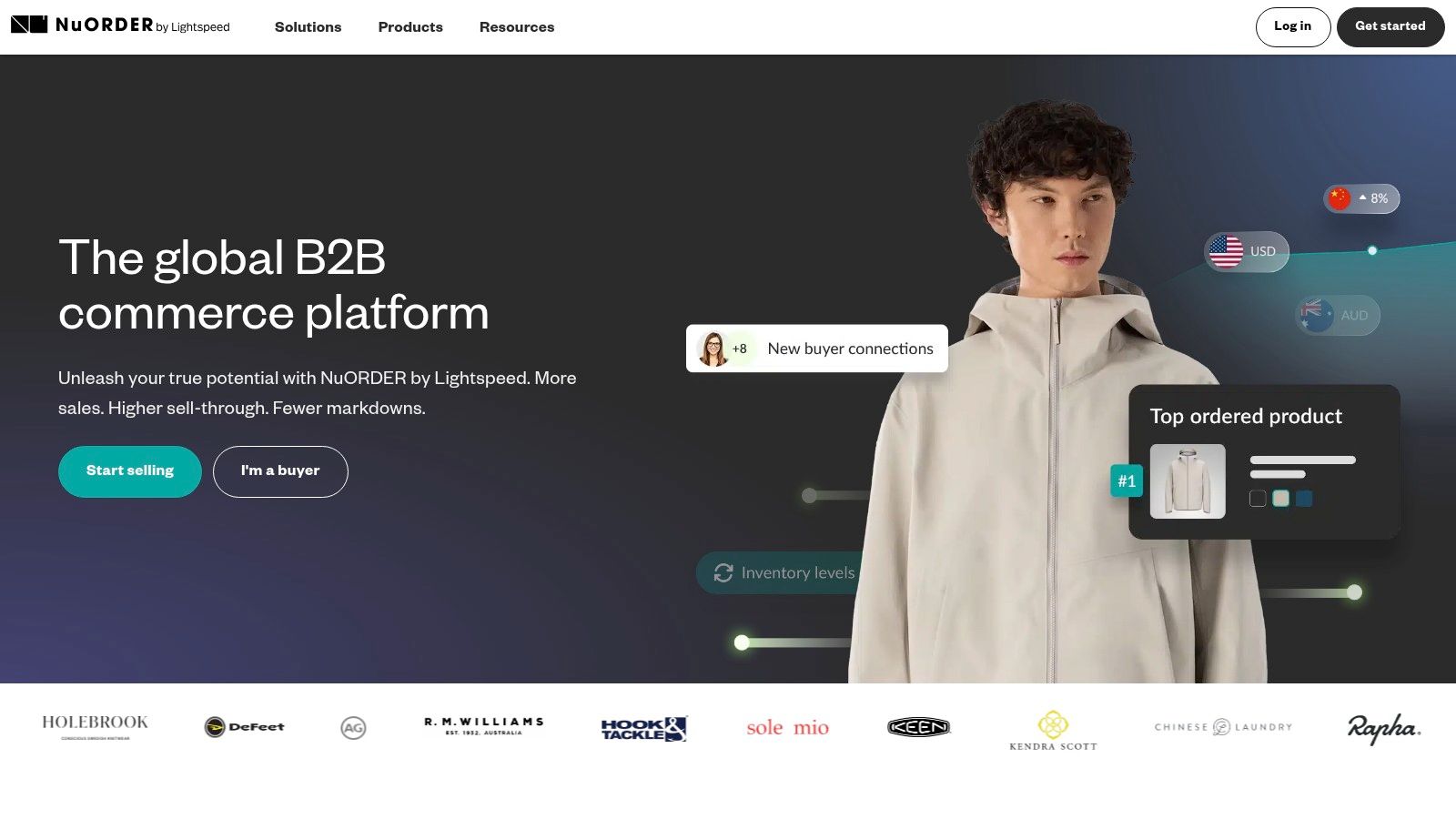
Branded wholesale portals, digital line sheets, and virtual showrooms let merchandising teams organize the sell-in presentation. Order management and payment processing connect that presentation to purchasing, while visual assortment tools support discussions about the collection's overall balance.
What Changes in Daily Work?
- Collection presentation: Buyers can review a structured assortment rather than reconstructing it from attachments.
- Retailer access: Buyer accounts are free for retailers ordering from participating brands.
- Enterprise scope: Integration and multilingual capabilities make it relevant to brands operating across markets.
The important distinction is between an attractive presentation and an order-ready document. A wholesale line sheet needs clear product identifiers, variants, prices, and delivery information, regardless of which showroom displays it.
Pricing disclosure: NuORDER lists paid brand plans starting at $600 per month, with pricing dependent on business needs, according to its website linked above. That starting point isn't an implementation budget.
I'd shortlist NuORDER when target retailers already work in its network and the team needs visual merchandising alongside order capture. I'd be more cautious when the requirement is a straightforward reorder portal, because broader assortment and enterprise capabilities may add complexity without changing how buyers purchase.
2. JOOR for Fashion Buyer Discovery?
JOOR is a fashion-focused B2B platform for presenting collections, discovering retail partners, and managing wholesale orders. Its clearest fit is apparel, accessories, and luxury selling where buyer relationships and seasonal collection presentation matter together.

JOOR Discover provides a discovery route, while digital line sheets and virtual showrooms support the actual selling conversation. Order history, order status, retailer reorders, payments, reporting, and ERP/API integrations extend the workflow beyond the appointment.
Where Does It Earn Its Place?
Say a buyer wants a narrower accessory assortment than the full collection. The useful test is whether the merchandiser can present that selection clearly, preserve the commercial details, and let the buyer return to it without another email exchange.
A wholesale line sheet template helps establish the information standard before you configure the platform. Otherwise, the team risks moving inconsistent product records into a more polished interface.
A buyer network is valuable when it contains the retailers you need, not simply because it exists.
Pricing disclosure: Retailers can create free buyer accounts; brand subscriptions are paid and quote-based. The absence of a public brand subscription price means commercial evaluation needs a sales conversation.
JOOR is a strong category fit for fashion-specific buyer workflows, but it isn't factory production management. Don't expect the showroom and order book to replace the systems responsible for developing products or controlling production.
Before committing, map your priority accounts against actual buyer participation. Discovery features and familiar buyer workflows are different benefits, and your business may need one more than the other.
3. RepSpark for Established Wholesale Operations?
Inventory uncertainty is a good reason to evaluate RepSpark. It combines retailer self-service with sales-representative ordering, digital catalogs, branded storefronts, customization, and ERP connections for apparel and lifestyle wholesale.
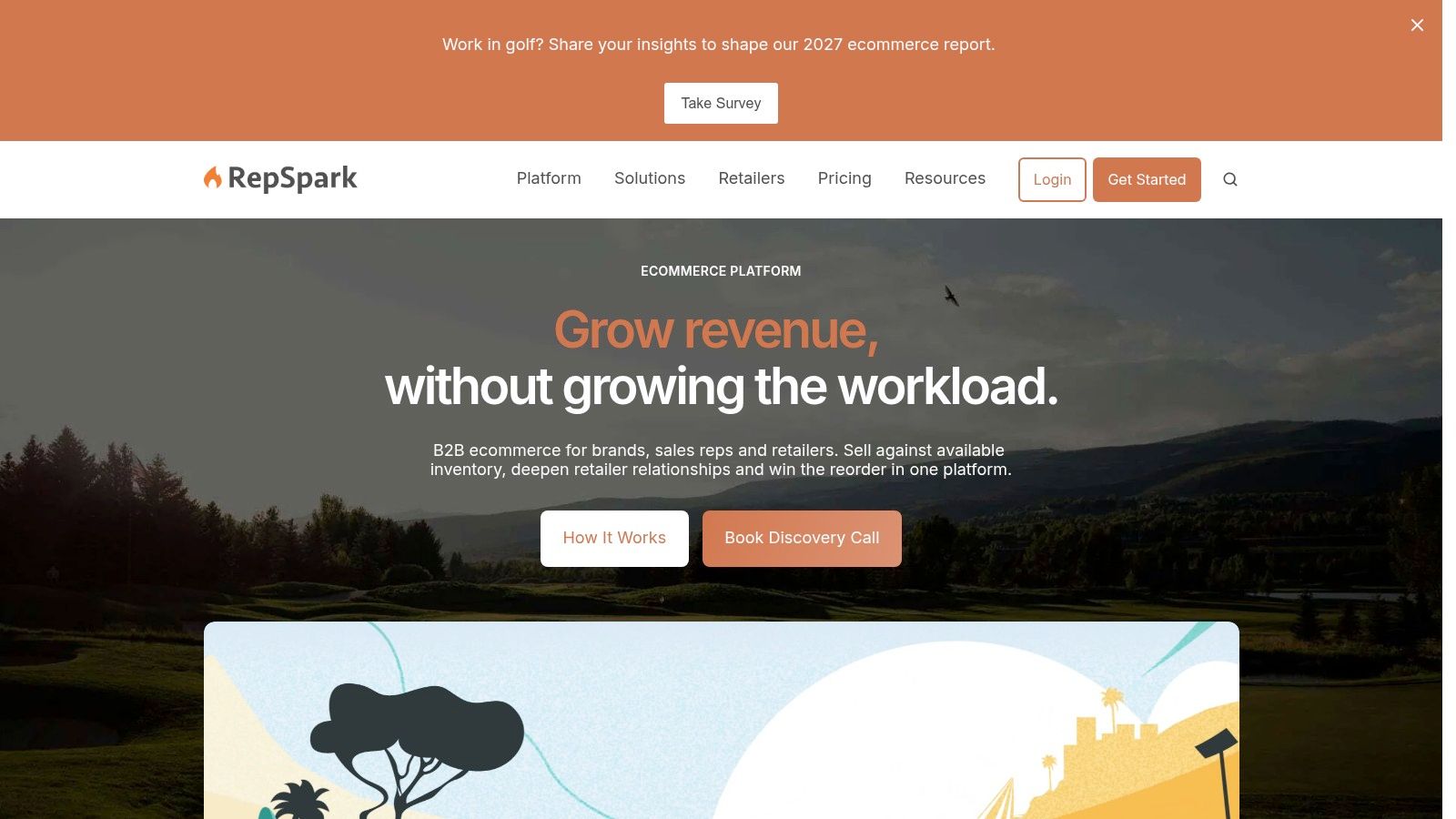
In RepSpark's survey and platform-data study of lifestyle-apparel brands, 80% of respondents said inventory visibility was a struggle, according to its State of B2B Wholesale Ecommerce report. That finding supports testing stock accuracy before spending the demonstration on showroom styling.
Test the Inventory Promise
- Availability: Put an immediately available item, a preorder, and an unavailable variant into the same proposed order.
- Account context: Confirm that the buyer sees the correct assortment and commercial terms.
- Rep handoff: Have a representative start an order and demonstrate how the retailer continues it.
- Operational scope: Review multi-warehouse, multi-currency, multilingual, ERP, and Shopify requirements against your actual setup.
RepSpark's custom assortments and virtual showrooms can help reps sell a considered range rather than expose the entire catalog indiscriminately. Retailer accounts are free, which removes a buyer-side subscription obstacle, but doesn't resolve onboarding or data-quality work.
Pricing disclosure: Confirm subscription, implementation, and integration scope directly. A connector name doesn't establish which records move, how frequently they update, or who resolves failures.
This is a better fit for an established wholesale operation than a brand seeking a lightweight store add-on. It won't make unreliable inventory records trustworthy on its own; the implementation still needs clear ownership of stock, allocations, and order exceptions.
4. Elastic Suite for Collaborative Assortment Planning?
Elastic Suite is worth considering when the order starts with a merchandising discussion rather than a buyer searching for known SKUs. Its catalogs, custom collections, whiteboarding, and ordering tools support account-specific and seasonal assortment planning.
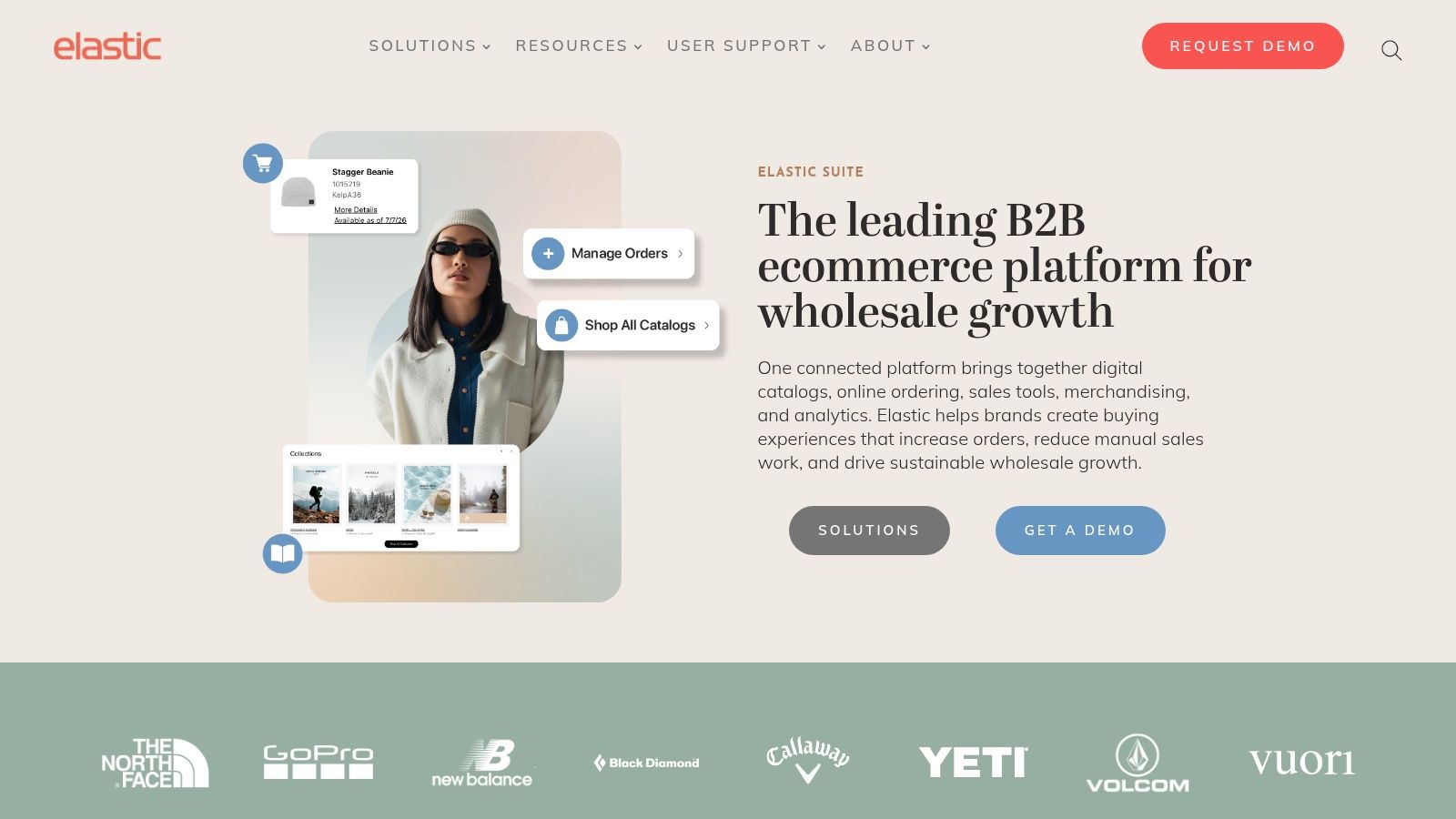
For a footwear or home assortment, the buyer may need to see how products work together before deciding quantities. Elastic's Whiteboard tool supports visualizing products in store or display contexts, while catalogs can contain imagery, video, panoramic product views, and three-dimensional renderings.
Separate Presentation From Product Creation
- Selling support: Custom collections help organize a particular customer's proposed buy.
- Operational follow-through: Order, shipment, invoice, and backorder tracking connect the presentation to fulfillment information.
- System connection: ERP integration belongs in the evaluation alongside the visual tools.
The trade-off is implementation breadth. A small brand taking uncomplicated replenishment orders may not need collaborative planning and extensive presentation capabilities.
Pricing disclosure: Pricing is demo-based and isn't clearly listed on the platform page. Request a scoped commercial proposal that separates software access from implementation and integration responsibilities.
I'd use the demo to build an actual account assortment, then change a delivery date or remove a variant. Watch whether the presentation and order remain consistent.
Elastic's visual selling tools don't replace upstream creative-production workflows. They help teams present and organize products for a buy; they shouldn't be treated as a substitute for developing the collection or maintaining its underlying product records.
5. Brandboom for Order-Enabled Line Sheets?
Brandboom sits close to a familiar workflow: build a product presentation, send the buyer a link, and take the order from that presentation. It's a practical candidate when static PDFs have become the problem but a broad enterprise rollout would be excessive.
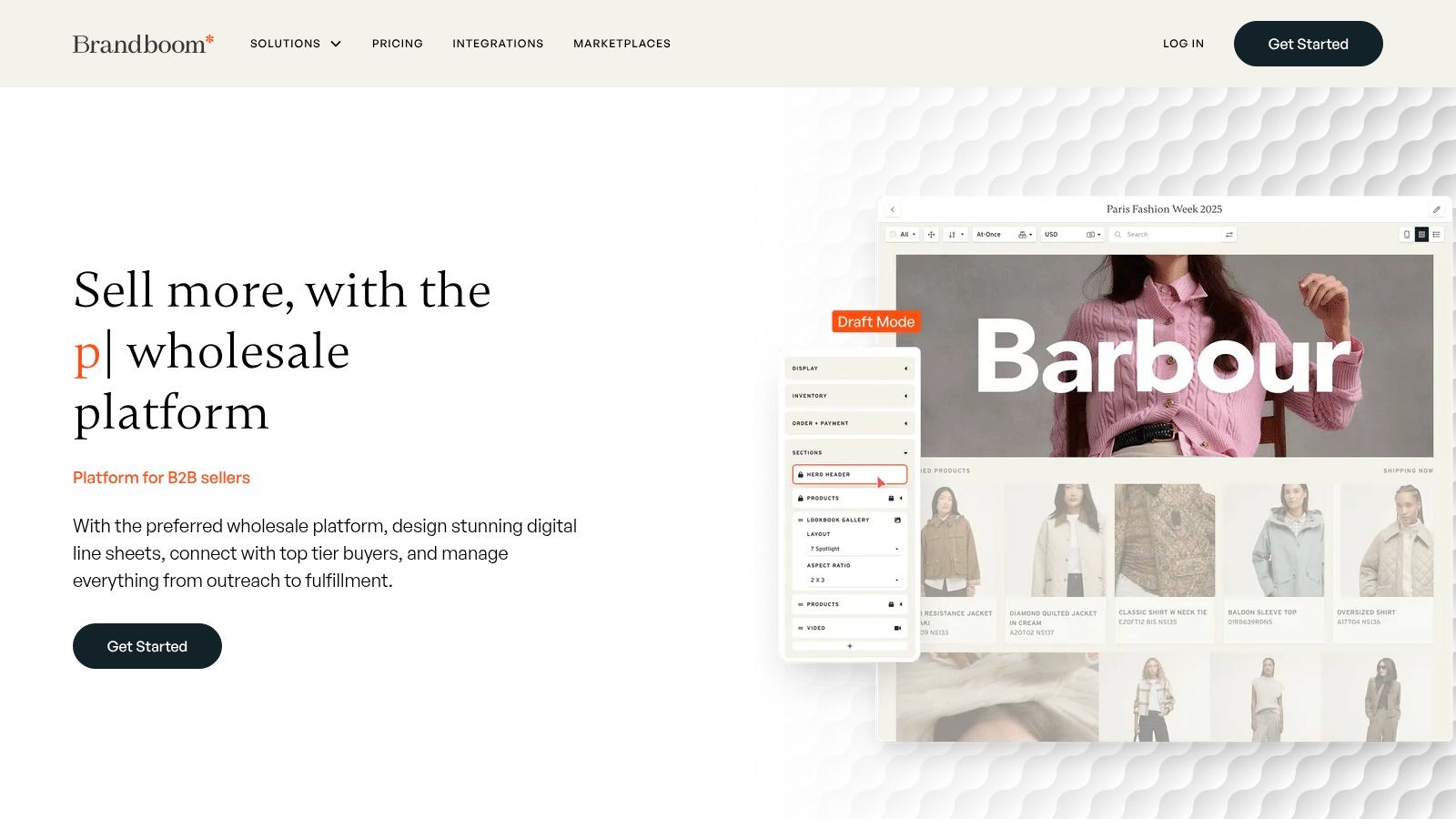
Customizable presentations support product imagery and video, and shared links update when product information changes. Mobile ordering and iPad presentation tools also make sense for appointments where the rep needs to move between showing the collection and recording quantities.
What Should You Compare?
A useful line sheet software comparison separates document creation from order capture. Brandboom's appeal is that buyers can act on the presentation, with orders, invoices, buyer activity tracking, and Shopify integration available on applicable plans.
- Public pricing: Brandboom lists plans from $50 per user per month billed annually, through custom enterprise pricing, on its website linked above.
- Capacity limits: Lower tiers cap active products or SKUs, so evaluate the full selling assortment rather than a small demonstration catalog.
- Buyer acquisition: It offers less retailer discovery than marketplace-oriented platforms.
The operational benefit is version control. Updating a linked presentation is more manageable than recalling an outdated attachment, provided the team controls who changes the source records.
I'd shortlist Brandboom for brands whose selling process already revolves around line sheets and direct buyer relationships. I wouldn't select it primarily to acquire new retail accounts, and I'd examine higher-tier requirements before assuming the entry price covers a large seasonal catalog.
6. Shopify B2B for an Existing Commerce Stack?
If wholesale buyers already know your brand and mostly need to reorder, Shopify B2B deserves an early look. Eligible merchants can manage wholesale alongside direct-to-consumer commerce in the Shopify admin rather than introduce another primary commerce environment.
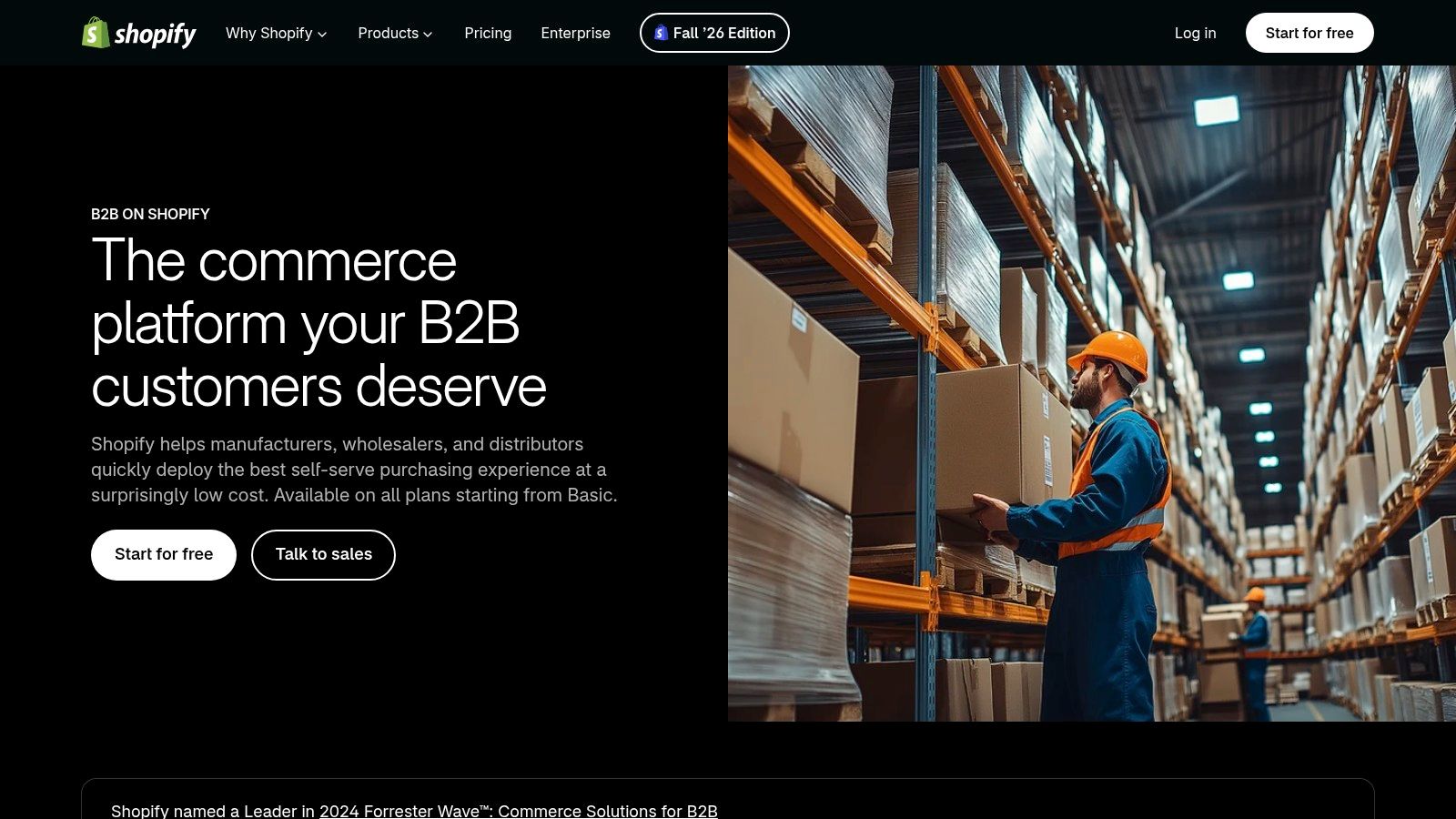
Company profiles support multiple buyers and locations, while catalogs, volume pricing, quantity rules, payment terms, invoices, and quick bulk ordering address recurring trade purchases. Self-service reordering matters particularly when the buyer knows the assortment and doesn't need a rep to reconstruct it.
Gartner research summarized by Shopify's B2B buying-experience guide indicates that 61% of B2B buyers prefer a completely representative-free purchasing experience. That supports offering independent ordering, not removing human support from negotiated or exceptional purchases.
Where Do Native Features Stop?
Pricing disclosure: B2B is included with eligible Shopify plans, but standard subscription fees apply and capabilities vary by plan. Company-specific catalogs and unlimited catalogs require Shopify Plus.
Complex prebooking, rep workflows, or multi-door buying may need apps or customization. Shopify also doesn't provide a wholesale buyer-discovery marketplace.
Practical rule: Test your hardest wholesale order, not the easiest DTC-style checkout.
For broader commerce evaluation, see how Shopify scores, then assess wholesale requirements separately. A familiar admin is an advantage, but it isn't proof that seasonal delivery windows, negotiated assortments, and account-level exceptions will work without additional configuration.
7. SparkLayer for Adding Trade Ordering to Your Store?
SparkLayer is an ordering layer for an existing ecommerce store, not a replacement storefront for every technology stack. It's particularly relevant when a brand wants to retain its current store while improving wholesale pricing, bulk ordering, and representative access.
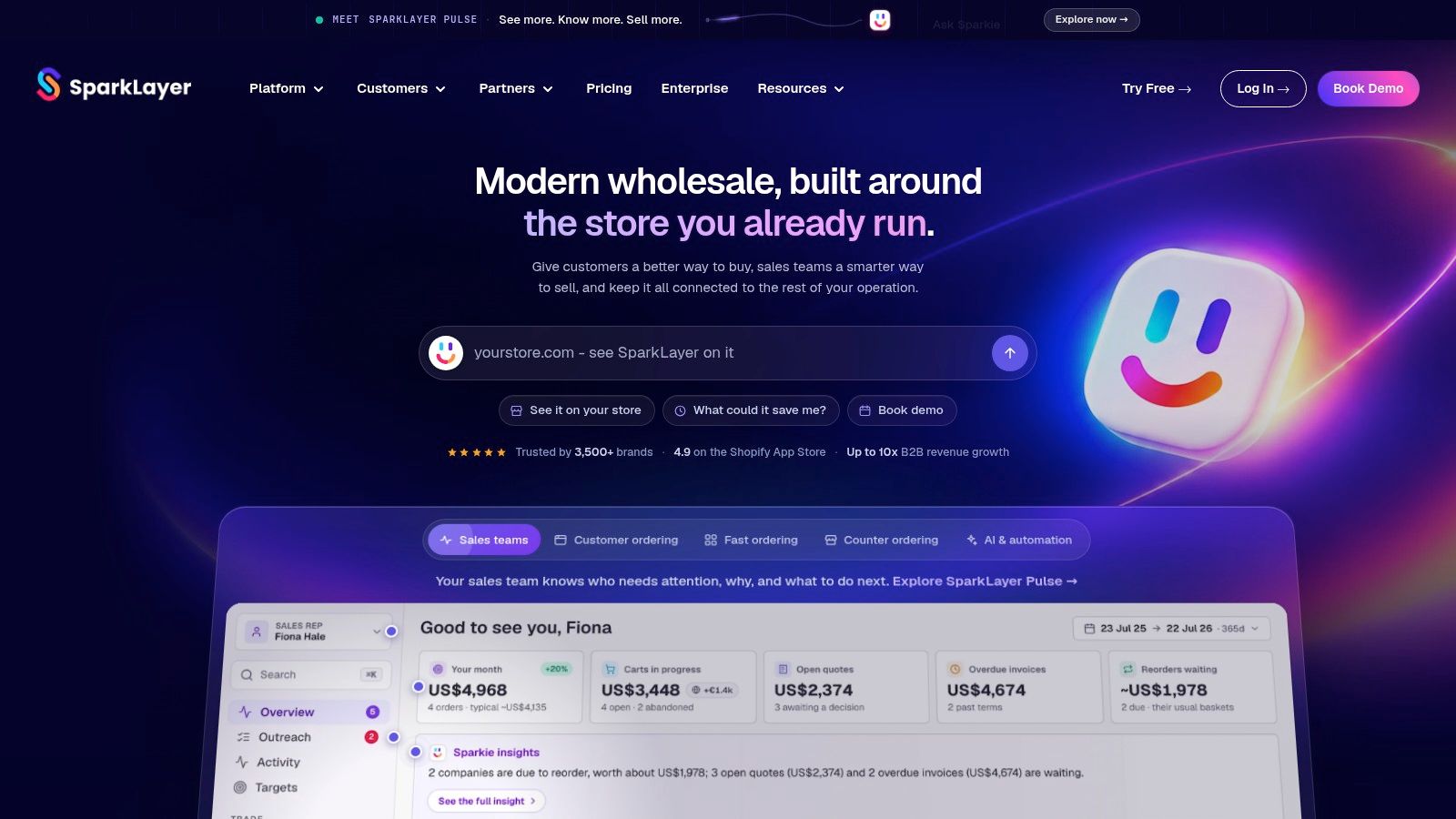
For fashion teams, the practical requirements are familiar: seasonal ranges, size runs, pack sizes, minimum quantities, and account-specific prices. SparkLayer's wholesale price lists, quick ordering, account management, and sales-representative ordering target that trade workflow.
Evaluate the Layer, Not Just the Storefront
- Platform dependency: Confirm that your ecommerce platform and theme setup are supported.
- Commercial rules: Test customer-specific pricing against the same products sold through your consumer store.
- Rep access: Have a representative place an order for a buyer account using the correct terms.
- Catalog compatibility: Check variant structures, pack requirements, and the way ERP-managed information reaches the store.
Pricing disclosure: SparkLayer lists its Starter plan at $49 per month on its website linked above. Plan limits and optional modules can change the relevant cost, so compare the required configuration rather than the starting subscription.
The advantage is avoiding a full storefront rebuild when the underlying store already works. The limitation is dependency: adding a B2B layer doesn't remove constraints in the catalog, ERP connection, or existing ecommerce implementation.
I'd compare SparkLayer directly with native B2B capabilities using the same buyer account and order scenario. Select it for a demonstrated workflow improvement, not just because its feature list is longer.
8. Pepperi for Field Sales and Distributor-Led Ordering?
Pepperi combines B2B ecommerce with mobile ordering and field sales. It's relevant to beauty and consumer-product businesses where representatives, distributors, and buyers need different routes into the same commercial process.
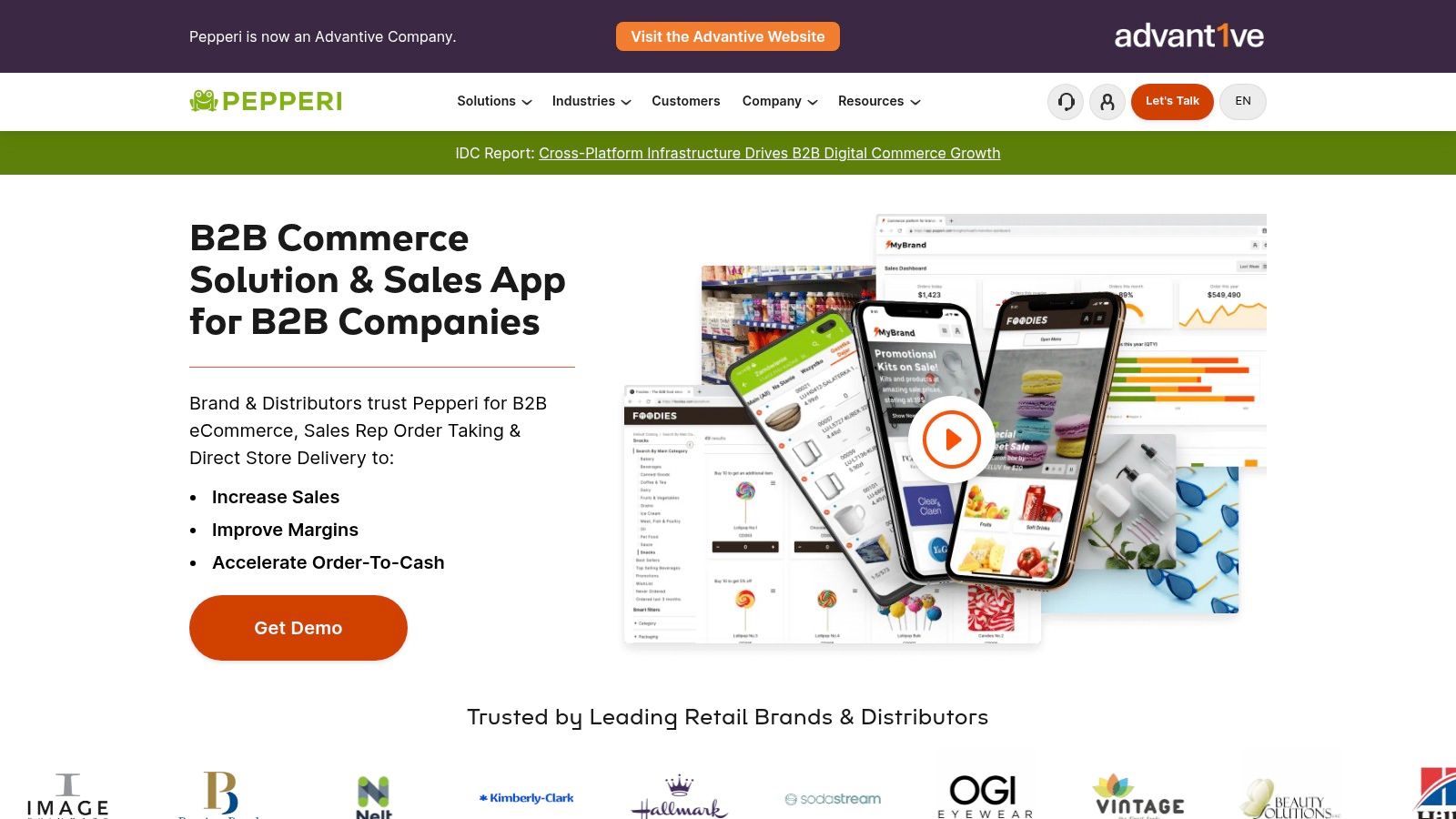
A beauty rep visiting a retailer may need account-specific prices, promotions, minimums, and a prepared order list, even without a reliable connection. Pepperi's branded web and native mobile storefronts, offline mobile access, and representative ordering address that selling model.
Put Account Rules Under Pressure
Customer-specific catalogs, price lists, promotions, bulk ordering, and multi-warehouse visibility can support varied routes to market. The demonstration should show whether those rules remain consistent when a rep edits an order and the buyer later returns through self-service.
The distinction matters because, in buyer research summarized by Sana Commerce, 33% of online B2B orders contained errors. A convincing interface isn't enough if pricing and availability change between channels.
Pricing disclosure: Pepperi requires a vendor conversation for pricing. Its breadth can involve more configuration and implementation work than a simple wholesale storefront.
The trade-off is specialization. Pepperi covers broad B2B selling needs rather than focusing exclusively on fashion collection presentation or visual assortment planning.
I'd shortlist it when field selling, account promotions, and mobile access drive the purchase decision. During evaluation, disconnect the device, create an order, reconnect, and inspect how the system handles changed stock or pricing before confirmation.
9. Faire for Independent Retailer Discovery?
Faire is a wholesale marketplace, so its main distinction is where the relationship begins. A retailer can discover a brand on the marketplace rather than arrive through the brand's own sales effort.
For jewelry, home, beauty, and lifestyle brands seeking independent retailers, that changes the evaluation. You're assessing both an ordering environment and a paid route to potential customer acquisition.
Compare Margin, Not Just Access
- Marketplace economics: Joining is free; for North American brands, Faire lists a standard marketplace commission of 15% plus a $10 fee on a retailer's first marketplace order, according to its website linked above.
- Referred relationships: Faire Direct orders from a brand's referred customers carry 0% commission, according to Faire.
- Additional costs: Payment-processing fees vary with payout speed, so commission isn't the whole margin calculation.
Brand-side tools cover order acceptance, fulfillment, retailer messaging, inventory, analytics, and integrations, including Shopify syncing. Retailer payment terms and marketplace promotions are also part of the buying environment.
Treat marketplace discovery as a customer-acquisition expense. Don't compare its commission with a storefront subscription as though they purchase the same thing.
The limitation is straightforward: joining doesn't guarantee demand. Merchandisers still need an assortment whose wholesale margin can support the applicable fees and whose presentation makes sense to independent stores.
I'd evaluate marketplace-acquired buyers separately from accounts your reps already serve. That keeps acquisition economics visible and avoids paying for discovery when your team supplied the relationship.
10. MarketTime for Rep Agencies and Trade Shows?
MarketTime belongs on the shortlist when representatives or sales agencies write a meaningful share of orders. It combines mobile order writing with branded B2B ecommerce, making it relevant to gifts, home décor, apparel, and accessories.
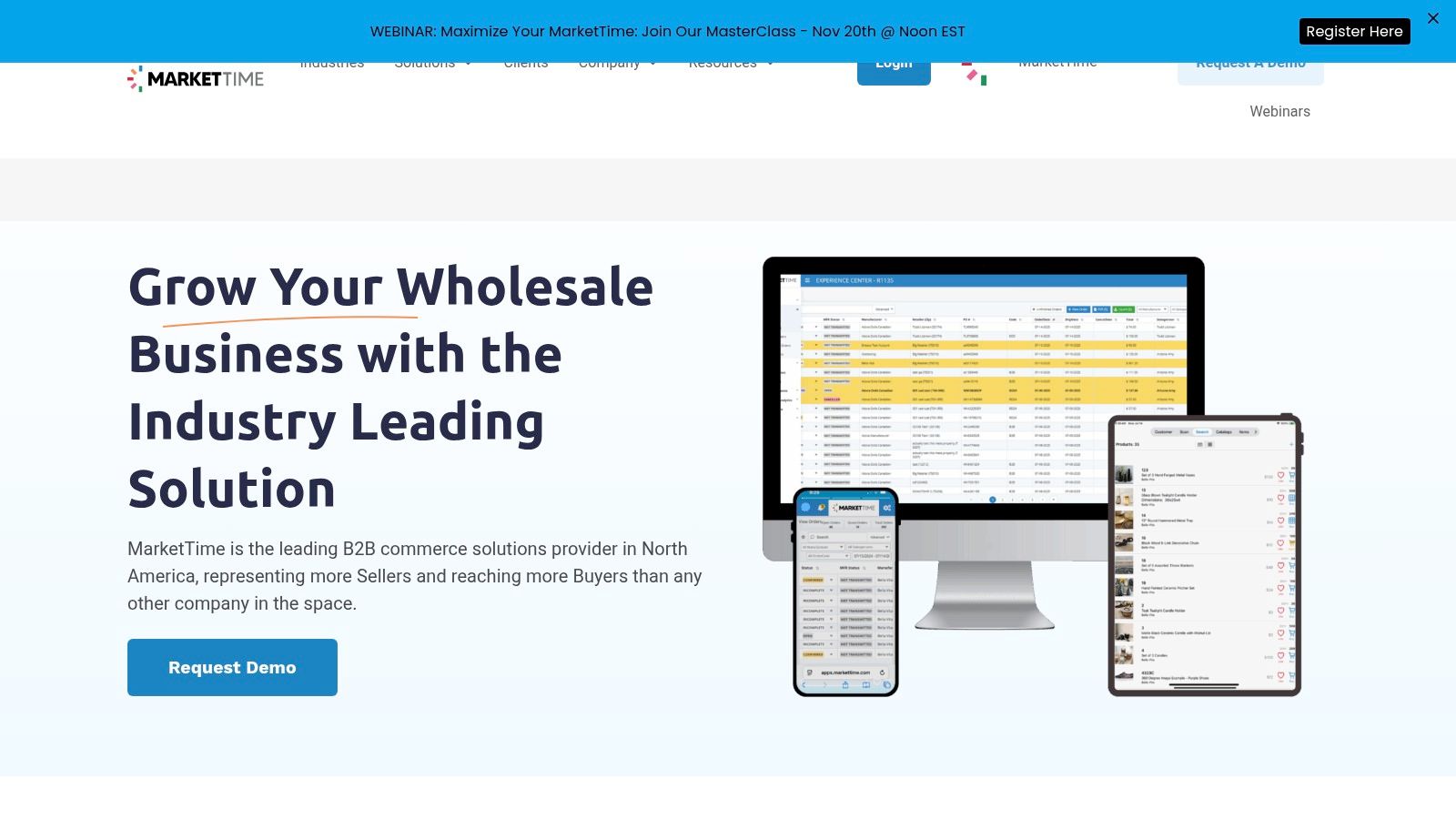
The operational benefit is continuity between a trade-show appointment and a later retailer reorder. Digital catalogs, barcode scanning, buyer and product records, offline order writing, reporting, and commission management address work that a basic buyer storefront may leave outside the system.
Follow the Order Through the Back Office
- Rep capture: Demonstrate an appointment order, including offline use.
- Retailer continuation: Show how the buyer returns through the branded B2B website.
- Financial handoff: Review commissions and business-system connections, including QuickBooks, NetSuite, Sage, SAP, and Xero.
- Exception ownership: Establish who handles rejected orders, changed terms, and incomplete account records.
Pricing disclosure: Public pricing isn't available, so subscription and implementation scope require a proposal. Don't infer the total from the order-writing interface alone.
MarketTime is more naturally aligned with rep-driven selling than self-service digital discovery. Available third-party review information is also insufficient for broad conclusions about customer experience, so a workflow-based demonstration is more useful than a generalized satisfaction claim.
I'd prioritize it when agency coordination, field capture, and commissions are operational requirements. If your buyers mainly find products online and reorder without assistance, start with the storefront options instead.
Ten wholesale ordering platforms by fit, pricing disclosure, and retailer reach, plus a separate Sprello row for upstream line-sheet and assortment work
| Item | Best for | Pricing disclosure | Retailer discovery | Typical setup |
|---|---|---|---|---|
| NuORDER by Lightspeed | Fashion and lifestyle brands with large catalogs or global wholesale operations | Brand plans start at $600/month; tailored pricing | Retailer network; free buyer accounts | Paid brand platform with portals, line sheets, and order tools |
| JOOR | Fashion, accessories, and luxury brands seeking buyer workflows | Brand pricing is quote-based; buyer accounts are free | JOOR Discover marketplace | Brand subscription with digital showrooms and order management |
| RepSpark | Established apparel and lifestyle brands with complex inventory workflows | Contact vendor for pricing and implementation details | Retailer accounts are free; discovery emphasis is limited | Wholesale platform connected to inventory, reps, and ERP systems |
| Elastic Suite | Brands and retailers planning visual, account-specific assortments | Demo-based; pricing is not clearly listed | Discovery emphasis is limited | Digital catalogs, assortment tools, and ERP-connected order management |
| Brandboom | Brands needing digital line sheets and order-enabled presentations | Public plans start at $50 per user/month, billed annually; enterprise pricing is custom | Limited retailer discovery | Shareable digital presentations with ordering tools |
| Shopify B2B | Shopify merchants managing wholesale and DTC together | Included with eligible Shopify plans; standard plan fees apply | No buyer-discovery marketplace | B2B features managed in the Shopify admin |
| SparkLayer | Shopify-based brands adding trade ordering to an existing store | Starter plan listed at $49/month; costs vary by plan and add-ons | No marketplace discovery focus | B2B add-on integrated with a supported ecommerce store |
| Pepperi | Manufacturers and distributors using account-specific catalogs and field sales | Contact vendor for a quote | No retailer marketplace focus | Configured B2B storefronts and mobile sales tools |
| Faire | Brands seeking independent retail buyers | Free to join; standard North American marketplace orders incur 15% commission plus a $10 first-order fee | Wholesale marketplace for independent retailers | Marketplace account with order, inventory, and messaging tools |
| MarketTime | Brands and agencies relying on sales reps and trade shows | Pricing available by request | Supports buyer ordering; discovery emphasis is limited | Rep order-writing tools paired with a branded B2B website |
Choosing a Wholesale Ordering Platform Without Overbuying
Shortlist by where the order starts, then examine buyer reach and pricing disclosure. Marketplace discovery, a branded reorder portal, and rep-assisted selling solve different problems, even when their feature lists overlap.
For network-led selling, compare NuORDER, JOOR, and Faire against your target retailers. For an existing commerce operation, compare Shopify B2B and SparkLayer; for presentation-led orders, consider Brandboom. RepSpark, Elastic Suite, Pepperi, and MarketTime deserve attention when inventory complexity, collaborative assortments, field sales, or agencies shape the workflow.
Price transparency helps determine evaluation effort, but it doesn't establish total cost. Include migration, integrations, training, data maintenance, payment fees, and internal ownership before comparing proposals.
What Should a Wholesale Ordering Platform Cost?
There isn't a useful universal benchmark across these categories. A marketplace commission pays for a different commercial model than a storefront subscription or enterprise implementation.
Use public pricing to screen options, then request a written scope for the workflow you need. Compare recurring costs separately from setup and ongoing operational work.
Does It Replace an ERP?
Usually, no. The ordering platform handles the buyer-facing transaction; your ERP may remain responsible for inventory, allocation, invoicing, and fulfillment records.
Name the source of truth for each field. Then test what happens when the systems disagree, rather than accepting an integration logo as sufficient evidence.
Should Buyers Self-Serve or Work With Representatives?
Support both when the selling model requires it. Let buyers reorder familiar products independently, while reps handle discovery, assortment development, negotiated terms, and exceptions.
Measure clean, completed orders and the work required to process them. Portal adoption alone won't tell you whether the operation improved.
What Should Be Tested in a Demo?
Use a real assortment with variants, account-specific pricing, minimums, and different delivery states. Change availability during the exercise and follow the resulting exception through confirmation.
A purchase order should preserve product codes, quantities by size and color, agreed prices, delivery dates, shipping details, and payment terms, as described in Fitinline's fashion wholesale guide.
Do Line Sheets Still Matter?
Yes. Buyers still need a clear, reviewable collection before they commit quantities, whether the eventual order is self-service or rep-assisted.
The Apparel Search retail buying guide identifies product images, style numbers, colors, size ranges, wholesale prices, minimum quantities, and delivery dates as core line-sheet information. Fix that product information before changing the ordering interface.
Sprello connects AI product visuals with a shared catalog, line review, wholesale line sheets, and buyer-specific assortments before the order reaches your selling platform. Visit Sprello to book a demo using your own product category and walk through the catalog, Canvas, line sheets, and buyer assortments.
Related
More to explore
Fresh reads
Wholesale Line Sheet Template That Buyers Can Order From
Build a wholesale line sheet template with style codes, prices, variants, minimums, and delivery dates buyers can order from.

PLM Software for Fashion Industry: 10 Tools for 2026
Compare 10 PLM software for fashion industry options, from enterprise suites to AI-assisted product development. Find the right fit for your team.
10 Line Sheet Software Options Worth Comparing in 2026
Compare 10 line sheet software options for fashion and lifestyle brands, including what each tool does well, what it lacks, and how to choose the right fit.