November 19, 2026
PLM Software for Fashion Industry: 10 Tools for 2026
Compare 10 PLM software for fashion industry options, from enterprise suites to AI-assisted product development. Find the right fit for your team.
Which PLM tools fit a fashion product team? Most of the ten below fit only part of the job, because a PLM system holds the technical record (tech packs, bills of materials, costing, supplier approvals) while the commercial work of turning concepts into a buyer-ready collection happens somewhere else entirely. Sprello is AI for product development and merchandising, from product concept to buyer-ready collection, and it sits in that second space, alongside your PLM rather than in place of it.
Grouping matters more than ranking. The list splits into broad enterprise suites built to govern the whole product record, mid-market cloud PLM built for faster starts, and design-centered platforms that prioritize digital product creation and 3D work.
- Full suite PLM: Centric, FlexPLM, BlueCherry, Infor. Deep data governance, long implementations.
- Mid-market cloud PLM: WFX, DeSL, Aptean. Fewer modules, faster starts, less administration.
- PLM plus adjacent content tools: Kubix Link, BeProduct. Product data alongside PIM or 3D outputs.
- Beyond PLM: the visual and assortment layer where merchandising teams lose weeks.
The stakes justify the homework. In a 2025 survey by MMGNET and The Interline, more than 90% of fashion professionals said technology was essential or quite important to effective business operations. Product lifecycles still run through four stages from introduction to decline, and the tools that shorten the front end are the ones that pay for themselves, as this summary of product life cycle stages for POD sets out.
Before shortlisting, decide which gap you're closing: supplier collaboration and technical packs, or visual development and buyer-facing assortments. The ten tools below fall on different sides of that line.
1. Centric PLM by Centric Software
Centric is the first name most enterprise fashion teams put on a shortlist, and the reason is scope. It runs planning, design, development, sourcing, and commercialization through one product record, so merchandising, design, and sourcing stop working from three different files.
The line-planning views are where merchandisers spend their time: 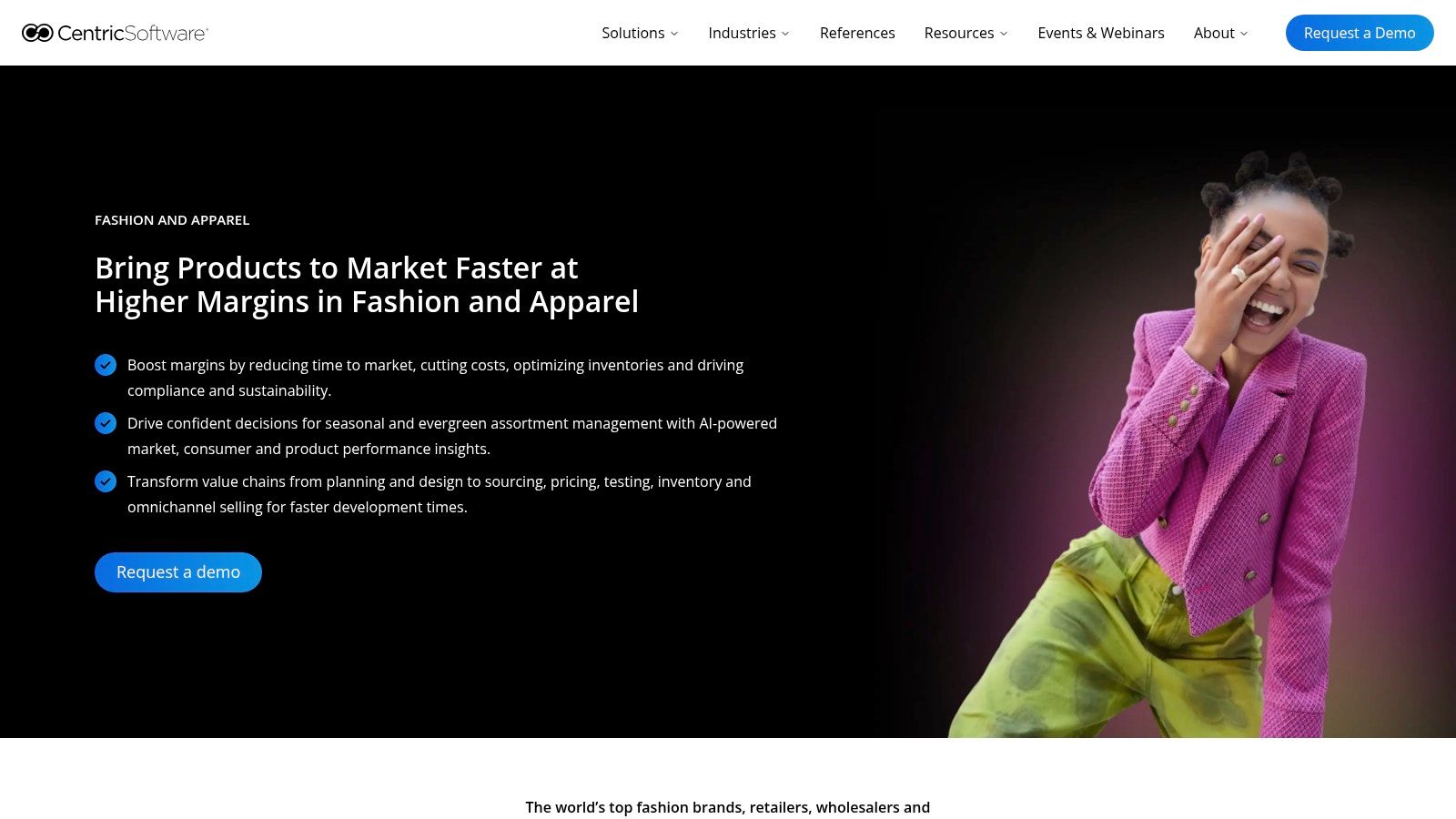
Where the breadth earns its keep
Visual Boards is the piece merchandisers feel most, because teams compare assortments and line plans side by side instead of rebuilding a colorway grid in a spreadsheet every season. Distributed teams get fashion-specific product data and collaboration in one place, and the wider Centric portfolio adds planning, pricing, and inventory tools when those functions sit next to product development.
- Product and collection workflows: planning through commercialization in a single system.
- Visual Boards: assortment and line-plan comparison for seasonal decisions.
- Adjacent portfolio tools: planning, pricing, and inventory across the wider Centric range.
The trade-off is size. Breadth is more than a small team needs, pricing isn't published, and scope plus implementation effort need confirming with the vendor before you commit. Centric suits complex, multi-brand or multi-region operations where the handoff between product development and adjacent business functions is the main bottleneck.
Cycle time is the argument for fixing that bottleneck. McKinsey's apparel go-to-market research found vertically integrated companies completed product creation, design, and development in an average of 11 weeks, against 24 weeks for hybrid players.
For the upstream creative work that feeds a system like this, this walkthrough of the product design process covers the stages. Current module detail sits on the Centric Software fashion page.
2. WFX Apparel PLM by World Fashion Exchange
Say you run a mid-market brand with factories in three countries and a product team of fifteen. WFX is built for exactly that shape: cloud PLM with apparel workflows rather than a generic manufacturing platform bent into shape.
Collection planning, design, development, sourcing, and sustainability data sit in one place, and suppliers work in the same system instead of trading spreadsheets over email. The vendor portal view: 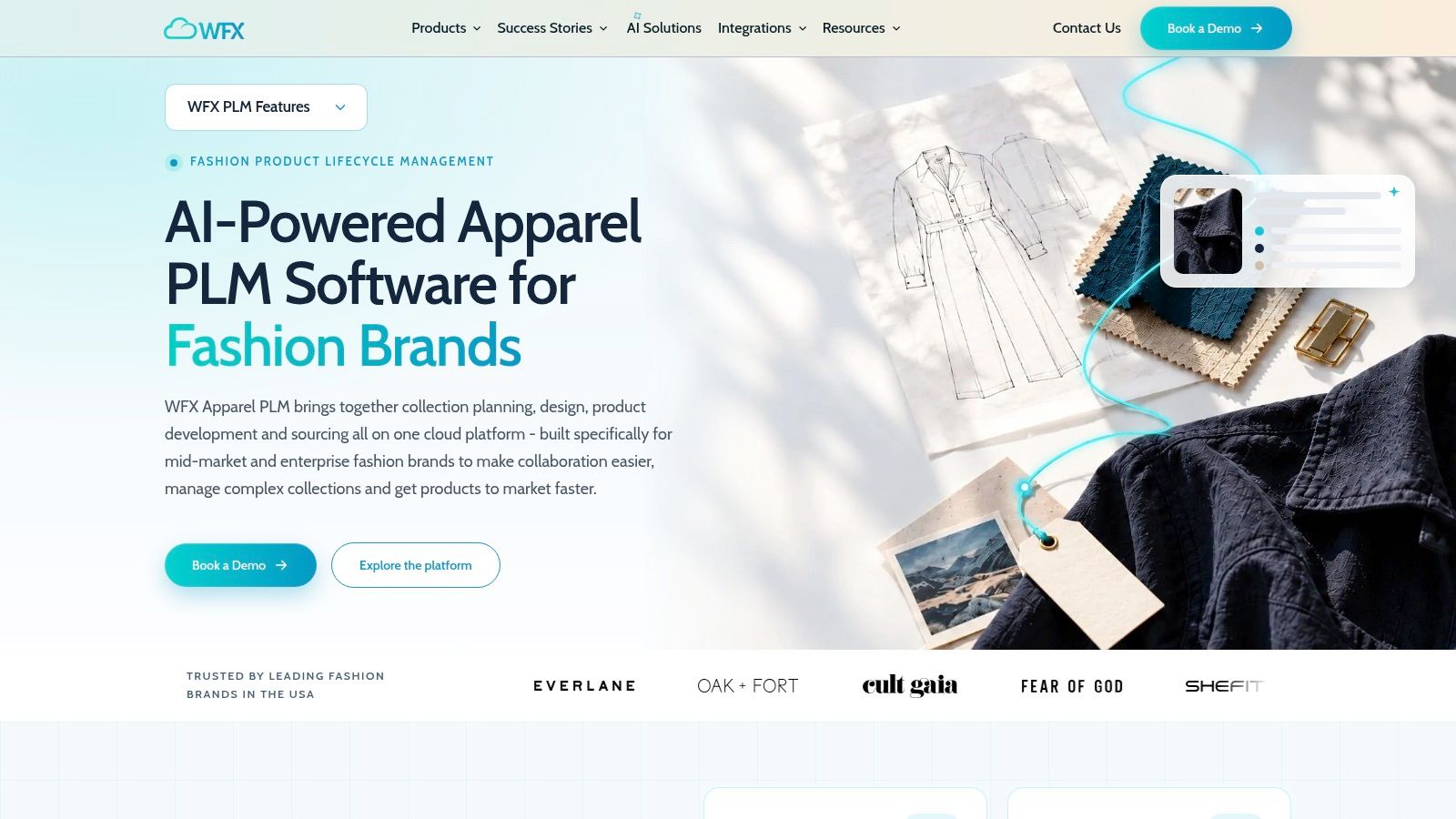
What it covers well
- Collection planning and visual line views: line architecture decisions made where the samples are.
- Tech packs, measurement sheets, costing, sample approvals: the day-to-day development record.
- Vendor Portal: supplier collaboration and sourcing visibility without file attachments.
- Illustrator, CLO3D, and Browzwear connectors: design work flows back into product data.
Implementation timing is the caveat. The vendor states that some implementations go live in 8 to 12 weeks depending on scope, and that claim deserves testing against your data migration and integration list. Overruns are common across the category: a 2026 industry report on PLM implementations claims more than half exceed their original budget or timeline, with a reported median project cost of $450,000 and a 15.5-month timeline. The same research found supplier visibility still inadequate for 17% of respondents.
Pricing isn't published. The approval loop that decides whether a sample ships is where most collaboration time goes, and this guide to the sample design brief covers what belongs in it. See the World Fashion Exchange apparel PLM page for scope.
3. FlexPLM by PTC
FlexPLM is the enterprise answer for retailers carrying big assortments across more than one product category. PTC positions it around scale, governance, and enterprise controls: thousands of styles across brands, categories, and regions, with the security layers a large organization demands.
The interface is built for volume rather than for a designer's sketchbook: 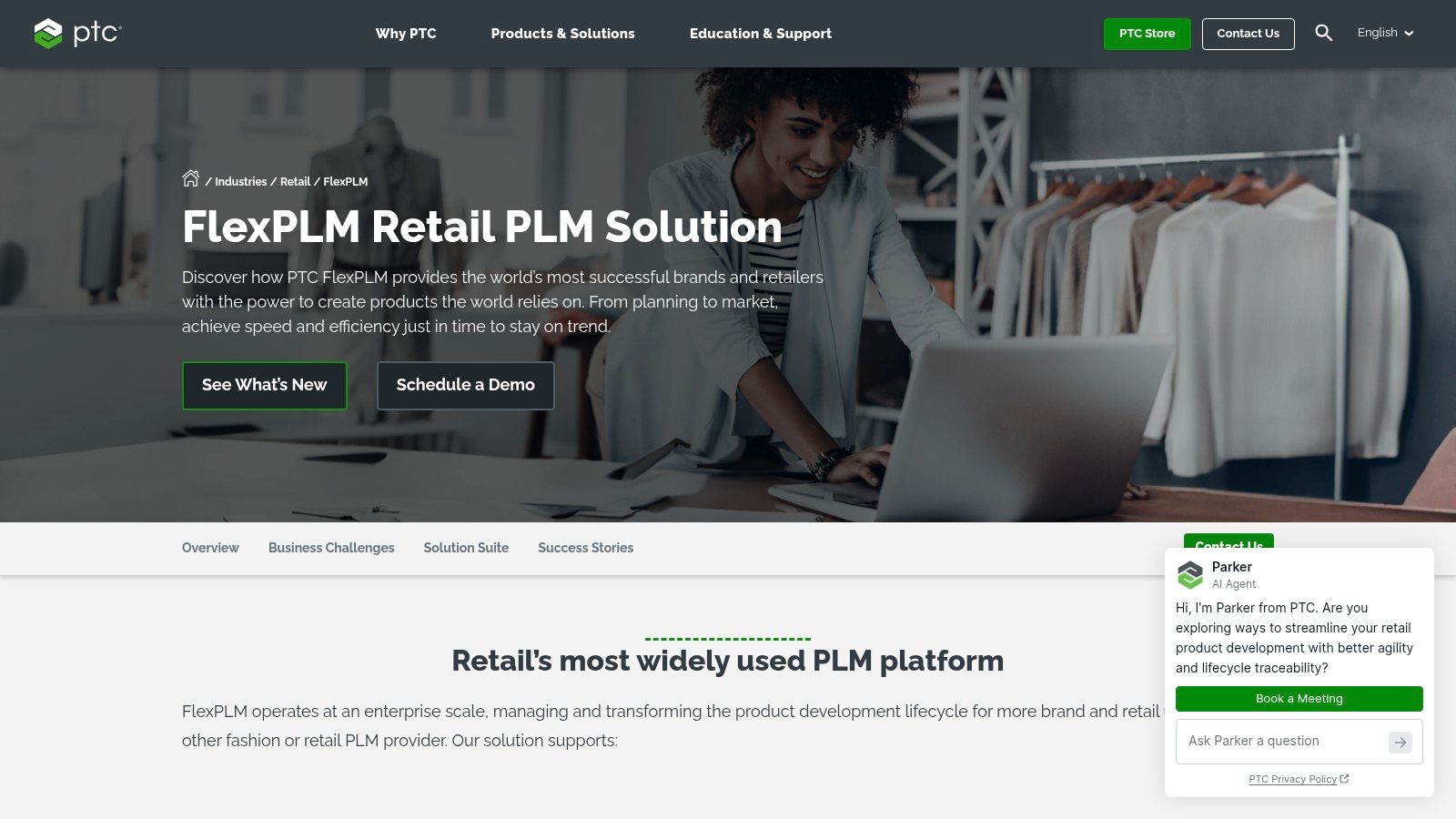
Where it fits and where it strains
- Design through sourcing: specifications, costing, and sustainability in one workflow.
- Style and SKU volume: built for large counts across brands and categories.
- Illustrator integration: design files sync into the product record instead of being re-keyed.
- Enterprise controls: security and structure for global, multi-brand teams.
The limitation is the inverse of the strength. Implementation planning and change management do the heavy lifting, public pricing and deployment detail aren't listed, and a lean team will spend more time administering the system than using it. Retailers running apparel next to home or footwear get the most from the broad category support.
The business case buyers bring to this tier is speed. In an AMR Research and Apparel magazine survey of apparel and footwear companies, 33% named faster time to market as the leading driver of PLM investment, ahead of lower product costs at 21%, while 58% wanted PLM ROI within one year. A one-season payback expectation on a multi-year platform is a demanding brief, which is why pilot scope matters more than module count.
See the PTC FlexPLM retail page for the current specification.
4. Kubix Link by Lectra
Kubix Link is the PLM to look at when product data has to serve marketing and e-commerce, not just development. It's cloud PLM at the core, with an optional PIM layer, visual Boards, and configurable Forms that carry product information into channels.
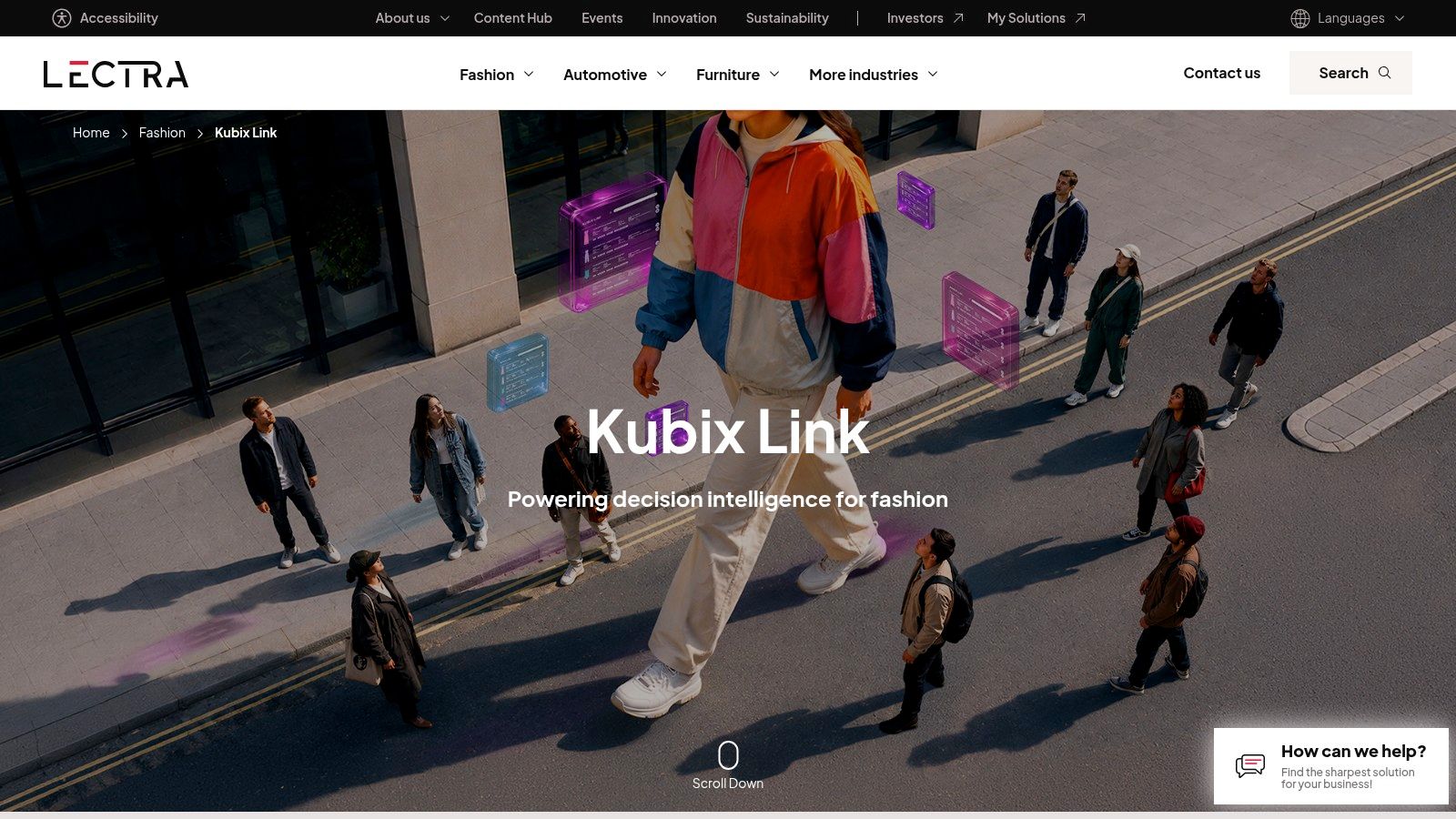
PLM and PIM in one conversation
Most fashion teams solve product content in a separate PIM, or worse, in a spreadsheet marketing maintains by hand and merchandising corrects. Kubix Link's pitch is that one record serves both sides. Collection calendars, configurable workflows, digital tech packs, and supplier collaboration cover development; the PIM option covers the content that feeds e-commerce and campaign work.
- Boards: visual work on inspiration, collections, and project updates.
- Sustainability and supplier data: with integrations to business and design systems.
- PIM option: product information used in marketing and e-commerce.
Confirm exactly which modules are in the proposed package. The range increases evaluation and deployment complexity, pricing isn't public, and a capabilities list that looks complete often isn't.
Interest in digital product creation is broad. HGI's analysis of fashion-technology survey data found 89% of surveyed fashion businesses expressed interest in 3D and digital product-creation tools in 2025. The test for a PLM-plus-PIM setup is whether the content workflows behind that interest get simpler, or just move house.
If your team is still choosing between design tools, this comparison of fashion design software covers where each one stops. Current detail sits on the Lectra Kubix Link page.
5. DeSL PLM by Textile Solutions Group
DeSL sells PLM as modules, which answers a real problem. Most brands can't absorb a full suite in year one, and buying in stages keeps the rollout tied to a working process rather than a slide deck.
The core covers line planning, digital planning boards, tech packs, costing, sample management, and supplier collaboration, with 3D sample support and traceability features. 
Buying modules instead of a monolith
- Line planning and digital planning boards: visual collection work that keeps teams aligned.
- Optional PIM, quality, color approval, and supplier relationship tools: added when the workflow demands them.
- 3D sample support: fewer physical rounds where the category allows it.
- Traceability features: supplier and sustainability data attached to the product record.
The catch is requirement mapping. With this many optional parts, buyers have to match each requirement to a module and a license line, or the proposal looks broader than what goes live. Pricing and implementation scope aren't publicly specified, and DeSL reports more than 20 years focused on fashion and retail, which matters more for process knowledge than for features.
Adoption is still the constraint across the market. A 2022 Sourcing Journal and AlixPartners survey found only 46% of respondents were using digital product-lifecycle-management solutions to improve efficiency, and the same source reports PLM can cut internal and external vendor email volume by as much as 85%. Test that claim in a pilot by counting approval emails before and after. See the DeSL PLM solutions page.
6. Aptean Apparel PLM by Aptean
Aptean's Exenta edition is the one I'd shortlist for a soft-goods brand whose bottleneck is tech packs, costing, and vendor quotes rather than enterprise governance. It's cloud, apparel-specific, and covers the development record without pulling in a full retail suite.
The workspace is built around seasonal line work: 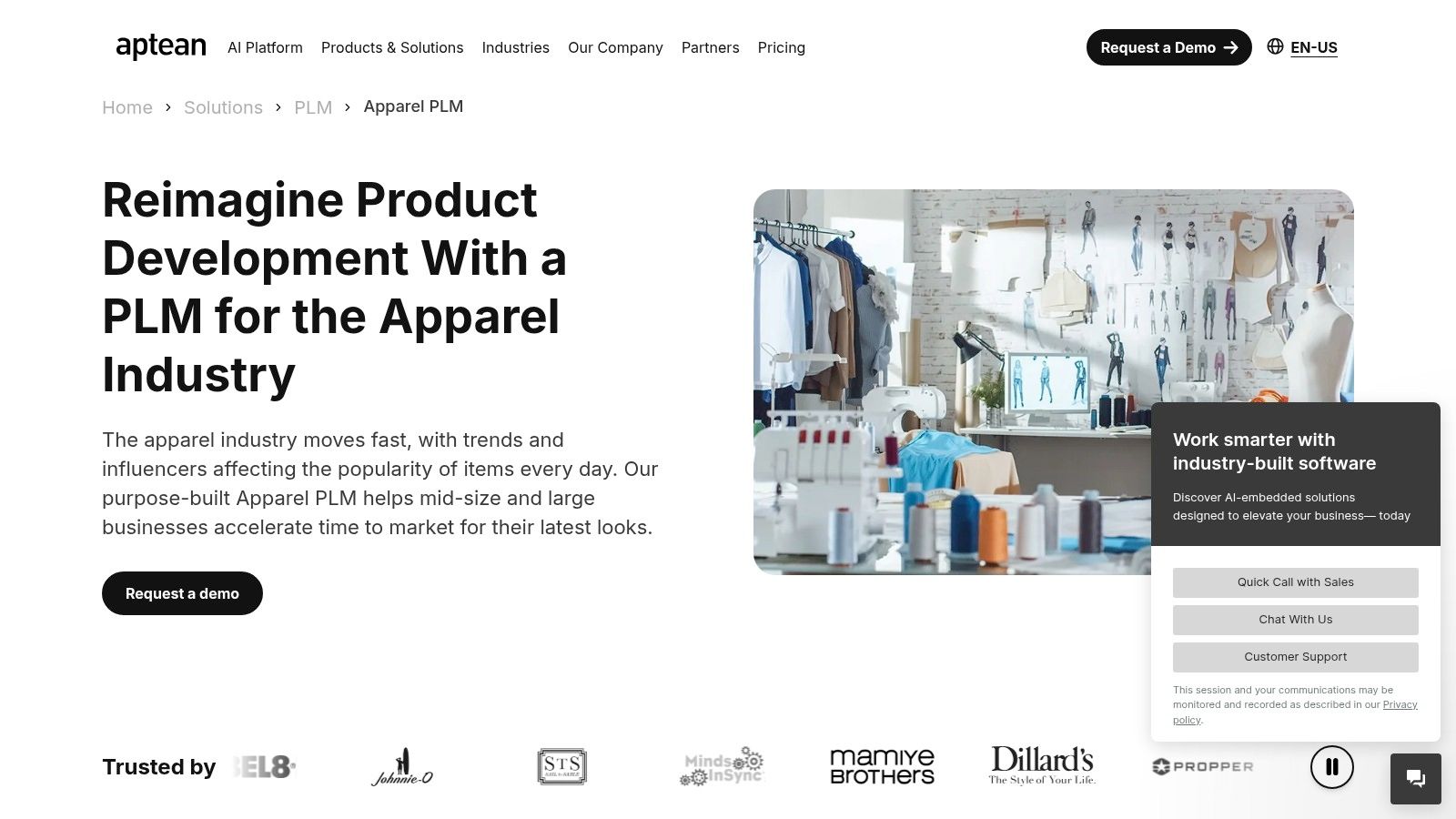
The apparel-specific core
- Seasonal line planning and calendars: presentation boards for line review.
- Tech packs: BOMs, measurement pages, and grading templates built for apparel.
- Costing: vendor quotes, BOM comparisons, and cost options side by side.
- Design connections: Adobe Illustrator and Browzwear integrations with 3D imagery support.
Test the grading template against your worst real style, not a simple tee. Measurement pages and grade rules are where apparel PLM configurations break first.
The honest limitation is fit assessment. A demo is needed to see how well the configuration matches your workflows, and pricing isn't public, so the evaluation lives or dies on whether you bring real styles, real measurement sheets, and a real vendor quote to the session. Aptean publishes customer testimonials and product-tour material, which helps with the shortlist but doesn't replace your own test data.
For a brand under 100 people with two major accounts and a simple size range, this tier is usually the right amount of system. For a multi-brand retailer, it isn't. See the Aptean apparel PLM page.
7. BlueCherry PLM by CGS
BlueCherry covers fashion, footwear, accessories, and home goods, which is unusual. Most PLM vendors pick apparel and stop. If your brand sells apparel and home in the same catalog, that breadth saves you from running two product systems.

Compliance is the second job
- Line planning, BOMs, samples, calendars, costing, approvals: the standard development record.
- Digital asset management and design collaboration: creative files tied to the product.
- Adobe and 3D-tool integrations plus an open API: connections to design and business systems.
- Supplier communication, compliance, and factory-audit workflows: traceability where audits happen.
The compliance layer matters more each year. Industry coverage reports that 72% of surveyed fashion companies had already deployed sustainability technology or planned to do so within the following year, while more than 60% cited product-development timelines as a primary challenge, as summarized in this review of fashion systems and integration. Compliance data is only as good as the supplier participation behind it.
The trade-off is weight. CGS offers a broader supply-chain suite, so the platform suits companies that also want ERP-level operational integration, not a team looking for lightweight PLM. Pricing isn't published, and CGS has published named brand deployments including FRAME's selection of BlueCherry ERP and PLM. See the BlueCherry PLM page.
8. Infor PLM for Fashion
Infor's fashion PLM is the pragmatic choice for private-brand retailers, design-and-source companies, and manufacturers already running Infor business applications. It supports collections and styles from design through production, including supplier collaboration and compliance workflows, and it can stand alone or sit inside Infor CloudSuite Fashion.
One PLM or two
- Line planning, design, development, sample management, costing, testing, reporting: the full development record.
- Adobe Illustrator integration and reusable libraries: materials and product components reused across seasons.
- Global collaboration with multilingual support and role-specific views: relevant for teams working across regions.
- SaaS on AWS: cloud delivery with use alongside CloudSuite Fashion.
Choosing rule: if you already run Infor for finance or supply chain, the integration math usually beats the feature comparison. If you don't, the ecosystem advantage disappears and you're evaluating a PLM like any other.
Category coverage is the other reason to look. Home textiles and accessories sit alongside apparel, and mass creation plus reusable components helps when a season carries hundreds of styles built from similar materials. Licensing and integration requirements should be confirmed before you plan external partner collaboration, particularly where factories sit outside your corporate systems. Pricing isn't published.
See the Infor fashion PLM page for deployment options.
9. YuniquePLM by Lectra
YuniquePLM is the sibling product to Kubix Link, and the difference matters when you're buying. It focuses on style management and product-development workflows: product and style data, BOMs, tech packs, calendars, workflow management, sample tracking, and collaboration, with integrations into Adobe Illustrator and Lectra's AccuMark ecosystem.
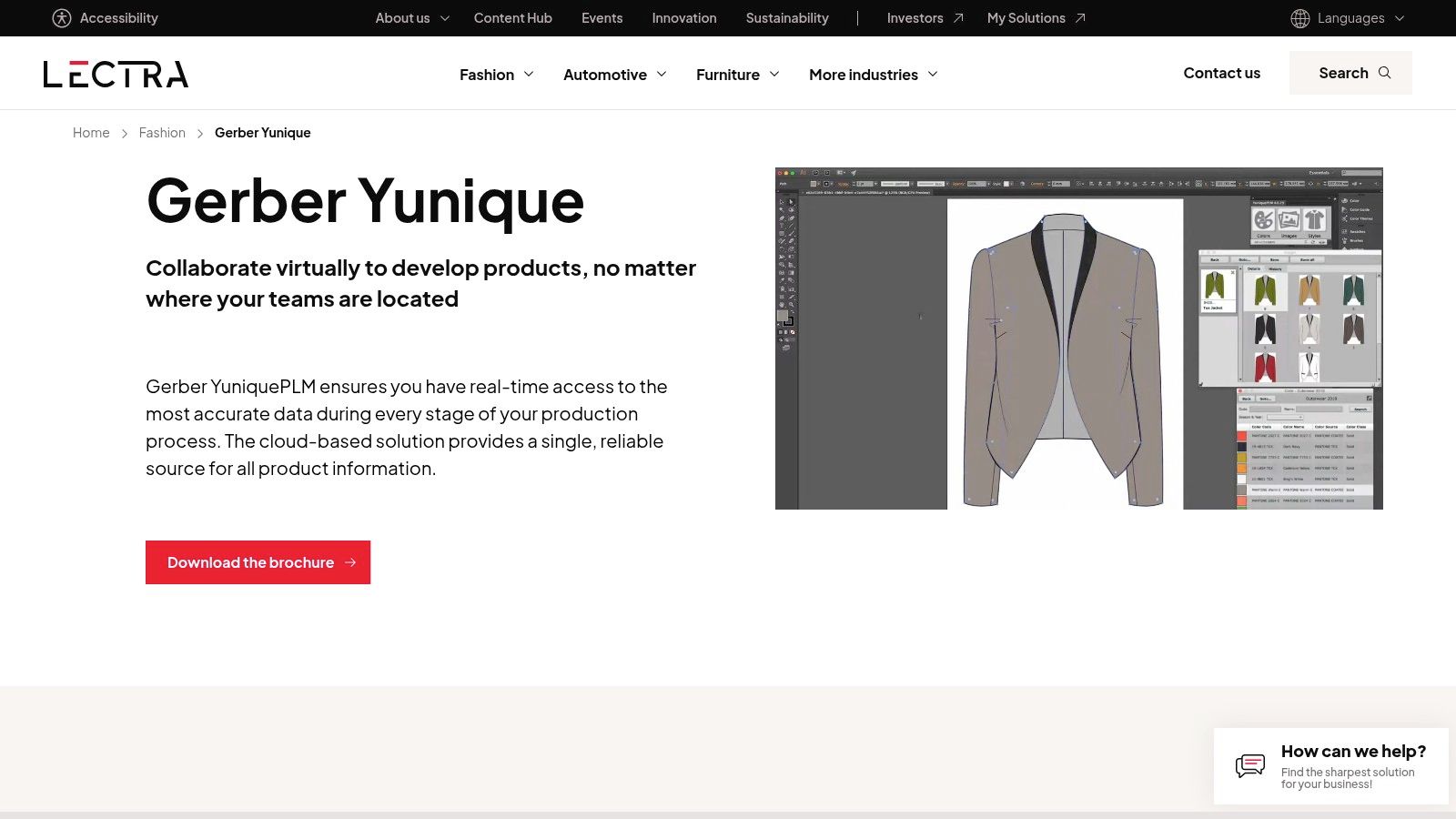
Familiar ground for Gerber teams
- Style data and BOMs: the working record product development teams already know.
- Tech packs, calendars, workflow, and sample tracking: from spec to approval.
- AccuMark and Illustrator integrations: pattern and design work connected to the record.
- Continued configurability: Lectra reports ongoing product updates.
The pattern side is where fit development usually costs the most time. A 2026 study on 3D CAD adoption in intimate apparel found the fitting cycle can take two to eight months, with designers and technical designers drafting and grading patterns across five to 56 sizes, and 10 of 13 study participants reported measurable time and cost savings after adopting 3D CAD, as reported in this study of 3D CAD in intimate apparel. Long fit cycles are why the pattern ecosystem connection is worth more than a long feature list.
Ask Lectra to clarify the roadmap and the practical differences from Kubix Link. Two PLM products under one vendor is fine, as long as you know which one you're buying and why. Pricing isn't public. See the Lectra YuniquePLM page.
10. BeProduct
BeProduct is design-centered PLM with an emphasis on creative workflow and Browzwear 3D integration. It synchronizes digital materials, trims, colors, and related product data using open standards, and the shared material, seam, and color libraries give designers something closer to their own working files than a tech-pack form allows.
The digital product creation view: 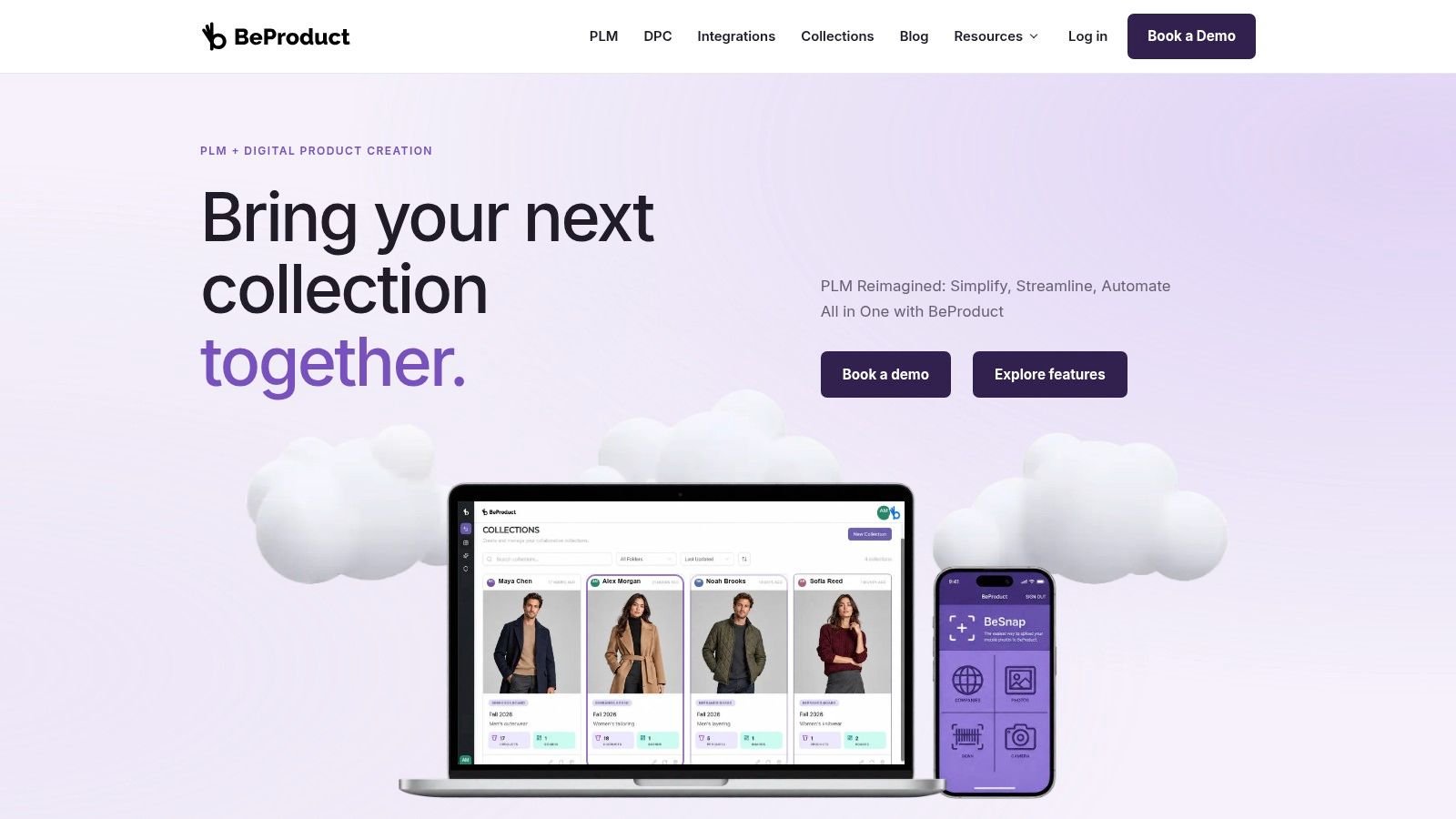
Built around 3D
- Browzwear ecosystem integration: 3D product creation feeding the PLM record.
- Shared material, seam, and color libraries: one source for the components designers reuse.
- Design adjustments, tech packs, grading, and alterations: development data in the same place.
- Open standards: digital asset exchange rather than locked formats.
The category context explains the positioning. McKinsey reported in 2024 that more than 80% of organizations were using 3D modeling and digital sampling, so a 3D-native PLM is now a mainstream requirement rather than an experiment.
The limitation is breadth outside product development. Reviewed product pages give less evidence of broad ERP or enterprise-suite coverage, and pricing plus implementation detail aren't publicly listed. For a team whose designers find traditional PLM interfaces cumbersome and whose sampling budget is the sore point, that trade-off is worth it. For a retailer that needs PLM wired to finance and inventory, it isn't.
See BeProduct for the current product scope.
PLM and product development tools for fashion brands compared
| Tool | Best for | Category focus | Notable capabilities | Pricing transparency |
|---|---|---|---|---|
| Centric PLM, Centric Software | Larger organizations seeking broad product-to-market workflows | Fashion and apparel | Planning, design, sourcing, commercialization, visual assortment boards, related planning and inventory tools | Pricing not public; confirm scope and implementation with vendor |
| WFX Apparel PLM, World Fashion Exchange | Mid-market and enterprise brands coordinating teams and suppliers | Fashion and apparel | Collection planning, tech packs, costing, sample approvals, vendor portal, design-tool integrations | Pricing not published |
| FlexPLM, PTC | Global teams managing complex, large-scale assortments | Retail, fashion, apparel, footwear, and consumer goods | Product development, sourcing, costing, sustainability, enterprise security, Illustrator integration | Pricing and deployment details not listed |
| Kubix Link, Lectra | Fashion teams connecting product creation with product content operations | Fashion | Collection calendars, tech packs, supplier collaboration, optional PIM, visual boards, sustainability data | Pricing not public; confirm included modules |
| DeSL PLM, Textile Solutions Group | Brands selecting product-development capabilities in stages | Fashion, apparel, retail, and footwear | Line planning, tech packs, costing, supplier collaboration, optional PIM and quality tools, 3D samples | Pricing and implementation scope not publicly specified |
| Aptean Apparel PLM (Exenta Edition), Aptean | Soft-goods teams seeking apparel-specific development workflows | Fashion, apparel, and soft goods | Line planning, tech packs, BOMs, costing, vendor quotes, Illustrator and Browzwear integrations | Pricing not public |
| BlueCherry PLM, CGS | Growing or enterprise brands integrating PLM with operations | Fashion, footwear, accessories, and home goods | Line planning, BOMs, costing, digital assets, supplier workflows, open API, ERP connections | Pricing not published |
| Infor PLM for Fashion, Infor | Companies managing large seasonal assortments or using Infor applications | Apparel, footwear, home textiles, and accessories | Line planning, sample management, costing, reusable libraries, multilingual collaboration, AWS SaaS | Pricing not published; confirm licensing and integration requirements |
| YuniquePLM, Lectra | Apparel teams seeking style management and product-development workflows | Fashion and apparel | Style data, BOMs, tech packs, calendars, sample tracking, Illustrator and AccuMark integrations | Pricing not public |
| BeProduct | Fashion teams prioritizing creative product development and 3D workflows | Fashion | Browzwear integration, shared material and color libraries, tech packs, grading, digital asset exchange | Pricing and implementation details not publicly listed |
How to Choose and Where AI Fits Alongside Your PLM
Start with the gap, not with the vendor list. Pull your last three seasons and mark, week by week, where a style stalls. Many brands find two different bottlenecks: the technical path (fabric approvals, tech packs, costing, fit) and the commercial path (visual development, line review, buyer-specific assortments). PLM software for the fashion industry is built for the first path. The second usually runs on email, slide decks, and a shared drive nobody trusts by week six.
Operating model changes the math. In McKinsey's research, fashion companies averaged 17 to 18 weeks for the production portion of the product-development process, and the full end-to-end go-to-market cycle ran 44 weeks for hybrid apparel companies against 28 weeks for vertically integrated ones, a 36% faster overall cycle, as detailed in McKinsey's full report on measuring the fashion world. If your competitors are vertically integrated, your workflow overhead is the difference you can control.
Not every style deserves the same process. A 2024 academic study of fashion omnichannel retailers separated design-led products, which follow the full traditional process and generally take longer, from adapted products that start later because they modify proven styles (fabric, color, detail) while keeping the fit and construction, and from reactive development that uses shorter lead times, smaller volumes, and closer suppliers once trading has begun. Three product paths need three workflows, and a single PLM configuration often flattens them.
What I'd do first: if your bottleneck is supplier collaboration and technical packs, buy PLM. If it's the speed and consistency of visual development, line review, and buyer assortment work, buy a merchandising workflow layer and leave the product record where it is.
Sprello is our product, so weigh that accordingly. It's AI for product development and merchandising, from product concept to buyer-ready collection, and it complements PLM and planning suites rather than replacing them. It connects AI product visuals (sketches, CADs, materials, and references turned into photoreal visuals and colorways, with saved workflows) to one shared product catalog, line review, wholesale line sheets, and separate buyer assortments per account or channel. It doesn't do tech packs, BOMs, pattern making, demand forecasting, or open-to-buy, and you shouldn't ask it to. One billion-dollar fashion brand cut prototype-to-market-sample lead time from 4 weeks to 2 and commissioned 20% fewer market samples.
The same principle applies to what you produce after the line is set. Teams that need to create videos for social publishing from the same product data run into the identical handoff problem, one step further downstream. A demo at sprello.ai walks through the catalog, canvas, line sheets, and assortments on one of your own product categories, which is a faster way to judge fit than any feature grid.
Sprello is AI for product development and merchandising, taking a collection from product concept to a buyer-ready assortment with one shared catalog, saved canvas workflows, wholesale line sheets, and separate assortments per account or channel. Bring one of your category's real styles and we'll walk the catalog, canvas, line sheets, and assortments through it against your actual PLM setup. Book a demo at Sprello.
Related
More to explore
Fresh reads
10 Line Sheet Software Options Worth Comparing in 2026
Compare 10 line sheet software options for fashion and lifestyle brands, including what each tool does well, what it lacks, and how to choose the right fit.
Jewelry Line Sheet Template: Fields, Steps and Compliance
Build a jewelry line sheet template with the fields, imagery, minimums and compliance details wholesale buyers check before they order.
9 Types of Fashion Silhouettes for Merchandisers in 2026
Nine types of fashion silhouettes explained with defining shapes, styling uses, and how each affects fit, sampling, and collection design.