

Making great user-generated content (UGC) is all about capturing real, genuine customer moments on video. You have two main paths to get there. The traditional route is encouraging your actual customers to create and share their experiences. The other, newer path involves using AI tools to produce realistic, UGC-style videos without ever picking up a camera.
No matter which way you go, the goal is always the same: create authentic, relatable content that builds trust and gets people to act.
Why Real UGC Connects with Today's Shoppers
The old marketing playbook is officially dead. People are just plain tired of glossy, corporate ads that feel disconnected from their lives. What do they want instead? Authenticity. They want proof from real people—just like them—not from a faceless brand. This is why UGC has become such a powerful tool; it’s the modern-day version of a trusted recommendation from a friend.

This isn't just a fleeting trend. The numbers tell a clear story. The market for UGC platforms is expected to explode from $9.85 billion in 2025 to a massive $35.44 billion by 2030. That's a huge signal that authentic voices are central to modern marketing, and it explains why 86% of companies are already weaving UGC into their strategies.
The Psychology Behind UGC's Impact
So, what’s the secret sauce? It all comes down to trust and relatability. When a potential buyer sees someone who looks and talks like them genuinely enjoying a product, it breaks down the natural skepticism we all have toward advertising.
This kind of content just feels real. It’s not shot in a perfect studio with a massive budget. It’s a regular person, in their own home, sharing an honest thought. That raw, unfiltered perspective is often way more convincing than any traditional ad could ever be. If you want to see what this looks like in the wild, check out these inspiring UGC examples to get a feel for what truly connects with people.
The real magic of UGC is its authenticity. It cuts through the noise and skepticism, creating an instant connection and building a community around your brand.
Deciding whether to source content from real creators or use AI tools depends on your resources, timeline, and specific goals.
Choosing Your UGC Creation Path
Here's a quick comparison of the two main approaches to creating UGC, highlighting the key differences in resources, speed, and control.
| Factor | Traditional (DIY) UGC | AI-Generated UGC |
|---|---|---|
| Authenticity | Highest level; genuine customer experiences. | Can appear very realistic, but is simulated. |
| Cost | Varies widely; can involve creator fees, product seeding, or agency costs. | Generally lower and more predictable subscription-based pricing. |
| Speed | Slower; involves finding creators, shipping products, and waiting for content. | Extremely fast; generate videos in minutes. |
| Control | Less control over final output, messaging, and quality. | Full control over script, visuals, and tone. |
| Scalability | Harder to scale; requires managing multiple creators. | Highly scalable; can produce dozens of variations quickly. |
Ultimately, both paths can lead to effective content. Many brands even use a hybrid approach, combining genuine customer videos with AI-generated content to fill gaps in their marketing calendar.
Types of UGC That Get Results
While all UGC is valuable, some formats are particularly good at building trust and driving sales. Keep an eye out for these high-performers:
- Unboxing Videos: There's a reason these are so popular. They build excitement and give people a transparent, first-hand look at your product and packaging.
- Authentic Testimonials: Nothing beats hearing a happy customer explain, in their own words, how your product solved a real problem for them.
- Problem-Solution Demos: These are gold. They show your product in action, tackling a specific pain point that your target audience knows all too well.
- How-To Guides: Practical tutorials from actual users are fantastic for showing off your product's value and how easy it is to use in a real-world setting.
Knowing which formats work best is a great start. The next step is learning how to use them in your paid campaigns. For a deeper look at that, our guide on user-generated content ads is the perfect next read to get you ready for the hands-on steps ahead.
Planning and Scripting Content That Connects
Great UGC videos might look like they were filmed on a whim, but the ones that truly perform? They almost always start with a smart plan. The secret to that effortless, authentic feel is having a solid strategy backing it up, making sure every video hits the right notes with the right people.
Before you even think about hitting record, you need to map things out. First, what’s the point of the video? Are you trying to get your brand name out there and build awareness? Are you aiming to drive sales for a new product? Or maybe you just want to collect some powerful testimonials to use as social proof. Each of these goals requires a totally different creative angle.
Know Your Audience Inside and Out
Once you’ve locked in your goal, it’s time to get laser-focused on who you're talking to. What are the daily frustrations that keep them up at night? What are they secretly hoping to achieve? The best UGC doesn’t just sell a product; it speaks directly to these core human needs.
Go deeper than just age and location. What slang do they use? What’s trending on their TikTok feed right now? When you understand their world, you can create content that feels like it was made just for them, which builds an instant, genuine connection.
This is exactly why UGC works so well. It cuts through the marketing noise and feels like a recommendation from a friend. The data backs this up, too—a staggering 92% of consumers trust user reviews and posts more than traditional ads. That trust is pure gold.
Crafting an Unskippable Hook
Let's be real: on social media, you have about three seconds to grab someone's attention before they scroll on. That’s where your hook comes in. The first line or visual has to be magnetic enough to stop the scroll.
Here are a few hook formulas I’ve seen work time and time again:
- Call Out The Problem: Start with a pain point everyone in your audience recognizes. "I used to hate how my makeup would melt off by noon..."
- Make a Surprising Statement: Say something unexpected or even a little controversial. "Stop using [common product], and try this instead."
- Lead With The Benefit: Get straight to the result everyone wants. "Here’s how I finally got clear skin without a complicated routine."
The mission here is simple: create instant curiosity. Make the viewer feel like this video holds the answer they’ve been searching for.
Structuring Your Script for Authenticity
Even the most "off-the-cuff" testimonial needs a loose structure to keep it on track. A simple outline ensures the core message is clear without making the video sound robotic or staged. The trick is to write it down in a natural, conversational tone—as if you were just talking to a friend.
When you're first starting, tools like video testimonial script generators can be a huge help. They give you a proven framework to build on, so you can be sure your story flows well and makes an impact.
A simple but effective structure looks like this:
- The Hook: Grab their attention in the first 3 seconds.
- The Problem: Quickly explain the pain point you were dealing with.
- The Solution: Introduce the product and show how it solved everything.
- The Result: Show off the positive outcome. Don't just tell—show.
- The Call-to-Action (CTA): Tell them what to do next.
For your CTA, think low-pressure and friendly. Something like, "If you struggle with this too, you have to check this out," feels much more authentic than a hard "Buy now!" If you want to see how this all comes together, checking out a solid advertisement script example can give you some great ideas for structuring your own message.
Alright, you've got your plan and your script is ready to go. Now for the fun part: actually making the video.
This is where the magic happens, turning your ideas into a real piece of content that can grab someone's attention. Whether you're a hands-on, do-it-yourself kind of person or you're looking for a faster, more scalable option, you've got two great ways to get this done.
We'll walk through the classic DIY method—using nothing but your smartphone—and then jump into the incredible efficiency of AI video generation. Both can get you fantastic results; it's all about picking the path that fits your budget, timeline, and what you're trying to achieve.
Just remember, all the planning you did up to this point is what makes this creation phase go smoothly.
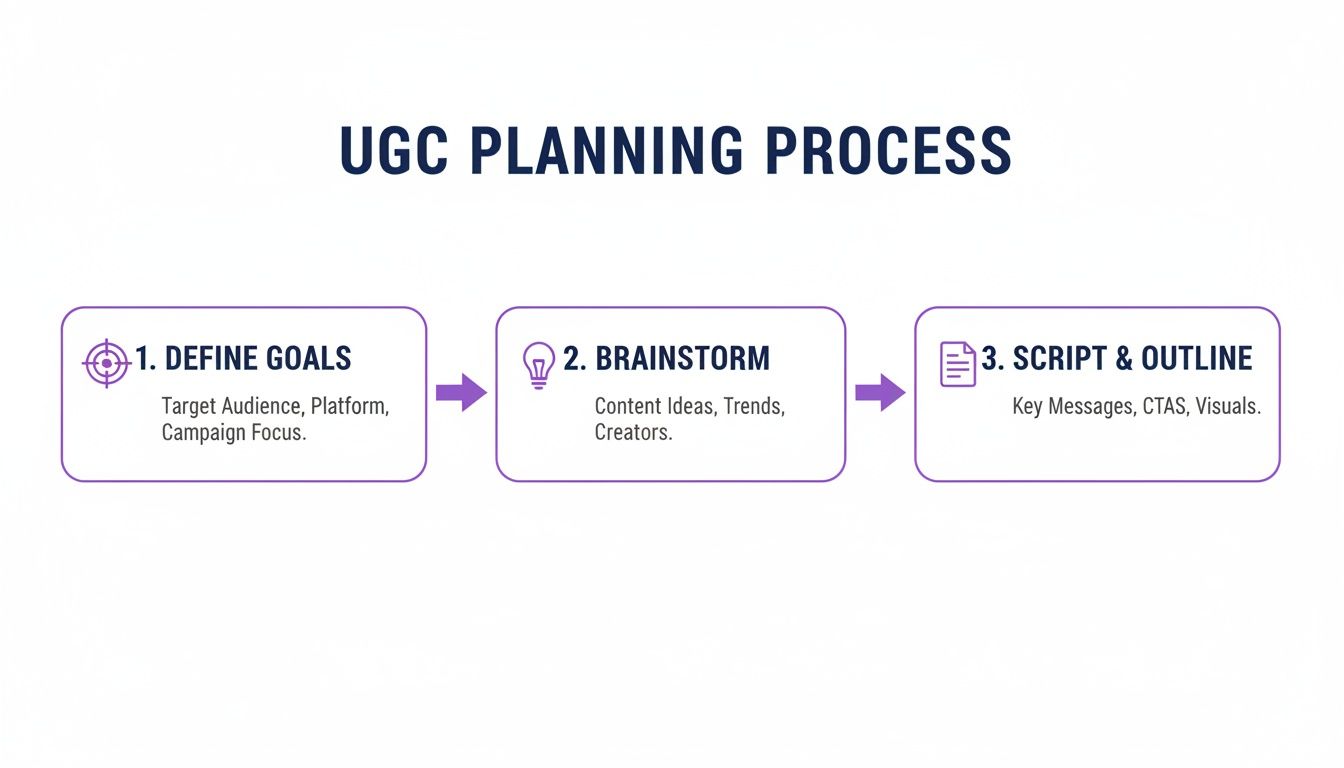
Thinking through your goals and concepts before you hit record is the secret to a much more effective video.
The Do-It-Yourself Filming Approach
Let’s be clear: creating authentic UGC doesn't mean you need a film studio or a bunch of fancy gear. In fact, some of the biggest viral hits were shot on a regular old smartphone. That slightly raw, unpolished vibe is exactly what makes it feel real and trustworthy to the people watching.
But "raw" shouldn't mean "bad." You can seriously level up your DIY videos from looking amateur to amazing with just a few simple tweaks.
Your Essential DIY Filming Checklist:
- Clean Your Lens: I know, it sounds ridiculously basic. But a quick wipe with a microfiber cloth is often the difference between a hazy, blurry mess and a crisp, professional-looking shot.
- Find Good Light: Natural light is your best friend. Seriously. Try to face a window so you get soft, even light on your face. Never have the main light source behind you, or you’ll just be a dark silhouette.
- Keep It Steady: Nobody likes watching shaky video. It's just distracting. Prop your phone up against a stack of books, grab a cheap tripod, or even use a coffee mug to keep it still.
- Get Clear Audio: Record in a quiet room. Background noise from traffic, barking dogs, or the TV will kill your video's quality. A great pro tip: the microphone on your wired headphones is often way better than your phone's built-in mic.
The goal isn't Hollywood perfection. It's about creating something that feels real and relatable. A clear shot with good audio that you filmed in your own home is way more powerful than a blurry, shaky video that's impossible to watch.
Nailing these simple things ensures your message gets through loud and clear. It keeps the focus on your story, not on technical glitches. This method is perfect for capturing those genuine testimonials and product demos that people actually connect with.
The AI-Powered Creation Alternative
Okay, but what if you need to create a lot of content? Or you want to test dozens of different ad variations, and you just don't have the time (or desire) to film everything yourself?
This is where AI-powered video generation completely changes the game for anyone learning how to make UGC.
Platforms like Sprello let you create entire UGC-style videos from scratch without ever picking up a camera. In just a few minutes, you can generate a script, pick a realistic AI avatar to be your presenter, and produce a natural-sounding voiceover.
The process is surprisingly simple:
- Generate Your Script: The AI can write hooks, body copy, and calls-to-action that are designed to work for your specific audience.
- Select an AI Avatar: You can choose from a big library of diverse and realistic presenters to be the face of your video.
- Create a Voiceover: Turn your script into a human-sounding voiceover. You can even pick different languages and accents.
- Add Visuals: The platform can generate custom B-roll, images, and other clips to match what your script is talking about.
This approach gives you incredible speed and flexibility. Think about it: you could create five different versions of an ad—each with a unique hook and a different presenter—in less time than it takes to set up the lighting for a single DIY shoot.
The power of video UGC is huge, especially when it comes to getting discovered and making sales. User-generated videos on YouTube get, on average, 10 times more views than content made by the brands themselves. On top of that, 70% of Gen Z and 68% of Millennials use UGC to find new products, and they're 40% more likely to buy after seeing a creator's review. For e-commerce brands, visual UGC is a top performer, driving 3 times longer watch times and boosting conversions by over 102% when people engage with it. If you want to go deeper, you can explore the full statistics on video UGC's impact.
Bringing Your UGC Video to Life in the Edit
Okay, you've got your raw footage. Now comes the fun part—the edit. This is where you transform a bunch of simple clips into a story that actually stops the scroll and gets people to watch. The real magic of high-converting UGC happens right here, turning good ideas into great videos.
The signature UGC style is all about energy and speed. Think quick cuts, dynamic motion, and zero fluff. Long, slow shots are your enemy. Your job is to trim out every single dead second and awkward pause to keep the momentum sky-high.
This isn’t just for show; it’s about respecting how people consume content on social media. By cutting rapidly between different angles, B-roll, and text on screen, you create a dynamic experience that keeps their eyes glued to your video.
A Blueprint for an Engaging Edit
A great edit isn't random; it guides the viewer from "what's this?" to "I need this." You're building a mini-narrative that hooks them in the first three seconds and doesn’t let go until they’ve seen your call-to-action.
Here's a battle-tested structure that works almost every time:
- The Hook (0-3 seconds): Hit them with your most visually interesting clip or a bold text overlay. Pose a question, state a problem, or make a surprising claim.
- The Problem (3-8 seconds): Give them a little context. Show the "before" state or dive deeper into the pain point you just introduced. Quick cuts demonstrating the struggle work perfectly here.
- The Solution (8-15 seconds): Time to introduce your product as the hero. This is where you use satisfying B-roll and clear shots of the product doing its thing.
- The Results (15-25 seconds): Show off the amazing results. This is the "after" moment that proves your product delivers on its promise.
- The CTA (Final 3-5 seconds): End with a crystal-clear, simple instruction. Tell viewers exactly what to do next with an end card, a text overlay, or a direct voiceover.
Following this framework gives your video a natural flow and makes sure you deliver your message before you lose the viewer's attention.
Why Sound and Captions Are Non-Negotiable
Sound is a massive part of the experience, but you need a two-pronged strategy. On platforms like TikTok and Instagram, jumping on trending audio can give your video a serious organic boost by aligning it with what the algorithm is already promoting.
But here’s the thing: you can't rely only on sound. A huge chunk of people watch videos on mute, especially when they're in public. That’s why captions are absolutely essential.
Captions have moved far beyond being an accessibility feature—they're a core part of video marketing now. In fact, research shows that UGC-style ads with captions see 4x higher click-through rates than ads without them.
Don't just slap a plain line of text at the bottom, either. Make your captions a key visual element:
- Animate your text: Have words appear one by one to match the voiceover.
- Use bold colors: Make text pop with brand colors or high-contrast combinations.
- Add emoji: Sprinkle in relevant emojis to highlight key phrases and inject some personality.
Many modern video tools like Sprello have one-click features that automatically generate and style these kinds of eye-catching captions. It’s a huge time-saver and guarantees your message hits home, whether the sound is on or off.
Adding That Final Layer of Polish
The last step is to add those little professional touches that make your video feel premium, even if it was shot on a phone. This means adjusting colors to make them more vibrant, adding simple transitions between clips, and using on-screen text or graphics to call out key benefits.
A quick "zoom in" effect, for instance, can put extra emphasis on a critical moment. A simple "swipe" transition can help you move cleanly from one scene to the next. The goal isn't to load it up with cheesy effects, but to use subtle enhancements that direct the viewer's focus and make the entire video more engaging.
Ultimately, you want a final product that feels authentic but performs like a professionally crafted ad.
You've created a fantastic UGC-style video. That’s a huge first step, but the real work starts now. A great video that nobody sees isn't going to move the needle for your business. This is where distribution comes in—getting your content in front of the right eyeballs and then figuring out what actually worked.
Without a solid plan for distribution and measurement, you’re basically flying blind. You won't know which videos are actually bringing in customers, which hooks are resonating, or where your ad spend is best placed. Let's get this final phase dialed in so you can build a repeatable system for growth.
Optimizing Your UGC for Each Platform
Every social media platform has its own vibe, its own rules of engagement. What kills it on TikTok might completely flop on Instagram Reels, even if they seem similar on the surface. Taking a few extra minutes to tailor your video for each channel can make a world of difference.
First, let’s talk about the basics—the technical stuff. Getting the specs right from the start makes your content look native and professional, not like a clunky afterthought.
UGC Video Specs by Platform
Here's a quick cheat sheet I use to make sure our videos are formatted correctly for the biggest platforms. It saves a ton of headaches later.
| Platform | Recommended Aspect Ratio | Ideal Length | Key Tip |
|---|---|---|---|
| TikTok | 9:16 (Full Screen Vertical) | 15-30 seconds | Jump on trending sounds and use quick, punchy edits. Attention spans are short here. |
| Instagram Reels | 9:16 (Full Screen Vertical) | 15-60 seconds | Reels tend to favor slightly more polished, visually appealing content. Good storytelling wins. |
| YouTube Shorts | 9:16 (Full Screen Vertical) | Under 60 seconds | Use big, bold captions since many people watch without sound. Shorts can have a longer lifespan, so think about evergreen value. |
Beyond the technical details, think about the user’s mindset on each platform. People go to TikTok for raw entertainment and quick hits of dopamine. On Instagram, they might be looking for more inspiration or aesthetic content. Adjust your captions, calls-to-action, and even the editing pace to match that energy.
Fueling Your Content with Paid Advertising
Organic reach is wonderful, but it's unpredictable. Paid ads are how you guarantee your best-performing UGC videos get seen by your target customers. The magic of using UGC in ads is that it doesn't feel like an ad. It blends right into the feed, building trust almost instantly because it looks like a recommendation from a real person.
The numbers don't lie. Ads featuring UGC get 4x higher click-through rates compared to standard brand ads. That's not just a minor improvement; it's a massive performance boost that can completely change your campaign economics.
Use your paid campaigns as a testing ground. Run different versions of your UGC ad to see which hook, creator, or call-to-action performs best. Once you find a winner, you can put more budget behind it. This is how you stop guessing and start building a playbook for what truly works.
Measuring What Truly Matters
Okay, your video is live and the ads are running. Now what? It's time to dig into the data. This is where you learn what's working and what's not, so you can make smarter decisions next time.
Don't get caught up in vanity metrics like views or likes. They feel good, but they don't pay the bills. The numbers that matter are the ones tied directly to your business goals: clicks, conversions, and cost.
To get a real sense of your UGC's impact, keep a close eye on these key performance indicators (KPIs):
- Click-Through Rate (CTR): What percentage of people who saw your video actually clicked? This tells you if your hook and creative are strong enough to grab attention.
- Conversion Rate: Of those who clicked, how many followed through and made a purchase or signed up? This is the ultimate proof that your video is persuasive.
- Cost Per Acquisition (CPA): How much are you spending to get a new customer? Knowing this number is critical for making sure your campaigns are actually profitable.
- Return on Ad Spend (ROAS): This is the big one. For every dollar you put into ads, how much revenue did you get back? This metric gives you the clearest picture of financial success.
Tracking these numbers helps you see the patterns and refine your strategy over time. If you want to go even deeper on this, our complete guide to video marketing analytics breaks down exactly how to track and interpret your data for the best results.
Navigating UGC Rights and Brand Safety
So you've found an amazing video from a customer showcasing your product. The temptation is to hit that share button immediately, but hold on. Using content created by your audience is a powerful way to build trust, but you have to be smart and ethical about it.
Getting this part right isn't just about avoiding legal trouble; it’s about building a respectable, long-term relationship with your community.
Getting Clear Permission to Use Their Content
First things first: you always need explicit permission before using someone else’s content for your business.
A quick "Love this! Can we share?" in the comments feels casual and friendly, but it's legally flimsy. That kind of informal ask won't hold up if you decide to use their video in a paid ad or on a product page. You need something more concrete.
The easiest way to handle this is with a simple content agreement. Don't let the word "agreement" scare you; this doesn't need to be a 20-page document drafted by a legal team. A straightforward email or even a direct message that clearly spells out the terms is usually all you need to get clear consent.
Make sure your request covers these key points:
- Where you'll use it: Be specific. Are we talking social media feeds, your website, email newsletters, or even paid advertising?
- How long you can use it: Will it be for a year, or are you asking for rights in perpetuity (forever)?
- If you can make edits: Can you add your own branding, captions, or background music?
Having a simple, written agreement isn't about being difficult—it’s about showing respect. It proves you value the creator's work and makes sure everyone is on the same page. This simple step can save you from major headaches and misunderstandings down the road.
Protecting Your Brand's Reputation
Beyond the legal side, you also need to think about brand safety. Just because someone tags your brand doesn't mean their content is a good fit for your official channels. Vetting every single piece of UGC before you promote it is non-negotiable.
You need to have clear moderation guidelines in place. Your team should be checking every submission for things like offensive language, misleading claims, or any other sensitive material that doesn't align with your brand's values. For example, if someone posts a video using your product in an unsafe way, that's a hard pass, no matter how great the lighting is.
This careful review process ensures that every piece of content you amplify truly reflects who you are as a brand. It's what turns your UGC program from a potential liability into one of your most powerful marketing assets.
Frequently Asked Questions About UGC
Jumping into User-Generated Content for the first time? You probably have some questions. It's totally normal. Most people wonder about the budget, if they have to be on camera, or how to get those elusive viral views. Let's clear up some of the most common things that trip people up.
What’s This Going to Cost Me?
Honestly, the cost of making a UGC video can be anything from $0 to a few hundred bucks. It really depends on the route you take.
- Doing It Yourself: This is the cheapest way in. You've got a smartphone, right? That's all you need to start. Your only investment is time.
- Hiring a Creator: If you pay someone else, you're looking at a range of about $50 to over $500 per video. The price tag depends on their experience, how big their audience is, and what you’re asking them to do.
- Using AI Tools: This is a great middle ground for scaling up. You pay a monthly subscription and can pump out a ton of videos without worrying about paying for each one individually.
Your budget will point you in the right direction, but don't think you need to spend a fortune. Amazing, high-performing videos get made at every price point.
Is There a Secret to Going Viral?
There's no guaranteed formula for a viral hit, but you can absolutely stack the deck in your favor. Think about the videos you've shared—what did they have in common?
Viral content almost always strikes a chord. It might be a super relatable problem that everyone has, a genuine emotional reaction like shock or laughter, or a smart take on a trending topic. The goal is to create something so interesting, funny, or helpful that people just have to share it.
My advice? Stop chasing "viral." Focus on making a genuinely good video for your specific audience. If you do that well, the shares will come naturally.
Can I Make UGC Videos Without Showing My Face?
Yes, 100%. You don't have to be a vlogger or influencer to create great UGC.
Some of the best-performing videos are filmed from a point-of-view (POV) angle. All you see are the creator's hands using the product. A simple voiceover is often all you need to make it feel personal and authentic. This approach is powerful because it puts the product right at the center of the story.
You don't need to be an on-screen personality to create compelling UGC. Voiceovers paired with shots of your hands using a product can be just as effective and authentic.
AI video tools are also a game-changer here. You can use a realistic AI avatar to be the person in your video, giving you that human touch without ever stepping in front of a camera.
Where Do I Find People to Make Videos for My Brand?
Finding great creators is probably easier than you think. Your best bet is to start with the people who already love you: your customers. A simple contest or a small incentive can bring in fantastic, authentic videos from your biggest fans.
You can also do a little digging yourself. Search relevant hashtags on TikTok and Instagram to find creators who are already talking about products like yours. And if you want to streamline things, there are creator marketplaces out there that connect brands directly with experienced UGC creators who are ready to get to work.
Ready to create high-converting UGC without the hassle of filming or finding creators? With Sprello, you can generate scripts, realistic AI avatars, and polished videos in minutes. Stop guessing and start creating content that sells. Explore Sprello today.


