October 18, 2026
Product Concept Development That Actually Scales
A practical guide to product concept development across SKUs, regions, and seasons, covering ideation, validation, prototyping, and rollout governance.
A product-development funnel can turn 100 new ideas into just two commercialized products, according to research summarized in the product-development literature (research on new-product development). That isn't a reason to generate fewer ideas. It's a reason to treat product concept development as a governed decision process, where teams test the riskiest assumptions before they become expensive samples, production commitments, or campaign assets.
A concept can win a room and still fail the range. The illustration looks right, the color story feels fresh, and the team agrees on the direction. Then the work expands across sizes, markets, suppliers, channels, and seasonal assets. If no one tested whether the material is available, the fit can be graded, or regional teams can use the creative consistently, the original concept wasn't ready to scale.
The practical question isn't only whether a concept is appealing. It's whether it can pass through four gates: ideation, validation, prototyping, and scaling. Each gate should produce a decision and an artifact, not just another meeting.
Why Most Concepts Fail Before They Reach Production
The moodboard gets approved. Merchandising sees a coherent story, design has a silhouette to develop, and marketing can already picture the campaign. The trouble starts when the team turns that single compelling image into a range: several colorways, a size run, regional edits, e-commerce photography, and sales materials. A fabric that looked ideal in the board may not be available in the required quantity. A distinctive detail may be difficult to reproduce consistently. A color that works in one market may not fit another market's assortment.
None of those problems means the original creative direction was weak. It means the team approved a visual before establishing what the visual had to prove.
Early decisions carry unusual weight because they shape what teams investigate next. Academic research on 203 industrial product launches, including 123 successful and 80 unsuccessful launches, found strong associations between outcomes and early activities such as screening, preliminary market and technical assessment, and detailed market research (research on early product-development activities). The lesson applies to fashion, beauty, and lifestyle teams: test customer need, technical feasibility, and commercial potential before committing substantial development resources.
A beautiful concept is a direction to investigate, not evidence that the range is ready.
A reliable process separates creative possibility from approval to advance. Ideation opens up directions. Validation tests whether a direction answers a customer and business need. Prototyping exposes design and construction issues through digital and, where needed, physical tests. Scaling checks whether the approved concept can travel across products, regions, channels, and production.
When those gates blur, teams make decisions on different evidence. Design may think a concept is approved for refinement while sourcing assumes materials are being locked and marketing starts producing assets. That ambiguity becomes rework. A governed funnel gives each function a shared answer to a simple question: what must be true before we move on?
The Four Gates Every Concept Must Pass
A gate isn't a bureaucratic pause. It's a decision point with defined inputs, a tangible output, and an exit criterion. Teams can adapt the format to their seasonal calendar, but they should keep those three elements visible.
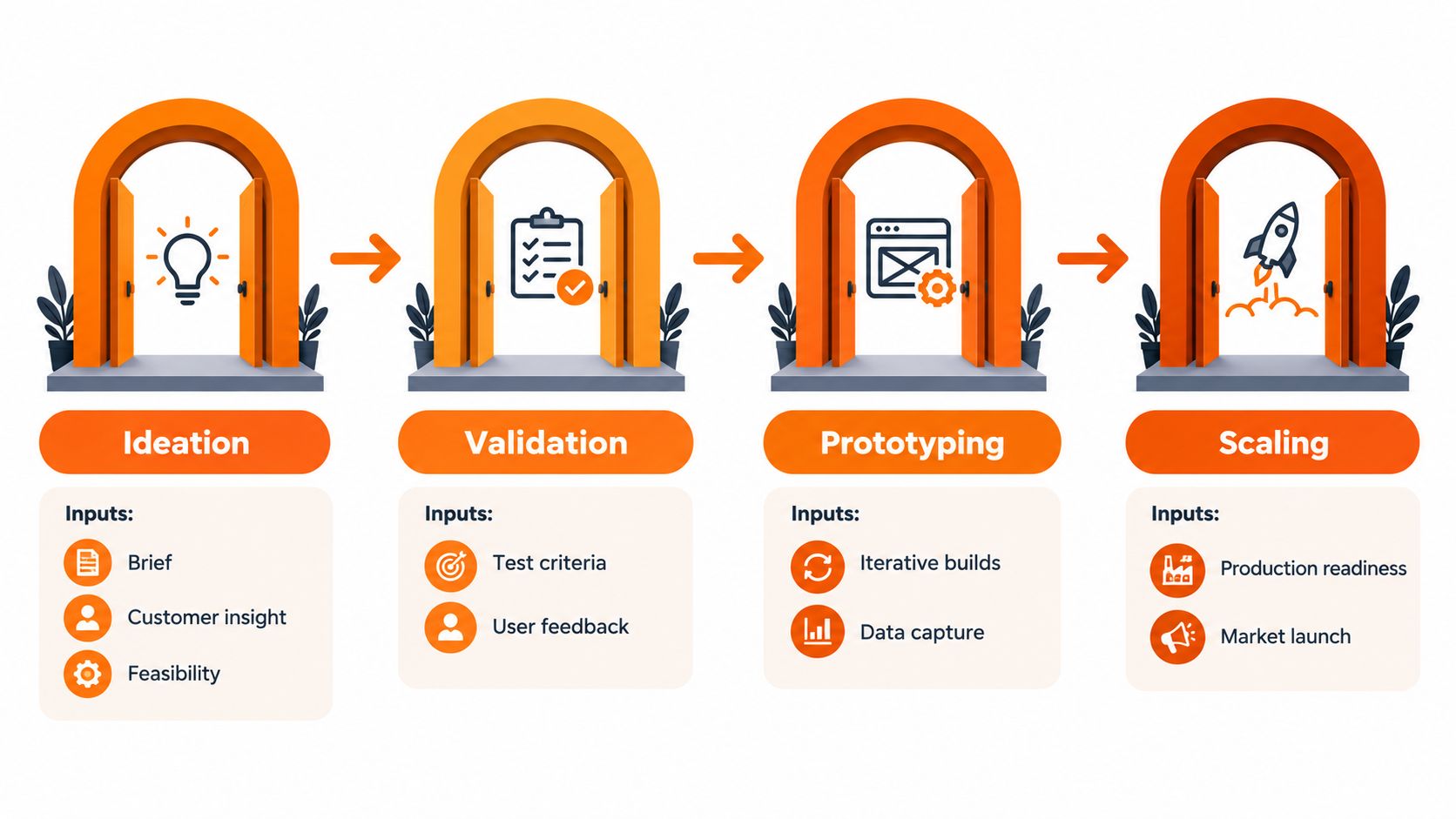
Ideation opens the field
Start with a seasonal or category brief, customer insight, assortment context, and an initial view of feasibility. Explore multiple visual directions without pretending they're all equally viable. The output is a concept board that records the customer, product role, key attributes, and open questions.
The gate closes when the team can explain what need the concept addresses and why it belongs in the assortment. It doesn't close because the board looks polished.
Validation tests the case
Next, compare the concept with the customer need, competitive context, technical constraints, and commercial role. Capture evidence and unresolved risks in a validation memo. For a practical way to organize concept-testing questions before development, use this guide to product concept testing.
Advance only when the team can say what evidence supports the direction, what remains uncertain, and how it will resolve the uncertainty. A strong test doesn't require every answer. It requires honest visibility into the unanswered ones.
Prototyping makes assumptions tangible
Create a digital prototype or sample plan that lets design and product development examine silhouette, materials, color, fit assumptions, and construction. The artifact is a digital prototype with captured feedback and version history. The gate closes when the concept is refined enough to support a specification and any remaining physical tests have a clear purpose.
Scaling checks operational readiness
The final gate gathers the approved specification, supplier and production evidence, assortment variants, regional requirements, and asset needs into a production dossier. Advance when ownership, dependencies, and exceptions are clear enough for execution.
These gates should fit the merchandising cadence, not sit outside it. Tie review dates to assortment decisions and sample milestones so a concept doesn't pass a creative review after sourcing or regional teams have already needed its specifications. That's how the funnel turns seasonal ambition into a sequence of decisions teams can support.
The Discipline Behind Selection
A product funnel protects execution capacity. One historical model starts with 100 ideas, then narrows to approximately 15 after screening, six after product development, three after testing, and two at commercialization (new-product development funnel research). These figures describe a filtering process, not a quota. The point is to test concepts against clear gates before weak assumptions spread across SKUs, regions, and seasons.
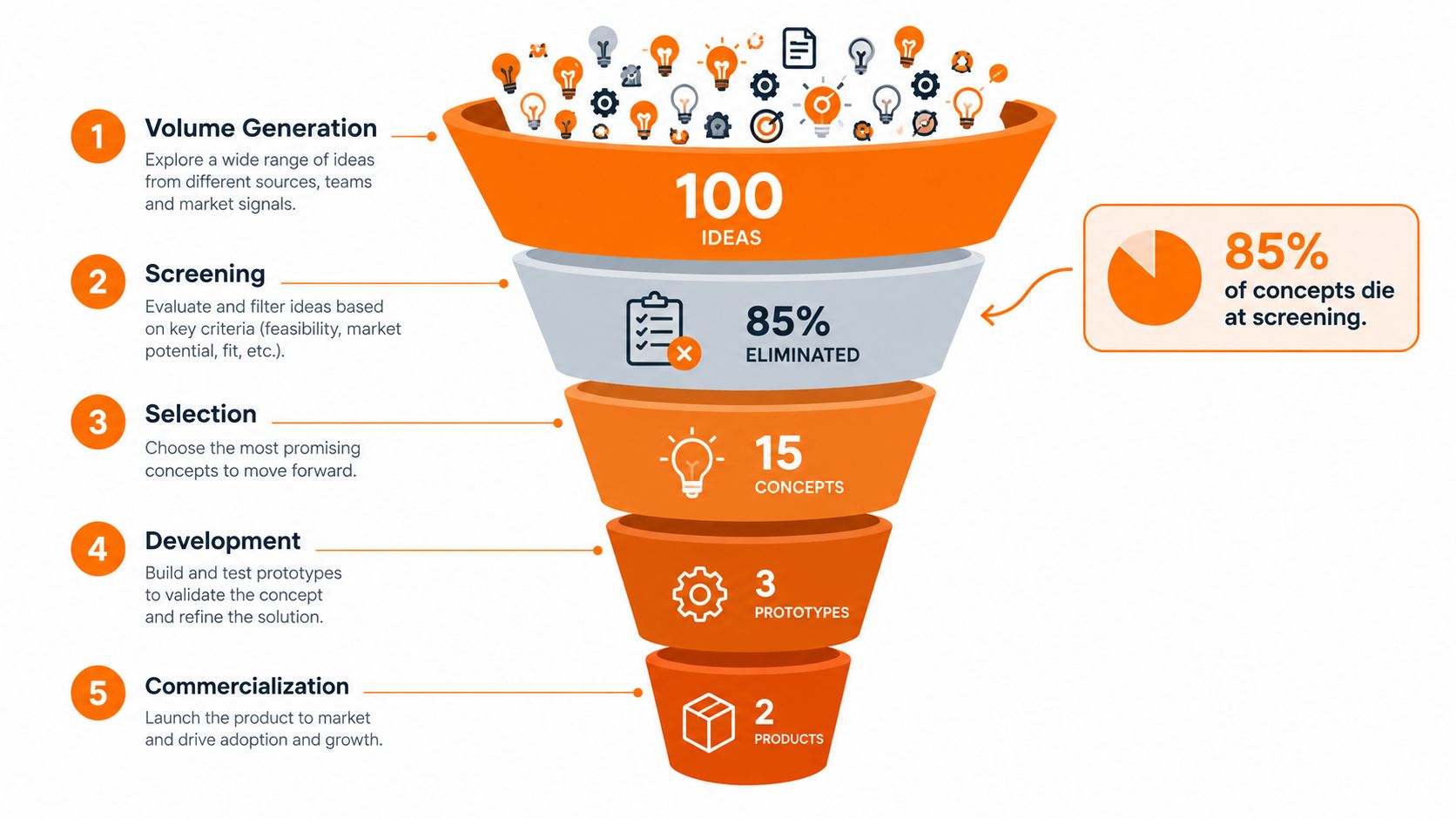
Selection works only when teams agree on what evidence each gate requires. A concept should advance because it addresses a defined customer need, has a credible route to production, and fills a clear role in the assortment. If those conditions are unresolved, carry the uncertainty forward as a recorded risk or stop the concept. Otherwise, design changes, sourcing checks, and regional adaptations can multiply late in the season, when they cost more time and coordination.
Selection is not creative pessimism. It protects capacity for concepts with the strongest evidence.
Set the thresholds before the review. For example, require a specific customer problem, a plausible material and construction route, and a reason the product belongs beside existing items. Keep the same criteria across categories where possible, then document any category or regional exceptions. That gives teams a consistent basis for comparison without forcing every market into an identical offer.
Market references can prompt useful questions, but they are not proof that a concept will work in another category. Reviewing proven Etsy top sellers may help teams examine customer appeal and differentiation. Use those observations to shape category-specific tests, not to substitute for them. A governed funnel makes stopping a weak idea a deliberate decision, rather than a late reaction after resources have already been committed.
Stakeholders and Decision Rights at Each Gate
Cross-functional reviews bog down when everyone has input but nobody owns the decision. A clear operating model distinguishes who approves, who must sign off, and who needs visibility. The exact titles vary, but the decision rights shouldn't.
At ideation, merchandising chairs the review and owns the assortment role, target customer, and seasonal fit. Design owns the creative direction and can reject a route that doesn't meet brand intent. Marketing advises on positioning and campaign implications, while regional leads flag market-specific needs early. Product development and sourcing contribute feasibility signals; they shouldn't be asked to certify a concept before it has enough detail.
At validation, merchandising remains accountable for commercial fit, while product development and sourcing have the strongest technical voice. They should be able to block advancement when the concept depends on unsupported assumptions about construction, materials, cost, or supply. Marketing and regional teams check whether the offer and story make sense in their contexts. Creative operations chairs or facilitates the review, keeping the decision and open risks recorded.
A useful shared starting point is a concise sample design brief that gives each function the same product context before review. The brief should be ready before the meeting, not assembled while stakeholders are talking.
Sign-offs should match the risk
During prototyping, design approves visual and brand fidelity; product development signs off on specification readiness; sourcing confirms the evidence available for materials and suppliers. Marketing and regional leads review the assets and variations they'll depend on downstream. At scaling, merchandising owns the go-forward assortment decision, with production, sourcing, regional, and marketing approvals required for their respective execution risks.
Keep the meeting focused on decisions. Send the artifact in advance, name one chair, and record the outcome as advance, revise, or stop, with an owner for every unresolved issue. Visibility does not mean veto authority. A region lead should be able to raise a market constraint; that doesn't mean every regional preference should reopen the whole concept.
This model works across parallel seasons because it defines decision rights by gate, not by who speaks loudest. Creative operations protects the process; functional owners supply the judgment their work requires.
Prototyping in the Digital Twin Era
Digital prototypes reduce rework only when they carry decisions teams can act on. A rendered silhouette without material assumptions, target market, or variant history may prompt reactions to appearance, but it cannot support a reliable handoff to product development. Treat each prototype as a governed design variant, with enough context to assess how a change affects SKUs, regions, and future seasons.
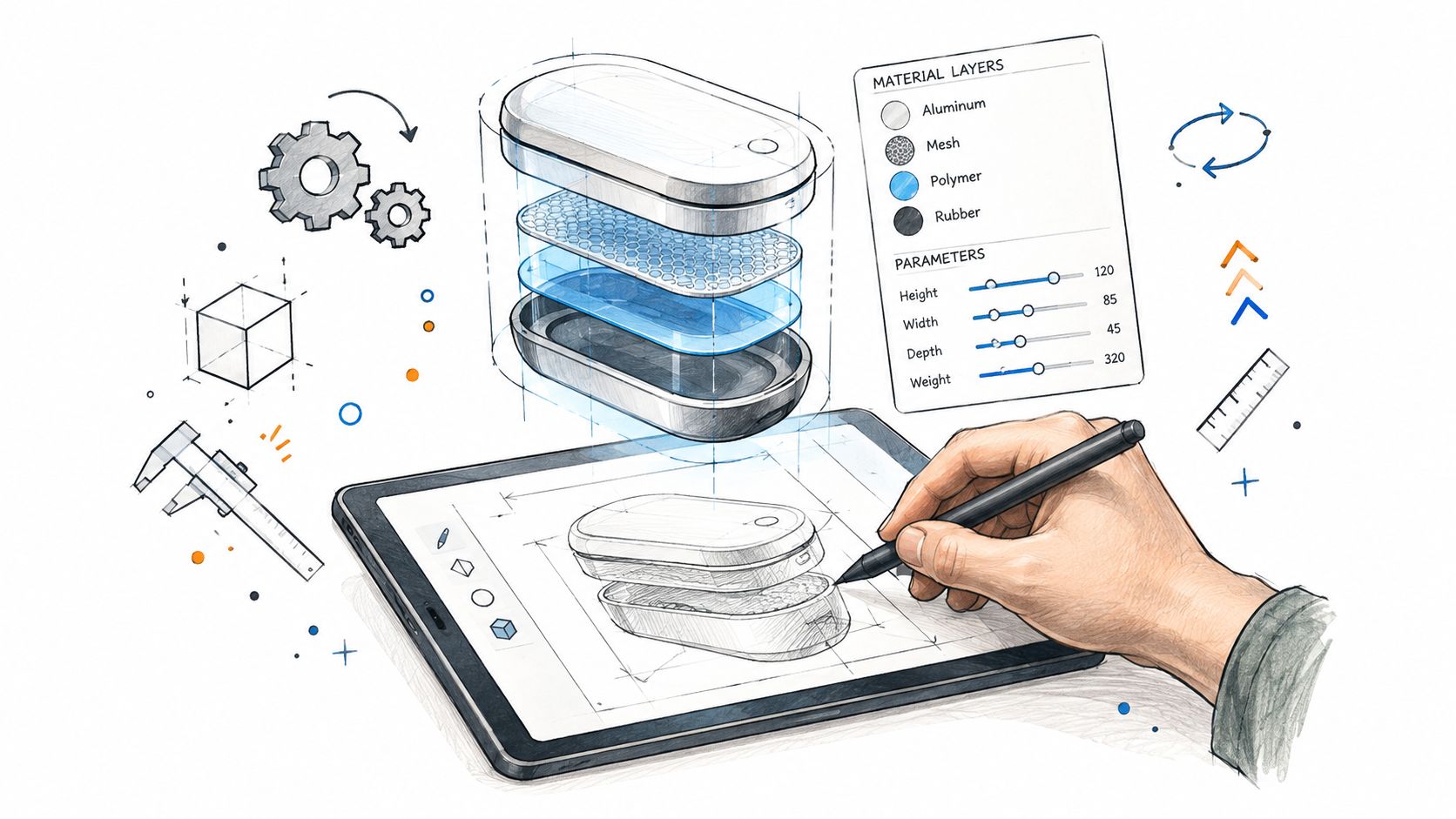
3D virtual prototyping lets designers assess silhouettes, fabric behavior, patterns, and construction details on a dynamic virtual mannequin before producing physical samples. Teams can adjust digital attributes, compare versions, and decide which remaining risks need a physical test. Research on virtual prototyping describes potential operational and environmental benefits from reducing material-intensive trial and error (research on virtual prototyping and sustainability). Use that evidence to guide the process, not to assume that every digital iteration replaces a sample.
Keep the design record attached to the image
Each variant should carry its source brief, silhouette attributes, material assumptions, colorway, target market, and approval status. Keep version history, use consistent names, and record who approved each change. When a material changes, check supplier feasibility, care requirements, and construction before the variant advances. These dependencies should be visible in the design record, not buried in email.
Physical testing still has a defined role. Teams may need samples to assess material hand, construction, fit, or performance when the digital representation cannot answer the question. Set the test around a specific uncertainty, rather than making a physical sample the default for every visual variation. A cross-industry example is quick-turn prototyping for automotive R&D, where rapid prototypes support design evaluation before further development.
Environmental trade-offs belong in the same decision funnel. Product design choices shape environmental outcomes early, so record material, color, construction, and fit decisions while teams can still change them. A proposed adjustment should be checked against its effects on related variants and markets, not approved for one SKU in isolation.
Track sample count per SKU, days from brief to approved concept, and the share of concepts rejected before sampling. These measures show whether digital screening helps teams resolve questions earlier and reserve physical work for risks it can answer. They also reveal where a weak decision gate is creating repeat work across variants.
Scaling Without Losing the Concept
A concept can be desirable and feasible yet still fail at scale. That usually happens when teams postpone operational questions until the handoff: Can factories reproduce the details? Do material assumptions hold across colorways? Can regional teams adapt campaign assets without losing brand consistency? Does the concept still fit when the assortment expands across channels?
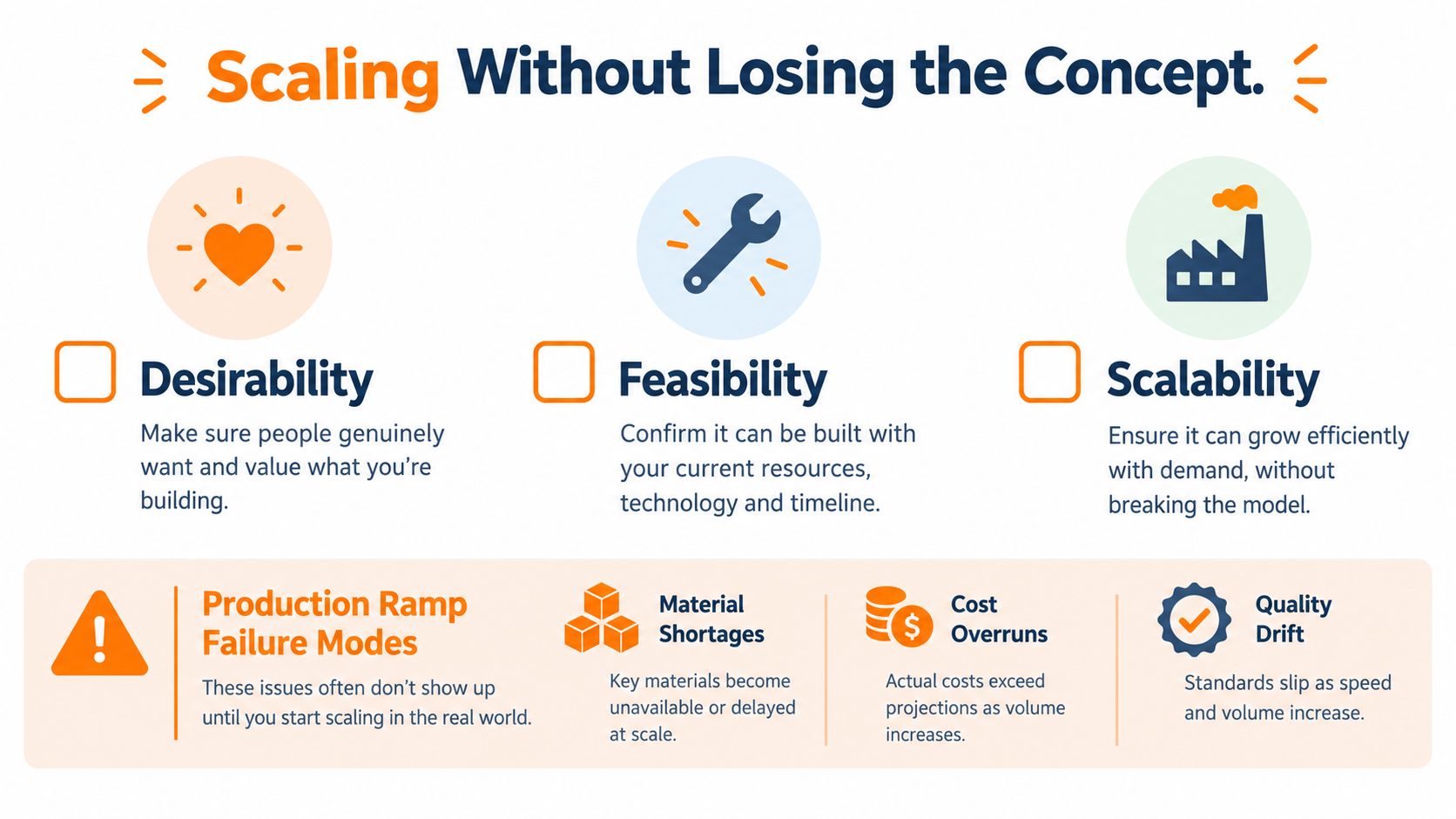
Scalability belongs inside validation, beside desirability and feasibility. Generative AI and other digital tools can help teams explore more directions, but a higher volume of concepts can also create more downstream complexity if variant records, naming, approvals, and asset reuse are inconsistent. Digital product-development coverage cites possible material and emissions reductions from virtual design and sampling, but those figures alone don't establish whether a particular concept can scale reliably. A team still needs to test its own handoffs and production route.
Pilot the operational pathway
Choose a concept and trace it through its intended SKU, channel, and regional variations before committing broadly. Set a baseline, then record revision rates, handoff time, sample count, localization effort, forecast confidence, and production exceptions. Compare the results with the team's existing way of working. If the concept needs repeated clarification or every region rebuilds its assets, the creative direction may be strong while the operating model remains unready.
Use those findings to check a short readiness list:
- Assortment fit: Confirm that variants, sizes, and colorways have a defined role in the range.
- Specification completeness: Attach materials, construction assumptions, target market, and approval status.
- Production path: Identify what sourcing and product development still need to verify.
- Asset reuse: Set naming conventions and brand guardrails before campaign work multiplies.
- Exception handling: Name who can approve a change when a supplier, market, or channel constraint appears.
Automation in manufacturing offers a useful comparison for thinking about repeatable workflows. This visual resource on how automation scales car manufacturing can prompt questions about standardization and handoffs, though fashion and beauty teams must validate their own supply and creative constraints.

For visual planning and production workflows, product concept design can help teams consider how creative direction connects to product variants. The scaling test remains practical: can the concept move from an approved idea to consistent, traceable execution without recreating the decision at every handoff?
Sustainability as a Concept-Stage Trade-Off
Sustainability is often treated like a materials checklist: select a preferred input, record it, then move on. That approach misses the choices teams have to make. A material may offer one benefit but come with a cost, supply, durability, or compliance constraint. A concept-stage decision should weigh those factors against the product's role and the market where it will be sold.
The commercial context can make the trade-off uncomfortable. McKinsey's 2025 fashion research reports that 18% of executives considered sustainability a top-three growth risk, down from 29% in 2024, even as regulation accelerated (McKinsey's State of Fashion 2025 report). That gap doesn't make sustainability irrelevant. It makes it more important to connect the decision to a specific product, customer, supplier, and market rather than assume every attribute carries the same commercial weight.
Compare the consequences before approval
| Attribute | What to Measure | Typical Trade-Off |
|---|---|---|
| Durability | Expected product life and evidence supporting performance | Longer use may require a different material, construction, or cost profile |
| Recyclability | Available end-of-life routes and relevant material details | A design choice may simplify use or production while making recovery harder |
| Cost | Expected product and sourcing implications | A preferred material may challenge target margins or price expectations |
| Supplier availability | Supplier evidence, capacity, and sourcing constraints | A compelling specification may be difficult to secure consistently |
| Regulatory exposure | Applicable market requirements and support for product claims | A market-ready concept may need different substantiation or localized wording |
| Customer willingness to pay | Feedback tied to the offer and target customer | An attribute may matter to the team more than it affects customer choice |
Use the brief to specify which sustainability attribute matters for this SKU and why. Attach supplier evidence, expected sell-through assumptions, end-of-life considerations, and region-specific claims requirements. Then record what the team is accepting as a trade-off. Research on sustainable fashion innovation describes consumer behavior, managerial performance, circular business models, and digital technology as connected themes, while noting barriers to circular adoption (research on sustainable fashion innovation).
A concept-stage decision won't remove every tension. It will make the tension visible while the team can still choose another material, adjust the construction, or change the market plan. Sustainability has more influence when it helps determine which concepts advance, not when it appears only in launch messaging.
A 90-Day Plan to Govern the Next Season
Use the first part of the season to align the brief and agree on screening criteria. Merchandising, design, product development, sourcing, marketing, and regional leads should know what evidence each gate requires before ideas arrive for review. Save the criteria and decision owners in a shared record.
Next, run validation reviews against customer need, commercial role, and feasibility. Produce a short decision memo for each advancing concept, with unresolved risks assigned to an owner. Then lock the digital prototype records: attach variants, materials, colorways, target markets, and approvals before teams request samples or campaign assets.
Close the cycle with a scalability pilot across the intended assortment and markets. Record revision rates, handoff time, localization effort, production exceptions, concept-to-specification cycle time, sample count per SKU, and the percentage of concepts rejected before sampling. Review the results with the people who own the next gate, then adjust the process before the following concept cycle.
The operating principle is simple: don't approve an image when the next decision requires a production pathway. Approve evidence, ownership, and a clear reason to advance.
Sprello provides an AI workflow canvas for fashion, beauty, and lifestyle teams to explore product concepts and organize production-ready creative workflows across SKUs, channels, regions, and seasons. If your team needs a clearer path from concept decisions to coordinated execution, visit Sprello.
Related
More to explore
Fresh reads
Product Concept Testing: A Practical 2026 Playbook
Master product concept testing in 2026 with a practical playbook covering qualitative research, rapid prototypes, A/B tests, KPIs, and AI-assisted workflows
Why Brand Consistency Is Important for Modern Brands
Discover why brand consistency is important for recognition, revenue, and operational efficiency. Learn practical guardrails to scale consistency across regions
Product Concept Design That Actually Ships
A practical guide to product concept design for fashion and lifestyle brands. Master ideation, moodboards, and production-ready briefs that scale.