September 22, 2026
Audit Process Steps That Keep Creative Work on Brand
Learn audit process steps for fashion and beauty teams to audit creative workflows, catch errors early, and keep campaigns on brand at scale.
A campaign can be technically ready and still fail the launch review. The product pages are populated, the lookbook is approved, and the paid social variations are sitting in their folders. Then someone notices that a core colorway is warmer in the e-commerce image than in the seasonal dossier, a regional banner uses an outdated logo lockup, and an AI-generated model image changes the garment's silhouette. The fixes look small until they spread across SKUs, channels, markets, and approval threads.
That's why audit process steps matter for creative teams. A useful audit isn't a finance checklist pasted onto a fashion or beauty workflow. It's a repeatable review of how product information, creative decisions, asset transformations, and final outputs move through the organization. The practical standard is simple: define the risk, inspect the evidence, document the finding, assign the fix, and verify that the correction holds where customers will see it.
Why Creative Audits Fail Without a Clear Process
The usual pre-launch scramble starts with good intentions. Merchandising shares the assortment spreadsheet, design sends the approved campaign board, and marketing exports channel versions from whichever folder appears most current. Each team checks its own work, but nobody owns the relationship between the inputs and the final customer-facing output.
That gap creates familiar problems. A product may have the correct SKU but the wrong color name. A beauty campaign may follow the approved palette in the hero image while retail banners use a different background treatment. A regional team may adapt copy correctly but crop the product so aggressively that the pack architecture no longer reads. These aren't isolated creative preferences. They're workflow failures that become expensive when teams discover them after production has multiplied the asset.
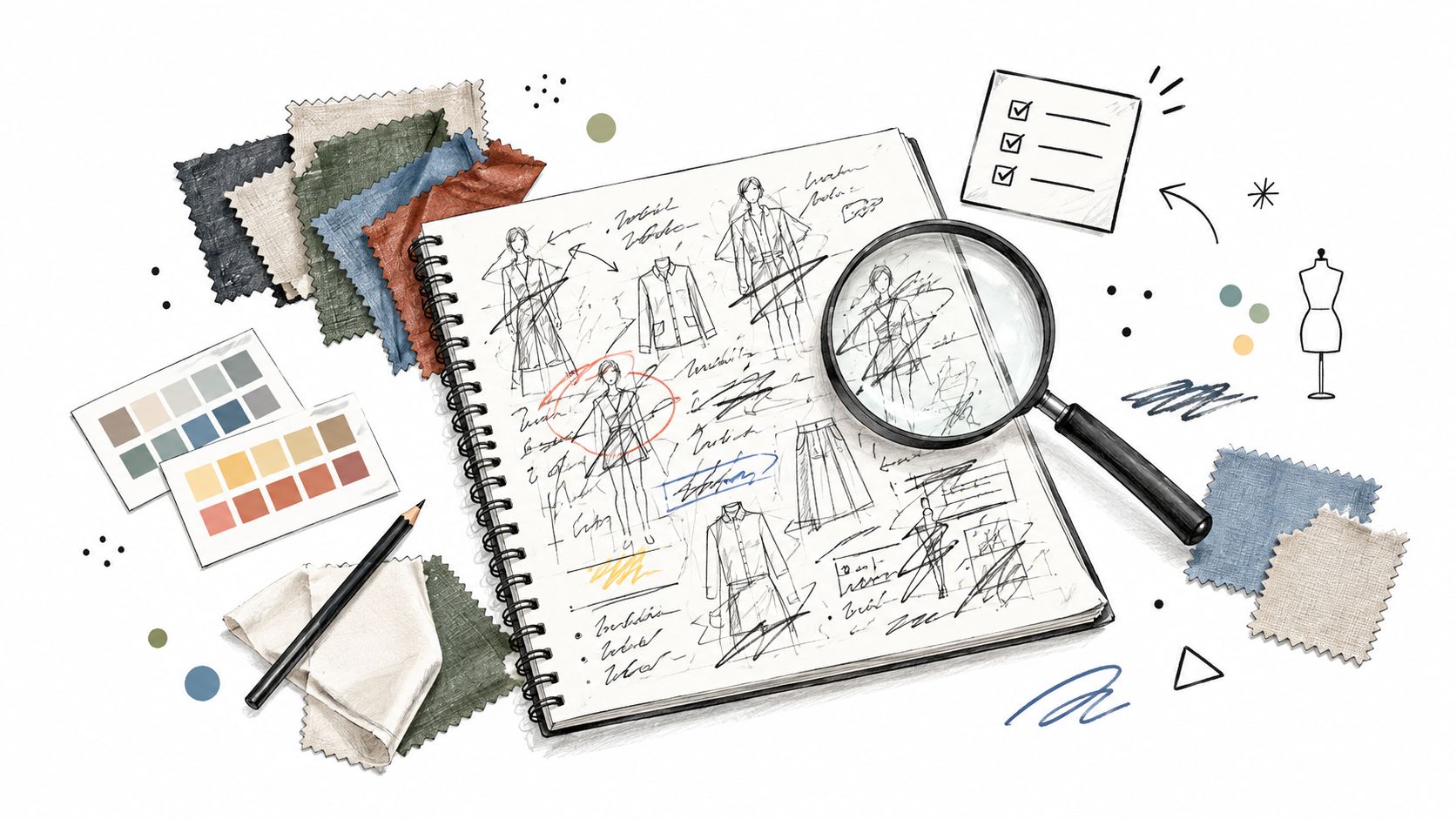
A checklist checks files, a workflow audit checks movement
A one-time checklist asks whether an image exists, whether a logo appears, or whether a deliverable has been approved. A workflow audit asks harder questions:
- Input integrity: Did the team use the approved product data, swatches, copy, and brand guidance?
- Transformation control: Who changed the image, prompt, crop, retouching, localization, or channel format?
- Output consistency: Does the final asset still represent the approved SKU, campaign idea, and market requirement?
- Handoff accountability: Can someone identify the owner, reviewer, version, and decision behind each deliverable?
This approach mirrors the logic used in formal audit practice. PCAOB guidance structures audit work around planning, risk assessment, tests of controls, and substantive procedures, with AS 2101 and related evidence guidance treating planning and risk evaluation as foundations for later testing. Creative teams can apply the same discipline without turning designers into accountants: understand where failure is likely, define the response, then inspect the evidence that supports the conclusion.
Practical rule: If a reviewer can identify the final file but not the approved input or the person who changed it, the workflow isn't audit-ready.
The cost of an ad hoc review isn't only rework. Late corrections interrupt merchandising decisions, delay localization, create duplicate exports, and weaken confidence in the seasonal dossier. A clear process protects speed because it moves judgment earlier, when teams can still change the source asset instead of repairing every downstream variation.
Setting Up Your Audit for Success
Preparation determines whether fieldwork produces useful findings or a long list of subjective comments. Before anyone checks a product image or campaign variation, the audit captain should establish what the review must answer, which assets are included, how reviewers will judge them, and who owns the evidence.
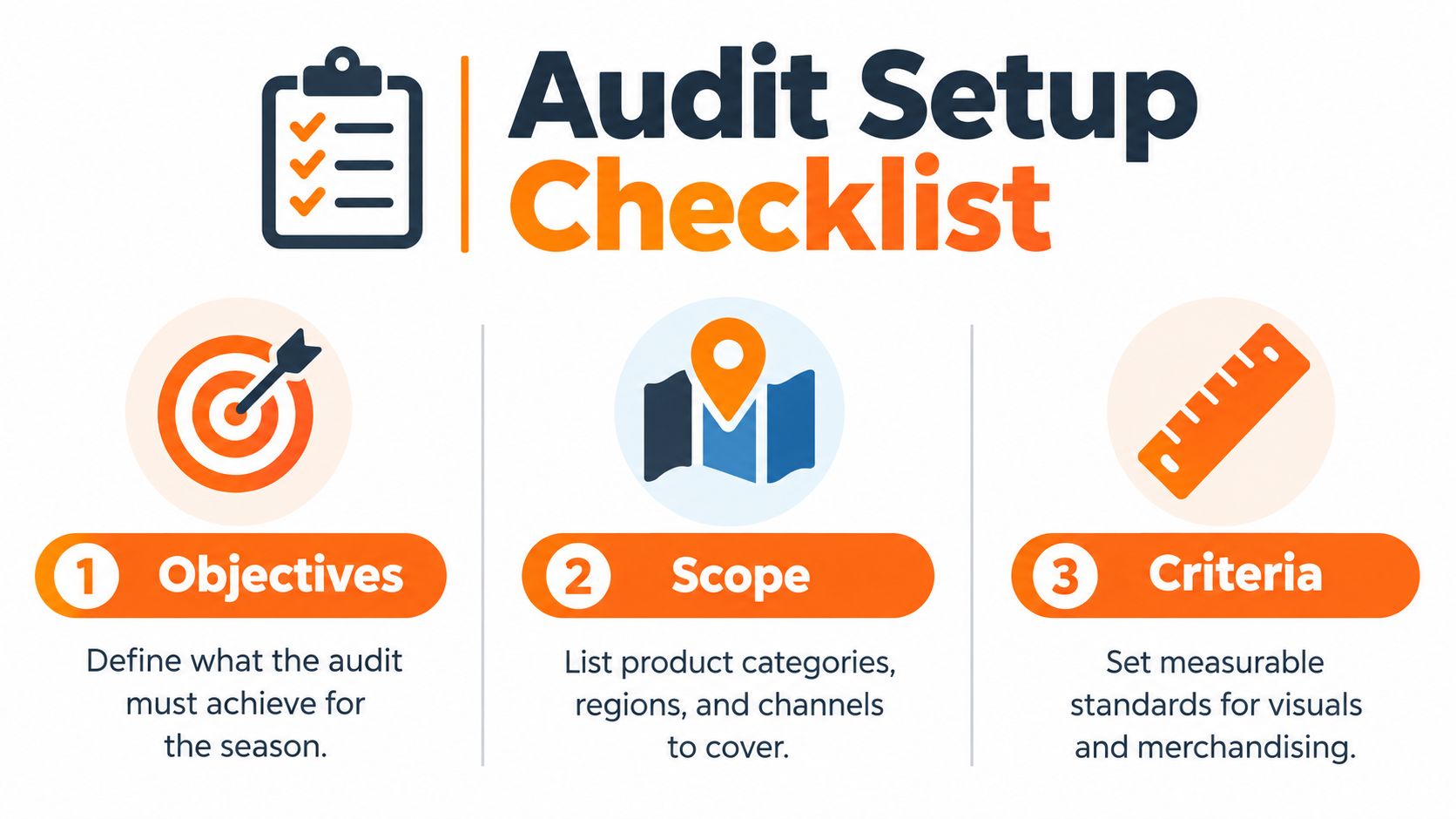
Start with the objective. A seasonal audit might test whether the assortment visualization reflects the approved line architecture, whether editorial assets follow brand guardrails, or whether channel adaptations preserve product truth. Those objectives should be specific enough to guide sampling and broad enough to expose handoff failures between merchandising, design, marketing, and regional teams.
Define scope before the first review
Scope is the boundary that keeps a creative audit from expanding every time someone remembers another folder. Record the collection or campaign, product categories, regions, channels, asset types, production period, and systems that generate the outputs. Include the exceptions, such as limited editions, market-specific claims, AI-generated photography, or assets produced by external agencies.
Then define the criteria. A reviewer needs more than “on brand.” Criteria can cover approved color references, silhouette accuracy, logo treatment, typography, crop rules, product naming, required disclosures, image dimensions, localization, and version status. Each criterion should point to a source of truth, such as the seasonal production dossier, approved style guide, SKU master, or channel specification.
Assign people, not shared inboxes
A practical role model separates coordination from evidence ownership:
- Audit captain: Owns scope, schedule, sampling, opening and closing meetings, and the final findings log.
- Evidence owners: Provide source files, approval records, product data, prompts, exports, and regional adaptations for their assigned workflow.
- Process owners: Explain how work moves through merchandising, design, marketing, commerce, or agency teams.
- Reviewers: Compare outputs against criteria and document observations without fixing files during the test.
- Remediation owners: Accept findings, propose corrective action, and provide proof of closure.
Create a source-of-truth library before fieldwork. Use stable naming conventions that connect the seasonal dossier to SKU, channel, region, asset type, version, and approval state. A beautiful folder structure won't help if teams save final files under labels such as “latest,” “approved final,” and “new final.” Those names hide sequence and make it difficult to establish which file informed the published output.
Schedule an opening meeting to confirm scope, access, escalation paths, and evidence deadlines. Reserve a closing meeting for factual validation, not negotiation over whether an inconvenient finding should exist. DCAA guidance distinguishes preliminary planning, evidence-heavy fieldwork, and concluding reporting activities, while ISSAI 400 connects audit strategy, planning, sufficient evidence, and conclusions. That sequence works for creative operations because it prevents teams from judging outputs before they agree on the standard.
The Core Audit Workflow From Planning to Follow Up
A strong audit moves in a deliberate sequence. Planning identifies the purpose and risk. Fieldwork gathers evidence. Analysis turns observations into findings. Reporting creates decisions and ownership. Follow-up verifies that corrective action changed the underlying workflow rather than only the visible file.
Plan and assess risk
Begin with the seasonal production dossier and prior findings. Identify what changed since the last cycle, such as a new product family, a new market, a new agency, a new image-generation workflow, or a channel with different asset rules. Risk assessment should direct attention toward points where an error could spread widely or compromise product truth.
A new launch may need closer review because the team lacks established reference assets. A translated campaign may need testing because local teams adapt copy and imagery independently. A high-volume catalog workflow may need checks at the prompt, generation, selection, retouching, and export stages rather than only at final publication.
The planning record should state the audit strategy, team roles, evidence requests, criteria, sampling logic, timing, and escalation route. That documentation gives the audit a stable frame when stakeholders disagree during fieldwork.
Conduct fieldwork and analyze evidence
During fieldwork, inspect the workflow as it runs. Compare source product data with assortment views, approved creative with channel versions, and production records with published or ready-to-publish outputs. Interview owners where the record doesn't explain a decision, but don't treat verbal confirmation as a substitute for traceable evidence.
Classify observations against the agreed criteria. Separate a missing approval from an incorrect asset, and separate an isolated naming lapse from a systemic handoff problem. The distinction matters because the remediation will differ.
A widely used framework aligned with ISO 19011 describes seven stages, from initiating the audit and reviewing documents through on-site work, reporting, completion, and follow-up. The Eurostat data quality assessment guidance reflects the broader principle that objectives, scope, criteria, feasibility, evidence collection, findings, and closure should connect rather than operate as disconnected tasks.
Report, close, and re-scope when needed
A useful report links every finding to the affected SKU, channel, region, asset, criterion, evidence location, risk, owner, and due date. Give stakeholders a chance to correct factual misunderstandings before publication, but don't dilute a supported finding to preserve comfort.
The plan shouldn't remain frozen if the business changes. Re-scope when live risk signals show that the original assumptions no longer hold, such as a new channel launch, a material process change, a failed sample, or a newly exposed third-party handoff. Record what changed, why the change matters, which tests were added or removed, and who approved the revised scope.
Follow-up closes the operational loop. Verify the corrected asset, test the changed handoff, update the dossier or template, and record whether the finding is closed, accepted with risk, or still open. The audit is complete when the organization can show that the response addressed the cause, not when the report was emailed.
How to Capture Evidence and Verify Creative Outputs
Evidence collection breaks most creative audits because teams treat it as a late administrative request. They search for files after the review begins, export screenshots without context, and rely on conversations that disappear when a project channel closes. A durable system captures evidence at the handoff where the decision is made.
Build evidence around the asset record
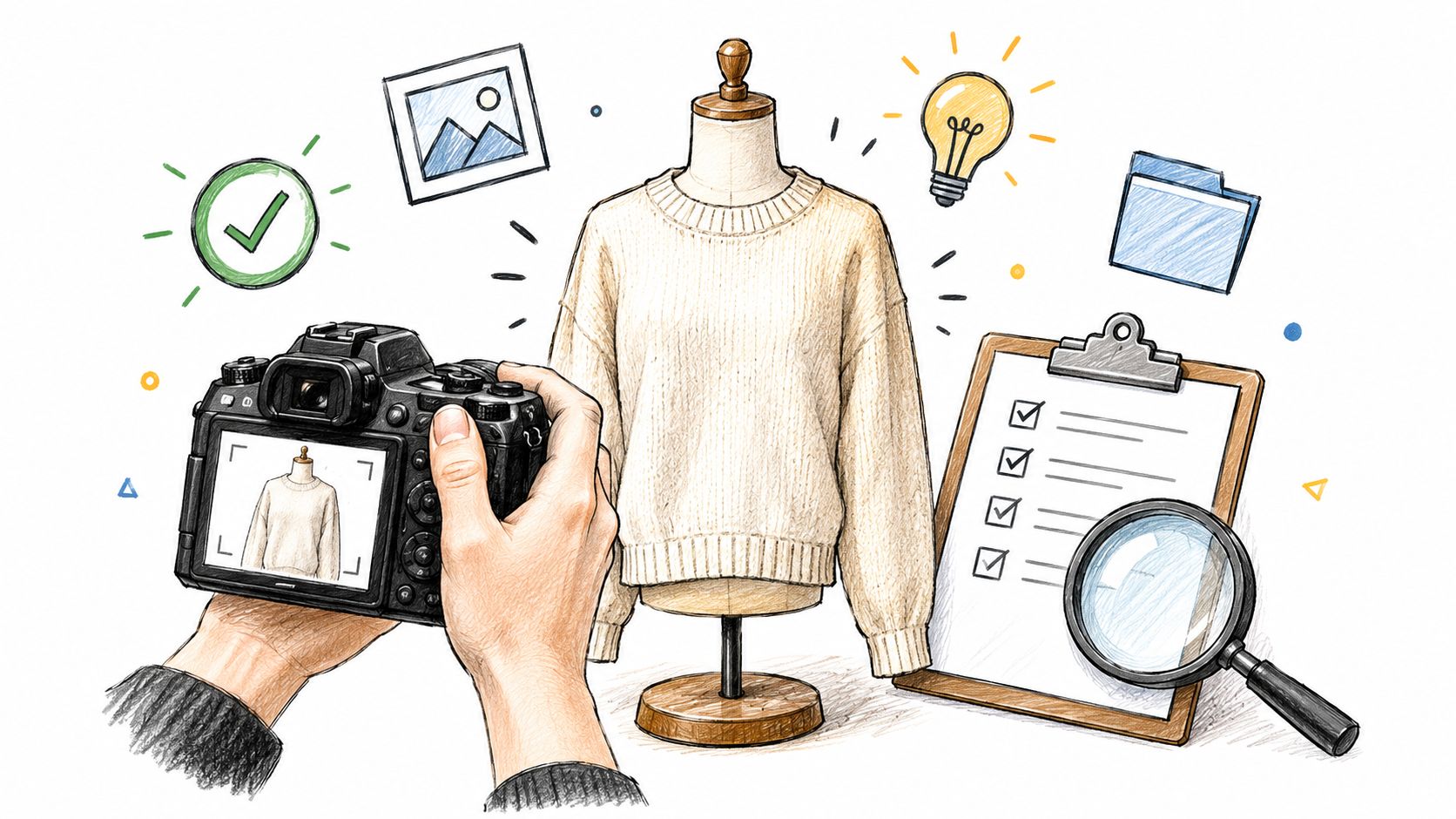
For assortment visualization, capture the SKU reference, approved product attributes, color or material reference, size or variant logic, source image, generated visualization, reviewer, and approval state. For editorial assets, retain the brief, moodboard or reference direction, selected products, final compositions, channel versions, localization notes, and approval history.
AI-generated photography adds another handoff. Preserve the source product image, prompt or parameter record, model or workflow identifier where available, selected output, retouching steps, and final export. The reviewer should verify that the garment, packaging, texture, proportions, and key details remain accurate. A polished image can still fail if it changes the product customers receive.
Use a source-of-truth library rather than scattered request folders. Teams designing a digital asset workflow should connect the asset to its production context so a reviewer can move from output to source without reconstructing the project from chat history.
Evidence should answer three questions: What was approved, what changed, and who verified the final output?
Make verification repeatable
Create a review record with one row per asset or meaningful asset group. Include the criterion, result, evidence reference, reviewer, timestamp, and finding status. Don't ask designers to write essays. A structured pass, fail, not applicable, or needs clarification field with a short note is usually more useful than a long narrative.
Run a mock walkthrough before the formal review. Ask each evidence owner to demonstrate the path from source input to final output while another person follows the record. This exposes broken permissions, duplicate versions, missing approval states, and ambiguous ownership before they slow fieldwork.
A sample-miss playbook keeps the team from improvising when evidence is absent. It should specify whether to request the source, expand the sample, record a control gap, pause publication, or escalate to the process owner. Immediate remediation updates should remain separate from the original finding so the audit trail shows both the condition observed and the action taken.
Version control deserves special attention. A final export should inherit a stable identifier from the SKU and campaign record, not depend on a filename that someone can overwrite. Where regional teams make valid adaptations, document the permitted variation and the criterion that remains fixed. That balance preserves local relevance without allowing every market to redefine the brand.
Fixing Findings and Preventing Repeat Issues
Detection creates value only when someone can act on the result. Creative teams often make one of two mistakes: they treat every discrepancy as an emergency, or they mark everything as a low-priority polish item. The first approach overwhelms production. The second allows product and brand risks to travel into more channels.
Triage each finding against three questions. Could the issue misrepresent the product or violate a brand requirement? How many channels, regions, or SKUs inherit the problem? Can the team correct the source workflow, or would it need to repair individual outputs? Those answers determine priority more reliably than the loudest stakeholder in the room.
Remediation Priority Matrix for Creative Audits
| Finding Type | Risk Level | Remediation Action | Owner |
|---|---|---|---|
| Product silhouette, shade, pack, or material is materially inaccurate | High | Hold affected outputs, correct the source asset or generation step, review downstream variants, and document verification | Product content lead with creative operations |
| Required brand element is missing or incorrectly applied across a campaign | High | Update the master template or guardrail, replace affected derivatives, and perform a targeted re-audit | Brand director with design operations |
| Regional adaptation changes an approved message or visual rule | Medium to high | Confirm the permitted variation, revise the market asset, and update localization guidance | Regional marketing lead |
| Naming, metadata, or version status is inconsistent | Medium | Normalize the record, connect the approved source to the export, and add a validation checkpoint | Content operations |
| Isolated crop, spacing, or export defect with no broader pattern | Low | Correct the file before publication and record the issue for trend review | Channel producer |
The common failure is repairing the visible asset while leaving the process untouched. If five exports use an outdated logo, replacing five files may close the immediate issue, but a template, library, or approval rule still needs correction.
Teams can use brand consistency software to centralize guardrails and make comparisons easier, but software won't decide whether a product representation is accurate. A designated owner still needs to define the rule, review exceptions, and accept residual risk.
Track closure, not applause
Stakeholder satisfaction can reveal whether the audit was understandable and workable, but it shouldn't be the only measure. Benchmarking guidance has found that audit functions commonly look at plan completion, issue closure, report turnaround, and feedback, with industry audit benchmarking data illustrating why one indicator can hide a bottleneck. A team may finish its planned reviews while findings remain open, or close issues quickly while reports arrive too late to influence the season.
Maintain a finding log that records owner, status, target date, evidence of correction, verification result, and root cause. Review recurring themes after the cycle. If the same error appears in multiple markets, the remediation belongs in the workflow template or production dossier, not in another reminder to individual contributors.
A closed finding proves a correction. A prevented finding proves the workflow learned.
Building a Repeatable Audit System That Scales
A seasonal audit becomes valuable when the next season starts with better inputs. The aim isn't to create a larger compliance department or slow creative production with approvals at every minor edit. It's to place small, well-timed checkpoints where errors are cheapest to detect, then keep the evidence attached to the work as it moves.
Replace the annual checklist with a living risk view. Refresh the audit plan when product launches, channels, regions, vendors, or production methods change. Recent guidance for internal audit planning describes monthly or quarterly refreshes driven by live risk signals and business-change data, with audit-committee visibility for emerging areas such as cybersecurity and third-party risk as outlined in current internal audit execution guidance. For creative operations, the equivalent signals include a new AI image workflow, a new marketplace specification, an agency handoff, or a sudden increase in regional adaptations.
Standardize the seasonal dossier
A production dossier should carry the collection or campaign from concept through final delivery. Keep the structure consistent while allowing category-specific criteria:
- Assortment layer: SKU, variant, material, color, size, product status, and approved reference.
- Creative layer: brief, visual direction, copy, guardrails, selected outputs, and approval record.
- Channel layer: required formats, crops, metadata, claims, localization, and publication state.
- Audit layer: risk assessment, evidence references, findings, remediation, and re-audit result.
Teams that need a practical method for documenting these handoffs can use a guide to write standard operating procedures, then adapt the procedure to the realities of seasonal creative work. The document should explain who acts, what evidence they attach, what happens when a sample fails, and when a plan must be re-scoped.
Measure the system with a small operational set: completion against plan, finding closure, fieldwork-to-report turnaround, rework themes, and stakeholder feedback. The value comes from reading the measures together. Completion without closure is unfinished work. Fast closure without verification is a false improvement.
A visual workflow canvas can make the relationship between inputs, transformations, outputs, and checkpoints easier to inspect. Workflow orchestration provides useful context for connecting those steps across teams and systems. For fashion, beauty, and lifestyle organizations, Sprello offers a visual canvas for production-ready workflows across SKUs, channels, regions, and seasons, including assortment visualization, campaign production, AI-assisted product photography, brand guardrails, naming conventions, and seasonal production dossiers.
The mature model is not “audit once, fix once.” It's a creative operating system where every seasonal output has an accountable owner, an approved source, a visible transformation path, and a follow-up record. That structure lets teams move quickly without asking reviewers to trust memory, scattered folders, or last-minute reassurance.
Use Sprello to map your seasonal creative workflow, connect SKU-level inputs to channel outputs, and keep approvals, guardrails, and evidence visible across handoffs. Start with one upcoming collection, assign evidence owners, and build the audit checkpoints into the workflow before the launch scramble begins.
Related
More to explore
Fresh reads

Product and Concept Guide for Fashion Development
Learn how product and concept workflows turn sketches and materials into production-ready apparel briefs with scalable, brand-consistent processes.

Dark Charcoal Grey Styling and Palette Guide for Brands
Discover dark charcoal grey codes, pairings, and styling tips for fashion and lifestyle. Learn when to use it over black with brand-ready palette guidance.

AI Fashion Photography Explained from Concept to Catalog
Learn what AI fashion photography is, how it works, and how brands scale catalog and campaign assets with quality, consistency, and governance.