September 27, 2026
Assortment Planning in Fashion: A Strategic Guide
Master assortment planning in fashion with strategies for line architecture, size curves, visual workflows, and KPIs to optimize seasonal SKU allocation.
The collection is ready, the campaign images are in production, and the launch date is fixed. Then the first allocation review exposes the problem: the hero jacket is missing in core sizes, fringe sizes are accumulating in the warehouse, and the regional edits look unrelated even though they came from the same line. Design sees a strong collection. Finance sees trapped inventory. Customers see inconsistent availability.
That tension is the operating reality of assortment planning in fashion. The work is not just choosing attractive products or filling an open-to-buy budget. It connects creative direction, demand evidence, inventory commitments, channel needs, and the visual story customers encounter at every touchpoint. A good plan protects the collection's identity while making difficult decisions about breadth, depth, sizes, colors, locations, and timing.
Why Seasonal Assortment Planning Fails Before It Starts
A seasonal line can look coherent in a design review and still break down in allocation. The hero silhouette receives too little depth, fringe sizes build in the warehouse, and regional edits lose the collection's visual logic. By the time those issues appear, production quantities may already be committed and expensive to change.
The work starts at least six months before a season starts. Teams commonly review two to three years of historical sales when deciding which styles, sizes, colors, and channels to carry, as outlined in this fashion assortment planning guidance. That lead time gives buyers and planners room to test the creative line against capacity, fabric commitments, cash, channel requirements, and likely demand before those constraints harden.
Historical sales alone can mislead. Planners should also examine return-adjusted demand signals, size-level sell-through, stockouts, cancellations, and the products customers actually view together. A spreadsheet can rank SKUs, but a visual assortment review shows whether the range still makes sense by outfit, color story, channel, and customer cluster. That review is where creative cohesion meets inventory math.
Fashion merchandising connects product direction with commercial execution. Teams clarifying what is fashion merchandising can use that framework to link presentation, product selection, and customer experience. Assortment planning turns those principles into decisions about breadth, depth, market edits, timing, and availability.
The plan must work by cluster
One national assortment rarely reflects actual shopping conditions. Store size, climate, local preferences, channel behavior, and brand role can change the right mix. A flagship may need the full creative statement, while a smaller store needs a tighter edit. E-commerce may require broader size availability and different depth because customers cannot assess fit in person.
Planners should group locations and channels by comparable customer and operating conditions, then review each cluster visually and commercially. The framework described in merchandise planning in retail helps establish the commercial structure before the seasonal line is distributed through it.
Practical rule: Keep the creative line intact at concept level, then make decisions explicit for each style, variant, channel, and cluster.
Strong plans preserve a recognizable seasonal point of view while accepting that every market does not need every item. Weak plans either force one uniform buy everywhere or localize so heavily that the collection loses coherence. Both errors start when assortment planning is treated as a purchasing spreadsheet rather than a visible, reviewable operating plan.
Designing Line Architecture and SKU Depth
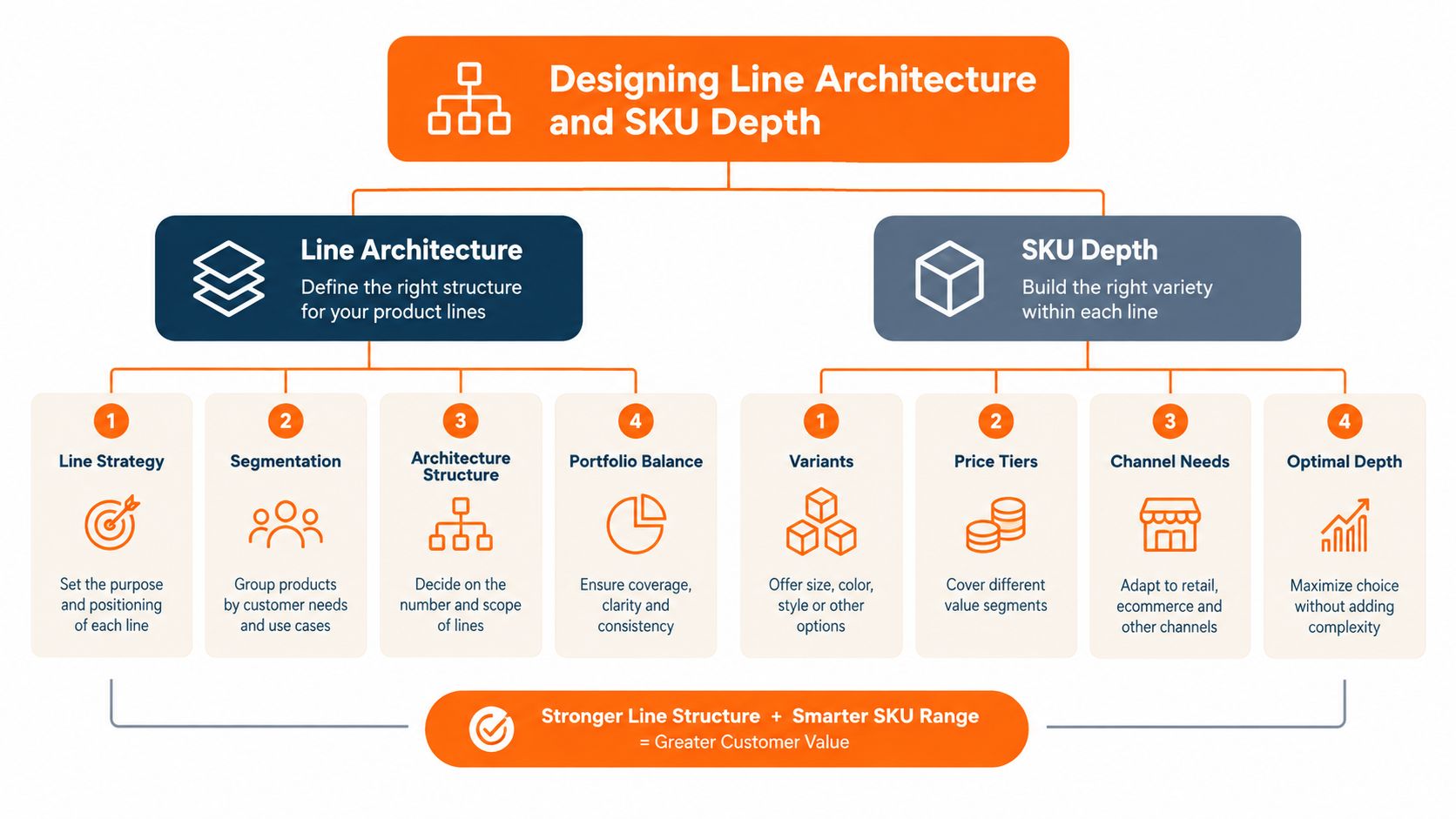
A collection needs a hierarchy before it needs a quantity. Start with the seasonal concept, then define the categories, silhouettes, materials, color families, and commercial roles that support it. Only after that should the team translate the line into styles and variants.
Breadth describes how many distinct styles the collection carries. Depth describes how much inventory supports each style. Increasing breadth creates discovery and visual energy, but it also fragments demand across more items. Increasing depth strengthens availability for proven or strategically important products, but it concentrates financial exposure if the forecast is wrong.
Build the architecture from roles
A useful line architecture gives every product a job:
- Core products: Reliable shapes, fabrics, or colors that anchor the assortment and support repeat demand.
- Seasonal updates: Familiar commercial ideas refreshed through proportion, trim, color, or material.
- Statement pieces: Directional products that express the creative concept and attract attention, even when their demand is less predictable.
- Commercial connectors: Items that complete outfits, support cross-selling, or make the collection easier to shop by channel.
This structure prevents the common mistake of approving products because each one looks appealing in isolation. A line can contain individually strong designs and still fail as a whole if it has too many similar silhouettes, competing color stories, or no dependable entry points.
Let the SKU matrix expose weak decisions
Build the matrix with style, color, size range, channel, cluster, delivery, and planned depth visible together. This makes duplication easier to spot. Two apparently different jackets may compete for the same customer if they share the same price position, use a similar fabric, and appear in the same channel at the same time.
The matrix should also show where localization is intentional. A regional variation needs a reason, such as climate, customer preference, or channel role. Otherwise, local edits become uncontrolled complexity that increases sample, photography, inventory, and operational demands.
SKU discipline matters after the buy as well as before it. Teams that need a clear naming approach can use practical guidance on SKU examples for second-hand inventory to reinforce consistent identifiers across product records, warehouses, and sales channels. The exact convention will vary, but ambiguity is expensive when a style has multiple colors, sizes, and market-specific versions.
The best assortment matrix doesn't merely count products. It shows whether each variant earns its place in the customer journey and the inventory plan.
A sound review asks four questions. Does the line look balanced when viewed as a whole? Does each cluster receive a credible offer? Are depth decisions concentrated behind the products that need availability? And can the business produce, photograph, allocate, and maintain every planned variant without creating avoidable friction?
Mastering Size Curves and Variant Allocation
A style-level forecast is only the beginning. Apparel inventory is sold as variants, and the commercial result depends on whether the right sizes and colors are available when customers want them. A strong jacket forecast can still produce poor results if the buy overweights fringe sizes and underfunds the core run.
A size curve expresses each size's share of total sales or demand. Planners first estimate total units, then use the curve to distribute those units across sizes, colors, and seasons. The curve turns a broad style decision into a variant-level commitment, which is where many seasonal plans either become precise or break down.
Build curves from clean demand
The source data matters more than the sophistication of the spreadsheet. Size curves should come from clean, full-price sell-through data, not from periods dominated by markdowns. Discounting changes customer behavior and can make the observed size mix look different from the underlying demand pattern. Apparel inventory guidance from BuyPlanr's explanation of size curves also recommends refreshing curves every season because customer mix and fit preferences shift.
A practical data review separates:
- Full-price sales from promotional sales.
- Initial demand from replenishment demand.
- Online orders from store purchases.
- Sales from returns.
- Genuine size preference from availability constraints.
The last distinction is easy to miss. If a core size sold out early, its historical share may be understated because customers couldn't buy it. If a fringe size remained available while other sizes disappeared, its share may appear stronger than the original demand warranted.
Allocate with constraints, not intuition alone
A size curve shouldn't operate as an automatic answer. Merchandisers still need guardrails for minimum presentation quantities, channel commitments, production multiples, budget limits, and supplier constraints. The curve provides the starting distribution, then the planner reviews whether the result is commercially and operationally feasible.
Refresh the curve when the customer base, fit block, product category, or channel changes. A curve from a relaxed knit top shouldn't be copied uncritically into a structured garment. Likewise, a DTC curve may not transfer directly to wholesale, where the customer profile, selling environment, and available fitting support differ.
A size curve is a demand hypothesis, not a permanent rule.
The most useful review compares the planned curve with what happened, then asks why the gap appeared. Was demand different, or was availability different? Did returns reveal a fit issue? Did markdowns distort the signal? Answering those questions creates a better input for the next season than increasing the quantity of the best-looking historical size.
Visual Workflows and Cross-Channel Consistency
A spreadsheet can tell a planner that a line contains the intended number of styles and variants. It can't reliably show whether the collection feels repetitive, visually unbalanced, or disconnected across channels. Buyers need to see the assortment as customers will encounter it, especially when the same seasonal story has to work in DTC, wholesale, marketplaces, and regional edits.

Visual assortment planning changes the review conversation. Instead of asking only whether a style is approved, the team can ask whether the complete line has enough contrast, whether several colorways are competing for the same role, and whether the campaign edit accurately represents what each channel can really sell.
Use one visual truth for different commercial edits
The objective isn't to make every channel identical. It's to define what must remain universal and what can flex.
Universal elements may include the hero silhouette, signature color story, key brand codes, or products needed to support a major campaign. Flexible elements may include regional fabrics, climate-appropriate layers, limited wholesale options, or a marketplace edit built around easier-to-understand product stories.
A shared visual canvas helps design, merchandising, and marketing review those decisions together. It also creates a useful operating connection to a digital asset workflow, because product images, naming, variant information, and campaign outputs need to remain aligned as the line changes.
Image preparation is part of the planning problem, not a final production detail. Teams comparing best fashion clipping services should judge them against the actual assortment workflow, including consistent backgrounds, variant accuracy, turnaround requirements, and the ability to preserve product details across a large catalog.
Review the line before inventory becomes fixed
A visual review should happen at several levels:
- Collection view: Does the full line express a coherent seasonal point of view?
- Category view: Are silhouettes and materials differentiated enough to justify the breadth?
- Channel view: Does each channel have a complete, credible customer offer?
- Cluster view: Do regional edits feel intentional rather than randomly reduced?
- Campaign view: Can the planned editorial story be supported by available products and variants?
After the team has reviewed the visual line and identified conflicts, a recorded walkthrough can help standardize the review ritual for distributed teams.
AI assistance can help generate or organize visual options, but it shouldn't replace merchandising judgment. The planner still decides whether a localized edit protects the brand, whether a duplicated silhouette should be removed, and whether the planned depth supports the visual importance assigned to the product. The technology is most useful when it makes those trade-offs visible early enough to change them.
Redefining KPIs for Return-Driven Quality
Gross sales can flatter a weak assortment. A product may sell quickly, attract strong attention, and still create poor commercial value if customers return it because the fit is inconsistent, the color differs from expectation, or the quality doesn't meet the promise.
Returns therefore need to sit beside sell-through, markdown history, and stock levels when planners evaluate a style. The operational question isn't only what sold. It's what stayed sold after the customer received and assessed it.
Separate demand from return inflation
Return behavior can distort the signal attached to a SKU. If a high-selling style also generates substantial returns, treating its gross demand as a clean endorsement risks repeating the underlying problem in a similar silhouette, fabric, or fit. The next season's team may deepen the buy when it should be investigating product quality or expectation mismatch.
A return-adjusted review should connect:
- Gross units sold: The initial commercial response.
- Returned units: The portion that didn't remain with the customer.
- Return reasons: Fit, quality, color, delivery expectation, or other causes.
- Net retained units: The inventory that effectively became a completed purchase.
- Post-purchase feedback: Evidence that explains why customers kept or rejected the product.
This isn't a request to punish every product with returns. Some categories naturally involve more consideration, and some channels make returns easier. The point is to interpret the signal rather than letting gross sell-through make the decision automatically.
Put quality into the assortment conversation
A return pattern may reveal an assortment problem, a product-development problem, or a content problem. Repeated fit-related returns can indicate that the size curve is being applied to a product with a different fit block. Color-related returns may point to photography or display issues rather than demand weakness. Quality-related returns may make a successful style unsuitable for deeper investment until the construction is corrected.
Commercial test: Don't ask whether the SKU won the sales report. Ask whether it delivered retained demand at an acceptable operational cost.
The review should also compare returns by channel and region. A style can perform differently when customers encounter different imagery, product descriptions, delivery conditions, or service expectations. Linking assortment decisions to post-purchase behavior gives the next planning cycle a more honest foundation and reduces the chance of overbuying a problem that merely looked successful at launch.
Technical Optimization and Algorithmic Allocation
Manual spreadsheets remain useful for judgment, scenario discussion, and financial visibility. They become fragile when planners must evaluate many items, sizes, locations, channels, budgets, and space constraints at once. The difficulty isn't just the volume of rows. It's the number of combinations that a human team has to compare before choosing a feasible plan.
Technical assortment optimization addresses that problem with demand forecasts and mathematical allocation methods. Academic research on fashion assortment planning describes historical-sales-based forecasts inside a nonlinear integer-programming model, allowing the model to balance demand lift against inventory, space, and assortment complexity, as shown in this research on fashion assortment optimization.
Compare the operating models
| Planning approach | What it handles well | Where it struggles |
|---|---|---|
| Spreadsheet-led planning | Transparent assumptions, quick scenario edits, human judgment | Repeated manual updates, version control, difficult multi-variable comparisons |
| Rule-based allocation | Consistent guardrails, minimums, cluster logic | Limited ability to discover better combinations |
| Forecast-assisted optimization | Many constraints, variant allocation, trade-offs between demand and resources | Requires clean inputs and clear business rules |
| Visual and algorithmic workflow | Connects commercial math with creative review | Needs governance so teams understand and approve recommendations |
The algorithm doesn't remove the buyer's role. It formalizes the constraints that the buyer already manages, such as budget, space, production capacity, minimum presentation quantities, and channel commitments. The merchandising team still defines brand guardrails and decides when a mathematically attractive solution undermines the collection's intent.
A practical introduction to merchandise planning software can help leaders evaluate which parts of the process need stronger structure before they invest in advanced optimization. An organization with inconsistent product names, incomplete return reasons, or disconnected channel data won't get reliable results from an advanced model.
The sensible sequence is to clean the data, define the rules, test recommendations against known seasons, and give planners a clear way to override or explain an output. Technical optimization earns trust when it makes trade-offs visible rather than presenting a mysterious answer.
Aligning Teams for the Next Season
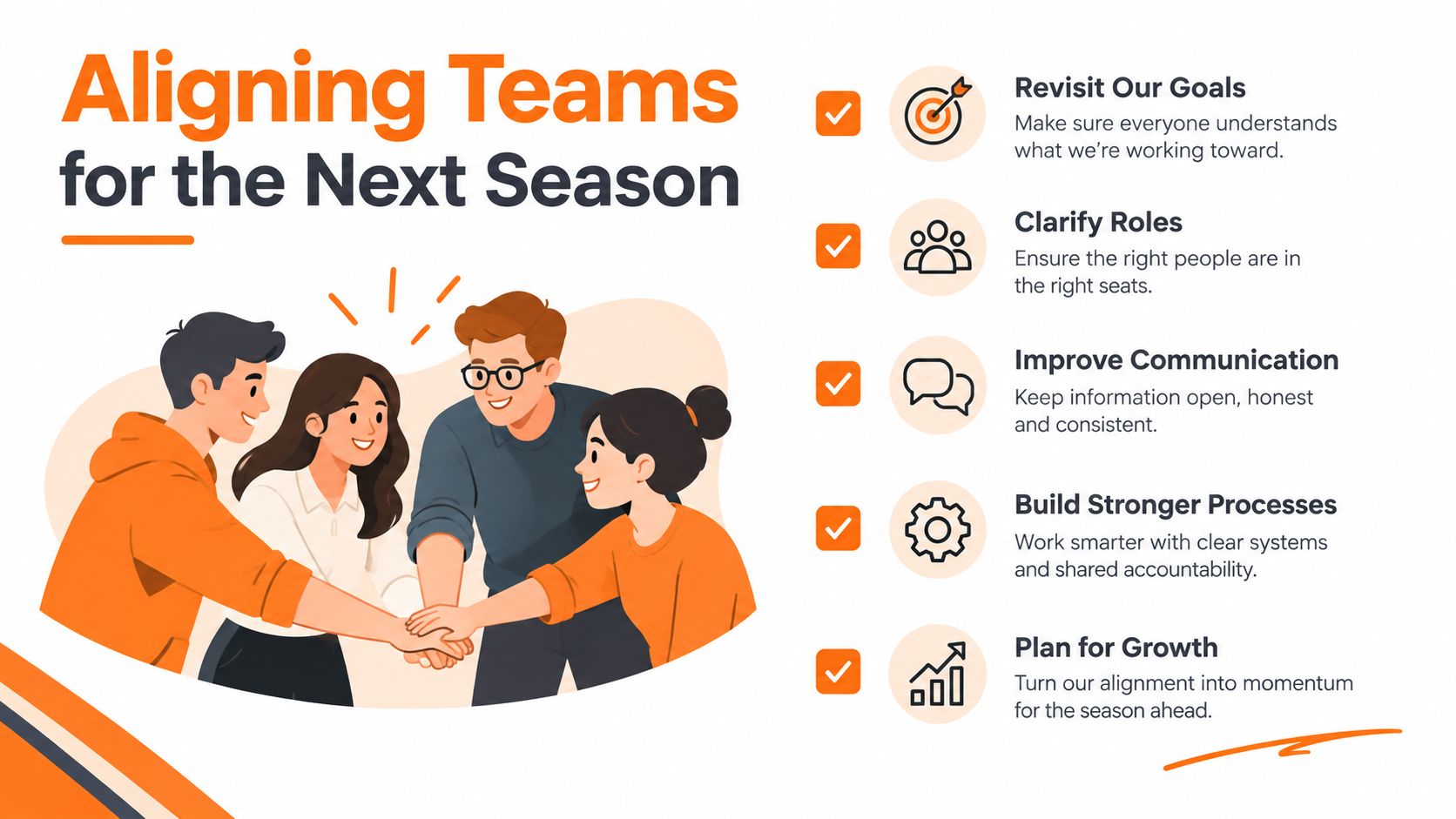
Assortment planning succeeds when design, merchandising, planning, sourcing, marketing, and operations make decisions from the same product truth. The shared truth needs more than a database. It needs clear ownership, visible assumptions, agreed milestones, and a review process that allows creative and commercial concerns to meet before inventory is committed.
The most effective teams don't ask design to suppress ambition or merchandising to accept every creative proposal. They define the conditions under which each idea can succeed. A statement piece may need limited depth and strong visual placement. A core item may need broader size coverage and dependable replenishment logic. A regional edit may need visual review before anyone treats it as a finished assortment.
A practical maturity check
Use the next planning cycle to audit the operating model:
- Data quality: Can the team separate full-price demand, markdown sales, stockouts, and returns?
- Variant visibility: Are size, color, channel, and cluster decisions visible before buy approval?
- Visual control: Can stakeholders review the whole line together rather than opening isolated product records?
- Decision rights: Does everyone know who can approve a style, change depth, or reject a localized edit?
- Learning loop: Are return reasons, retained demand, and post-season observations fed into the next curve and forecast?
Set the next season up deliberately
Start by creating a single seasonal dossier that contains the line architecture, SKU definitions, cluster logic, size-curve assumptions, return findings, visual reviews, and approval dates. Then schedule a pre-commitment review where the team can see the commercial plan and the visual collection in the same conversation.
The final question should be broader than “Will this sell?” Ask whether the product mix is coherent, available in the variants customers need, appropriate for each channel, and likely to remain successful after delivery and returns. That is the standard that turns assortment planning in fashion from a seasonal buying task into a repeatable brand and inventory discipline.
Sprello provides an AI workflow canvas for fashion, beauty, and lifestyle teams to visualize assortments, colorways, size runs, channels, regions, and seasonal handoffs in one working environment. If your next line review needs clearer collaboration between creative and commercial teams, visit Sprello to explore a workflow built around those decisions.
Related
More to explore
Fresh reads
What Is Merchandise Planning in Retail? a Practical Guide
What Is Merchandise Planning in Retail. Learn what merchandise planning in retail really means, how it drives sales and margin, and the steps teams use
8 Product Concept Examples for Brand Teams
Explore 8 product concept example ideas across fashion, beauty, and lifestyle, with strategic analysis and workflows for scaling concepts into production.

Product Image AI Generator: How Brands Use It at Scale
Learn what a product image AI generator does, how it works, and how fashion and beauty brands use it for catalog-scale content without losing brand quality.